Transparent LED Film for Glass Windows and Facades
Written and reviewed by the ETA Visual Engineering & Project Team. Guidance is updated when project, product or Singapore site-planning practices change.
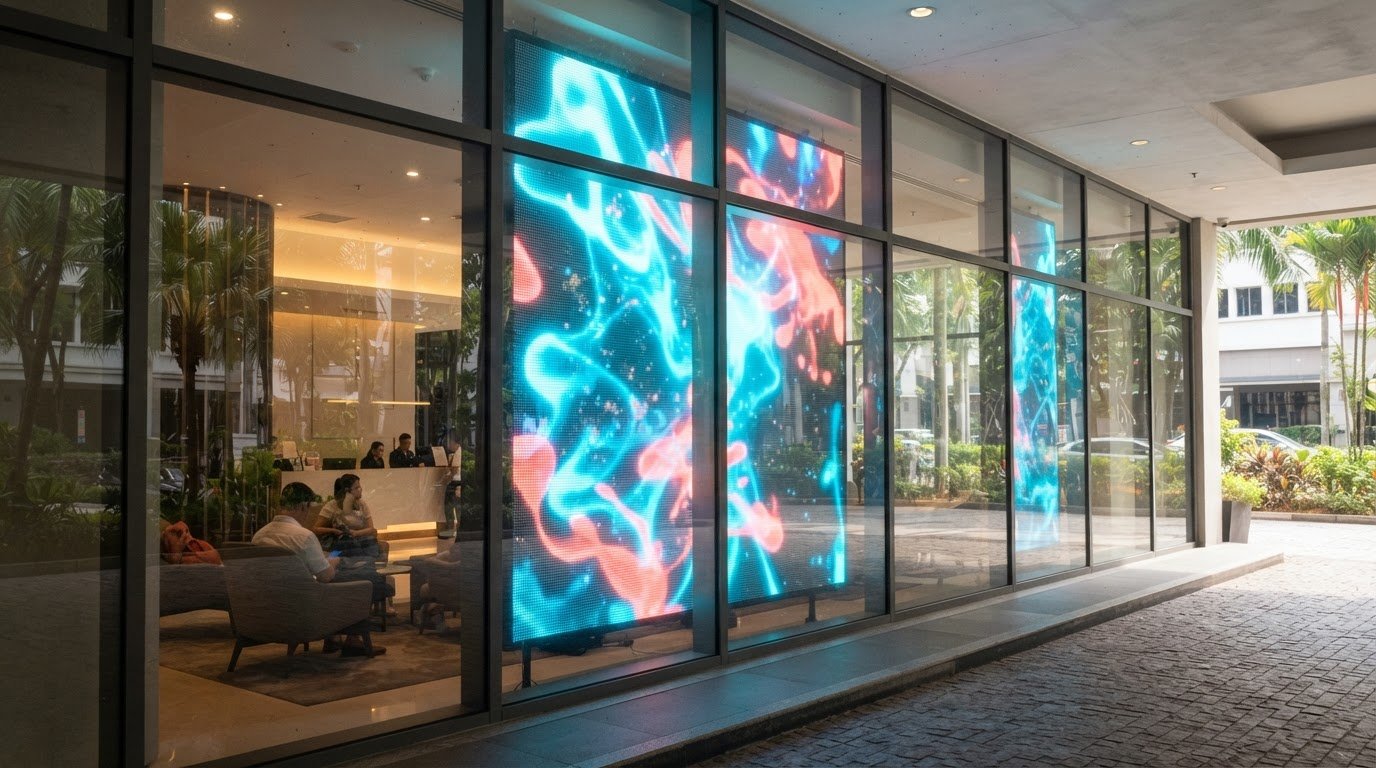
Transparent LED film for glass windows can offer transparency of up to 90%, but the finest pixel pitch or greatest openness isn’t automatically the right choice for every site. Pixel pitch affects how clearly content appears at different viewing distances, while brightness and the way the display integrates with the glass shape the overall result. It’s reasonable to want digital content that stands out without making a window or façade feel closed off. Choosing transparent LED film for glass windows means balancing image detail, visibility through the glass and viewing conditions, rather than selecting a specification in isolation. This guide explains how pixel pitch relates to viewing distance and transparency, which display specifications matter, and what to consider when integrating a system with windows or building façades in Singapore. You’ll also learn how site conditions, including daylight, glass layout, installation access and maintenance needs, influence the design. The aim is to help you assess whether transparent LED is a suitable fit and understand the decisions involved before moving into project planning.
Key Takeaways
- Match pixel pitch and brightness to the content, viewing distance and daylight conditions rather than choosing specifications in isolation.
- Assess how transparency, image clarity and the display format affect the window or façade’s appearance and function.
- Plan glass suitability, power and signal routing, commissioning and maintenance access as part of the integration design.
- In Singapore, account for heat, humidity, building management requirements and practical installation access when planning the project.
- Define the application and site constraints early to shape a display solution and budget that fit the building.
Table of Contents
- What Is Transparent LED Film for Glass Windows?
- Choosing Pixel Pitch, Resolution and Brightness
- Technical Specifications and Maintenance
- Integrating Transparent LED Film with Glass
- Singapore Site, Installation and Budget Considerations
- Common Mistakes and Practical Recommendations
- ETA Visual: Transparent LED Displays
What Is Transparent LED Film for Glass Windows?
Transparent LED film for glass windows uses LED elements on a see-through surface to display moving content while leaving parts of the glass visible. For a Singapore storefront or façade, the design balances image visibility, daylight conditions and the view through the glazing.
Daylight and Nighttime Brightness Adaptation
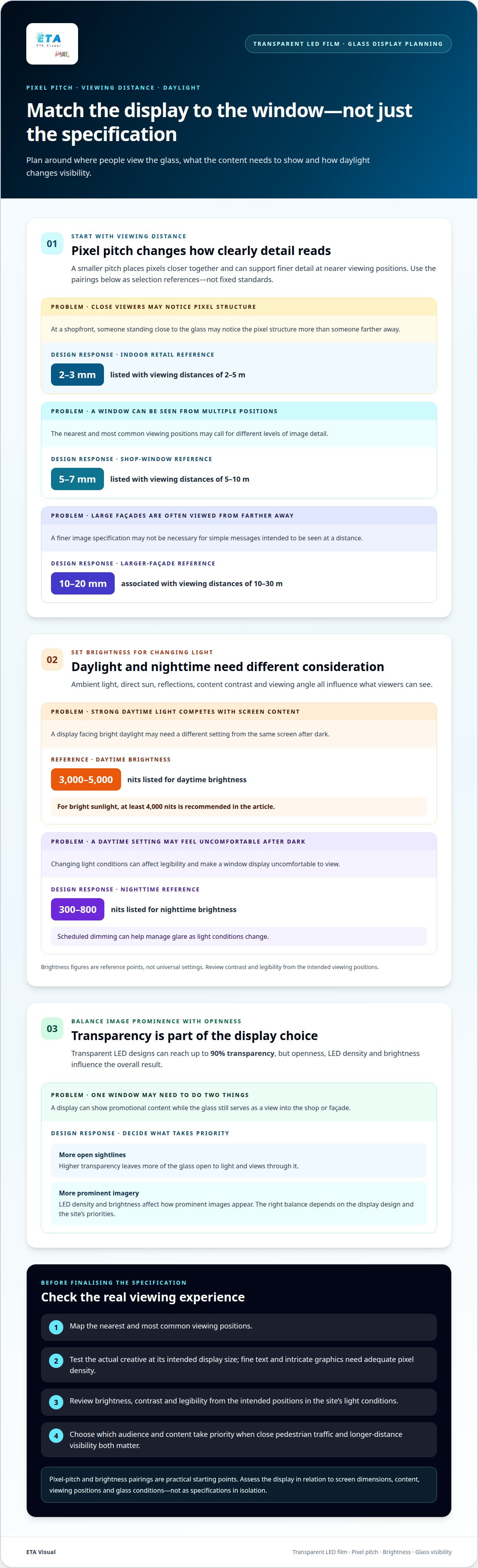
Ambient light changes the brightness needed for legible content. A display facing strong daytime light may need a different setting from the same screen after dark; listed nighttime brightness is 300-800 nits. Scheduled dimming can reduce glare and keep changing light conditions from making the window display uncomfortable to view.
Daylight-Visible Display Brightness
Listed daytime brightness for transparent LED film is 3000-5000 nits, with at least 4000 nits recommended for bright sunlight. These figures are reference points, not universal settings: direct sun, reflections, content contrast and viewing angle all influence what viewers can see through a shop window.
Transparency and Brightness Trade-Offs
Higher transparency leaves more of the glass open to light and sightlines, while LED density and brightness affect how prominent images appear. Transparent displays can reach up to 90% transparency, but the actual balance depends on the display design. A shop prioritising passers-by seeing inside may choose differently from one prioritising bold promotional content.
Display Formats for Glass
Rigid LED panels use a fixed module format, while rollable film can suit surfaces where a thinner, more adaptable application is useful. Glass-integrated displays form part of the glazing design rather than sitting as a separate screen. Transparent OLED and LCD displays also show content on glass, but use different technologies. Compare image appearance, transparency and installation requirements rather than assuming they perform alike.
Storefront Window Displays
For a retail window, transparent LED can show promotions while leaving merchandise and the interior visible. Content should suit the viewing distance and time of day: a simple product message may be clearer than detailed video viewed through reflective glass. Plan the installation around the window layout and access for maintenance.
Suppliers, Installers, and Use Locations
In Singapore, specialist LED display and AV integrators supply and install transparent LED systems, coordinating display design with glass, power and signal routing. Potential locations include shopfronts, commercial building façades and suitable home glazing. Approval requirements for window advertising depend on the site and applicable building or advertising rules, so coordinate with building management and relevant authorities before installation.
Choosing Pixel Pitch, Resolution and Brightness
Pixel pitch affects image detail and the distance at which content appears clear. Choose it in relation to screen dimensions, planned content and actual viewing positions, not as a standalone specification.
Pixel Pitch and Viewing Distance
Pixel pitch measures the spacing between neighbouring LED pixels. A smaller pitch packs pixels more closely, supporting finer image detail at nearer viewing positions. For transparent displays, listed examples pair 2-3 mm pitch with viewing distances of 2-5 m, while 5-7 mm is associated with 5-10 m. These are selection references, not fixed standards.
At a shopfront, someone standing close to the glass may notice pixel structure more than someone viewing it from farther away. Map the nearest and most common viewing positions, then assess image clarity from those points before finalising the specification.
Selecting Pixel Pitch by Viewing Distance
Use the viewing environment to narrow the choice. For indoor retail viewed from 2-5 m, 2-3 mm pitch is one listed option; shop windows viewed from 5-10 m may suit 5-7 mm. Larger façades viewed from 10-30 m are associated with 10-20 mm pitch. Treat these pairings as practical starting points, not mandatory rules.
Consider transparency and content together. A finer pitch may support more detailed graphics, while a wider pitch can suit simpler messages viewed from farther away. For a window with close pedestrian traffic and long-distance visibility, decide which audience and content take priority.
Pixel Pitch and Content Clarity
Resolution depends on the display’s pixel spacing and active dimensions. Fine text, product details and intricate graphics need adequate pixel density to remain legible; large logos, colour blocks and short promotional messages can work with less detail. Test the actual creative at its intended display size instead of relying only on a resolution label.
Brightness also affects visibility, particularly when daylight competes with screen content. Set brightness for the site’s changing light, then review contrast and legibility from the intended viewing positions. If a specification mentions OCR bonding or adhesive layers, clarify how those layers affect glass compatibility, optical appearance and future servicing. For project-specific design, explore transparent display integration.
Technical Specifications and Maintenance
A transparent display’s technical schedule should cover the controller, receiving cards, power supplies, bezel and signal path. These components affect how images reach the screen and how technicians access them. One listed Glass Holographic display specification gives average power consumption of 200 W/㎡ and maximum consumption of 600 W/㎡. Treat figures as model-specific, not universal film standards.
Power planning also needs the stated input and operating conditions. The listed display requires 110-220 V ±10% AC at 50/60 Hz. Confirm the supply arrangement, circuit capacity, cable routes and isolation points against the selected system design. A bezel or frame can affect the visible area and access to connections, so coordinate its dimensions with the glass layout.
Performance specifications help assess playback quality. A listed Glass Holographic display has a refresh rate of at least 3840 Hz, a frame rate of at least 60 Hz and a contrast ratio of 1000:1. These values describe different characteristics: refresh rate relates to image scanning, while frame rate describes how often content frames update. Review both against the content and viewing conditions.
- LED film: Listed film specifications include 1-3 mm thickness and a typical weight of 2-4 kg/m².
- Light-strip film: Check strip spacing, connection points and the controller’s compatibility with the intended screen layout.
- Flexible film: Confirm the permitted installation surface and bend conditions; flexibility alone doesn’t establish suitability for every glass shape.
Maintenance planning matters in Singapore, where humidity and heat make access and routine inspection important design considerations. Keep connections reachable, define safe cleaning methods, and inspect the glass and film for dust, adhesion changes or visible damage. A listed display lifespan of at least 100,000 operating hours is a specification, not a maintenance-free guarantee.
For ongoing care, set a documented inspection routine and record faults, image changes and repairs. Use suitable cleaning procedures for the display surface, as described in this LED screen cleaning guide. Preventive maintenance can help identify connection or visual issues before they interrupt advertising playback.
Integrating Transparent LED Film with Glass
Successful integration starts with the glass, not the creative. A site survey maps each pane, frame, joint and existing obstruction, then checks the surface condition and access on both sides. For example, a shopfront divided by mullions needs a layout that respects those divisions. The display plan should show where content will appear and where clear sightlines will remain.
Surface suitability affects adhesion, appearance and servicing. The installation team assesses the glass finish, cleanliness, flatness and any existing coatings before choosing an application method. Film should align consistently across panes, with edges and joins planned to avoid visual breaks. A mock-up or sample layout can help assess vibrant content against the actual interior and exterior views.
Plan power and signal routes before installation. The design maps the source, controller, receiving cards and display connections, then coordinates cable paths with frames and nearby equipment. Keep power supplies and service points accessible without blocking doors or important building features. In a mall, coordinate installation access and permitted work periods with building management.
- Survey: Record glass dimensions, frame locations, surface condition and maintenance access.
- Design: Set film coverage, panel boundaries, cable routes and content orientation against the window elevation.
- Install: Prepare the glass and apply the display according to the system’s installation requirements.
- Commission: Test signal flow, image alignment, brightness settings and playback using the intended creative.
Commissioning should include a visual review from inside and outside. Check that images align across panes, content remains legible, and cables or equipment do not obstruct the intended view. A test pattern can reveal alignment issues, while a real advertisement shows whether text and product images read clearly from the intended viewing positions.
Plan maintenance before the final fixing. The design should preserve access to controllers, connections and film edges for inspection or repair. Singapore’s heat and humidity make practical access and suitable cleaning procedures important considerations. A retail storefront integration guide can help clarify how display layout relates to shopfront use.
Singapore Site, Installation and Budget Considerations
Singapore’s heat, humidity and strong daylight make site conditions central to a window-display design. A survey should record the glass orientation, nearby heat sources, reflections and exposure to weather. An interior-facing installation differs from a display exposed directly to outdoor conditions. The chosen system and installation method must suit the actual location, not just the visual concept.
Building management can shape the installation sequence. In a shopping mall or office, the project team may need to coordinate access, loading bay use, work periods, protection of public areas and equipment movement. Confirm these arrangements early with the facilities team. They affect how installers reach the glazing, route cables and complete testing without disrupting normal operations.
- Glass and layout: Pane dimensions, frames, coatings and surface condition influence coverage and installation preparation.
- Access: Height, working position, equipment movement and maintenance reach affect installation planning.
- System design: Display area, controller location, power provision and signal routes shape the technical scope.
- Project coordination: Building procedures, work windows and site protection affect labour and sequencing.
Budget planning should cover the complete installed system, not just the film. Specification, glass preparation, cabling, control equipment, access requirements, commissioning and future maintenance all contribute to project scope. A narrow shopfront with nearby equipment differs from a large façade requiring complex access and longer cable routes. Clear drawings and site information help define what the quotation includes.
Project pricing depends on the site and is provided after a quotation request. Key cost factors include display size, specification, glass condition, installation access, power and signal routing, and commissioning requirements. For a useful assessment, share window or façade dimensions, site photographs, intended content, operating schedule and any building-management constraints. These details help align the design, installation sequence and ongoing service needs before work begins.
Common Mistakes and Practical Recommendations
A common mistake is choosing a display based on product specifications alone. The right design also depends on the window’s purpose, content, glass layout and viewing positions. A promotional shopfront needs different creative from a façade viewed across a plaza. Define the primary audience and message before settling the display area or configuration.
Another mistake is treating transparency as the only measure of success. A highly open screen may suit a window where interior visibility matters, while a denser image may better support prominent advertising. Assess the balance from both sides of the glass, including reflections and changing daylight. Review sample content at its intended size, not only on a laptop.
Glass and installation constraints are easy to overlook. Existing coatings, joints, frames and surface condition affect layout and application planning. A survey should identify these features and available routes for power and signal cables. In a mall, include access arrangements and building-management procedures in the installation plan, rather than leaving coordination until work begins.
- Match content to the audience: Use short, legible messages for passing viewers; reserve detailed visuals for people who can stop and view.
- Assess actual sightlines: Review the display from inside, close to the glass and from the main approach.
- Plan for service access: Keep controllers, connections and film edges reachable for inspection and repair.
- Test before launch: Check image alignment, playback, brightness settings and content legibility on the installed surface.
Do not treat commissioning as a brief power-on check. Test the intended advertising, inspect the whole display for alignment or dead areas, and confirm that scheduled content plays correctly. Record the display layout and signal path so future troubleshooting starts with useful system information. Agree on cleaning procedures that suit the film and glass, rather than applying routine window-cleaning methods without considering the display.
Include ongoing maintenance in the operating plan. A preventive maintenance contract provides a structured way to plan inspections and keep the display under review. This is particularly useful for commercial windows where prolonged image faults affect day-to-day signage.
ETA Visual: Transparent LED Displays
ETA Visual designs, supplies and installs transparent LED displays for commercial windows and building façades. Its integration support is useful when a project needs more than screen selection, such as coordinating the display layout with glass, content, power, signal routing and maintenance access. The aim is a system that fits the site and its intended use.
For a Singapore retail frontage, the key decisions include how much glazing remains visible, where viewers stand, and how sunlight affects content. ETA Visual can assess these considerations through site survey and system design, then coordinate installation and commissioning. This approach helps connect the display specification with the physical window, rather than treating the glass as a simple mounting surface.
Transparent LED is not the right format for every surface. Where a solid, opaque display area is preferable, ETA Visual also offers Indoor P0.9~P5 LED Screens. Flexible & Curved LED can suit designs requiring a shaped screen, while Outdoor LED Billboards address outdoor advertising applications. The intended viewing conditions and structure guide which category is relevant.
Project integration can cover practical decisions such as:
- Application: Define whether the screen serves a shopfront, commercial façade or another business setting.
- Display design: Align the layout, pixel pitch, transparency and content with viewing positions and glass divisions.
- System coordination: Plan power, signal flow, control equipment and access for maintenance.
- Delivery: Coordinate supply, installation, commissioning and ongoing maintenance around site requirements.
Early discussion helps with projects involving multiple panes, mall access procedures, difficult cable routes or restricted maintenance access. Sharing the site location, glass dimensions, photographs, intended content and known building constraints gives the design process a practical starting point. ETA Visual can discuss how transparent display integration fits the application and whether another LED screen format better suits the space.
Contact ETA Visual to discuss your transparent LED display project.
Turn Your Window Concept into a Project Brief
Before moving to design, define what the display needs to achieve and how the space should feel when the screen is off. A concise project brief can capture the intended audience, content, glass layout, viewing positions, operating schedule and site constraints. These priorities give the integration team a clear basis for shaping a suitable system.
For transparent LED film for glass windows, the next step is to connect the visual concept with the building’s practical requirements. Share available drawings or photographs, note any building-management procedures, and identify who will oversee content and ongoing care. That groundwork helps turn an attractive idea into a coordinated installation plan.
ETA Visual offers Transparent LED Displays, Indoor P0.9~P5 LED Screens and Outdoor LED Billboards, with system design and integration shaped around commercial applications. If you’re planning a storefront or façade display, discuss the site and intended use with the team.
A well-defined brief is a strong starting point. With the right decisions made early, your glass display project can move forward with clarity and purpose.
CAN YOU USE TRANSPARENT LEDS OUTSIDE?
Yes, but use a transparent LED display outdoors only when its specific design suits the site’s exposure. “Transparent” describes the display format, not its resistance to rain or other outdoor conditions. Before installation, assess whether the screen faces open weather or sits behind glazing, and plan the supporting structure, cabling and maintenance access for that location. ETA Visual offers Outdoor LED Billboards for outdoor advertising applications.
IS A TRANSPARENT LED VISIBLE IN DAYLIGHT?
Yes, a suitably specified display can be visible in daylight. For a practical assessment, show the intended content on a sample or test setup at the site, then review it from the main pedestrian approach and inside the premises. Repeat the check under different daylight conditions. This can reveal reflections or content details that may be difficult to see before the full installation.
WHAT IS A TRANSPARENT LED SCREEN?
A transparent LED screen is a digital display designed to show content without forming a fully opaque visual barrier. For example, a retailer can use one to present a campaign across a shopfront while retaining a view of selected merchandise. Transparency does not mean every part of the image or background remains equally clear, so consider content layout and the desired view together.
What Exactly Is Transparent LED Film?
Transparent LED film is a glass-oriented display format that uses LED elements to show digital content. It differs from decorative or sun-control window film, which does not create an electronic image. Product construction and installation methods vary, so the term alone does not establish how a particular system attaches, connects or can be serviced after installation.
What is transparent LED film for glass windows and how does it work?
It is a glass display system that uses LED pixels to render digital images. A content source sends playback to a controller, which distributes image information to the display. In practice, the system also needs a planned signal route, suitable power provision and access to its control equipment. These integration details determine how the display fits into a shop’s existing content and operating setup.
What types of transparent LED film are available for window displays?
The term “transparent LED film” does not imply a single construction. Products can differ in module layout, connection arrangement, mounting approach and how technicians access components. Instead of selecting by format name alone, compare installation drawings and proposed glass coverage. This helps establish whether the system fits the window’s divisions and can be maintained without obstructing normal use of the space.
What are the brightness, transparency, pixel pitch and viewing angle specifications to compare?
Compare specifications for the same proposed configuration, and check how each figure is defined. For example, distinguish stated maximum brightness from an operating setting, and confirm whether transparency refers to the display area or another measurement basis. Consider pixel pitch and viewing angle in relation to the content and audience positions. Ask for the complete specification sheet and review it alongside the installation layout.
How do transparent LED film and LED mesh compare with LCD and projection displays?
Transparent LED film and LED mesh use different display arrangements, so their appearance and installation approach can differ. LCD is generally a panel-based display, while projection requires an image surface and suitable light conditions. Compare where the image will sit, how much background should remain visible, and how the system will be installed and serviced. The best fit depends on the site’s intended use.
Visual planning reference
| Planning factor | What to define | Why it matters |
|---|---|---|
| Viewing positions | Nearest viewing distance and audience locations | Supports an appropriate pixel-pitch and screen-size decision. |
| Content workflow | Input sources, resolutions and control workflow | Helps ensure information remains readable and simple to operate. |
| Installation conditions | Structure, access, power, ventilation and maintenance access | Aligns the display scope with the physical site before procurement. |
Want an accurate budget for your space?
We'll do a free site survey and prepare a clear, itemised quotation — no obligation.
Frequently asked questions
Yes, but use a transparent LED display outdoors only when its specific design suits the site’s exposure. “Transparent” describes the display format, not its resistance to rain or other outdoor conditions. Before installation, assess whether the screen faces open weather or sits behind glazing, and plan the supporting structure, cabling and maintenance access for that location. ETA Visual offers Outdoor LED Billboards for outdoor advertising applications.
Yes, a suitably specified display can be visible in daylight. For a practical assessment, show the intended content on a sample or test setup at the site, then review it from the main pedestrian approach and inside the premises. Repeat the check under different daylight conditions. This can reveal reflections or content details that may be difficult to see before the full installation.
A transparent LED screen is a digital display designed to show content without forming a fully opaque visual barrier. For example, a retailer can use one to present a campaign across a shopfront while retaining a view of selected merchandise. Transparency does not mean every part of the image or background remains equally clear, so consider content layout and the desired view together.
Transparent LED film is a glass-oriented display format that uses LED elements to show digital content. It differs from decorative or sun-control window film, which does not create an electronic image. Product construction and installation methods vary, so the term alone does not establish how a particular system attaches, connects or can be serviced after installation.
It is a glass display system that uses LED pixels to render digital images. A content source sends playback to a controller, which distributes image information to the display. In practice, the system also needs a planned signal route, suitable power provision and access to its control equipment. These integration details determine how the display fits into a shop’s existing content and operating setup.
The term “transparent LED film” does not imply a single construction. Products can differ in module layout, connection arrangement, mounting approach and how technicians access components. Instead of selecting by format name alone, compare installation drawings and proposed glass coverage. This helps establish whether the system fits the window’s divisions and can be maintained without obstructing normal use of the space.
Plan the next step
Continue with a relevant solution and real Singapore project evidence.