Workflow and System Design
Review the audience, content sources, display positions, audio use and control actions before selecting equipment. Separate retained devices from new supply and identify the interfaces that need checking.
ETA Visual plans commercial AV projects around what people need to see, hear and control. We coordinate indoor displays, commercial audio and connected source equipment into an agreed design, supply, installation, commissioning and handover scope for Singapore commercial spaces. The final equipment, integration responsibilities and site works are confirmed through a review of your workflow, existing devices and installation conditions.
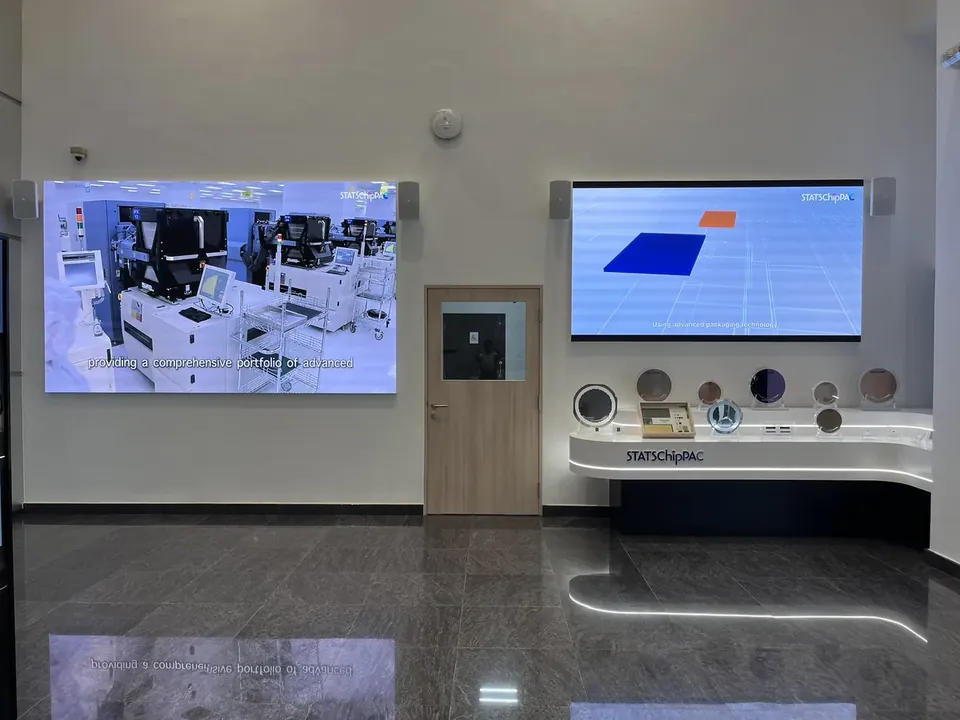
Corporate Lobby: an existing indoor LED installation. This image does not document an audio system or full AV integration.
Review the audience, content sources, display positions, audio use and control actions before selecting equipment. Separate retained devices from new supply and identify the interfaces that need checking.
Specify the agreed indoor display, commercial audio and connected AV components together. Confirm source outputs, signal paths, controls, power and network requirements instead of treating each device as an isolated purchase.
Plan mounting, cable routes, access windows and site readiness with the facilities, IT and fit-out teams. State which work ETA Visual will deliver and which preparation or approvals remain with other parties.
Agree checks for the specified sources, displays, audio and normal control actions. Include the operating guidance and handover responsibilities needed by the team that will use the system.
Straight answers from a Singapore-based specialist — so you can plan with confidence.
An AV system integrator in Singapore should understand how the space will be used before fixing the equipment list. Tell ETA Visual who will operate the system, what content or audio they will use, where the audience will sit or stand and which controls are needed in normal operation. That information helps define a coordinated commercial AV scope rather than separate purchases for display and audio.
This service is the entry point for a project that needs connected AV components planned and delivered together. If your requirement is a standalone indoor LED display, a focused commercial audio system or an operational control room, use the relevant specialist service for its detailed design questions.
For an audio visual installation, send a floor plan or site photos, approximate dimensions, display locations, audience distances, room finishes, operating hours and target project stage. Include existing equipment details and available power or network information. A site review can then focus on the unknown interfaces and physical constraints.
For an existing site, decide which devices should remain and which may need replacement. Compatibility should be checked against actual outputs, inputs and normal use; keeping a device should not be assumed merely because it still powers on.
When comparing an AV company in Singapore, give each supplier the same site and workflow brief. Ask the proposal to distinguish design, equipment supply, mounting and cabling, installation, configuration, commissioning and handover. A quote should make retained equipment, assumptions and exclusions visible so that different offers can be compared on the same basis.
ETA Visual's published services describe coordinated display and audio planning. The project proposal should still name the specific components and interfaces included; a combined AV brief does not automatically include every type of display, content platform or control system.
An AV installation in Singapore needs a clear interface with the surrounding site work. Review mounting conditions, cable routes, equipment access, power and network readiness before committing to installation. Agree who prepares the site and when each part of the work can take place.
The design should relate source equipment to its display and audio destinations, including the controls people will use. Identify outstanding compatibility checks early so the installation does not depend on unconfirmed client equipment or network arrangements.
Commissioning should check the agreed operating workflow, not only whether each device turns on. Set out which sources must reach which displays and audio destinations, the normal control actions, and any display calibration or audio configuration included in the proposal. The final checks follow the agreed system and site scope.
Confirm who will receive the handover and what they need for routine use. Operating guidance, signal-path information and any project-specific settings or documentation should be named in the handover scope. Ongoing inspection, repair or support is a separate agreement rather than an implied performance or response commitment.
A broader integration project may include a specialist display or audio scope, but those decisions should not be compressed into a generic AV specification. Use the existing services below to examine the relevant system detail, then bring the confirmed requirements into the integration proposal.
The image on this page comes from ETA Visual's Corporate Lobby project in Singapore. The published record describes a P2 indoor LED feature wall for a corporate office lobby reception area, with supply, installation and commissioning.
This is evidence of the indoor display portion of a commercial project. The record does not document an audio system or a complete integrated AV installation, so it is not presented as proof of the full service scope described above. The equipment, interfaces and handover responsibilities for your project must be stated separately in its proposal.
Use the existing corporate AV planning article for background information. This service page is the commercial entry point for defining a site-specific supply, installation and handover proposal.
Meeting-room AV planning should begin with how the room is used: seating and viewing positions, presentation or conferencing sources, audio requirements, existing equipment and the controls users need. Share which devices may be retained, and ask the proposal to identify the interfaces and compatibility checks that remain subject to site and workflow review.
For a connected meeting-room brief, display, commercial audio and source interfaces can be coordinated in one delivery scope while specialist decisions remain explicit. ETA Visual's published Meeting Room LED case documents a P1.2 COB indoor LED display with supply, installation and commissioning; it is a meeting-room display reference, not evidence of integrated conferencing or audio delivery.
Can't find your answer? Message us on WhatsApp for a quick, straight reply.
It brings the agreed displays, commercial audio, content or presentation sources and control connections into one planned operating workflow. ETA Visual's project scope can cover design, equipment supply, installation, configuration, commissioning and handover. The included devices, site works and responsibilities are confirmed through a site and workflow review and stated in the proposal.
Send the site address, plans or photos, approximate room and display dimensions, audience positions, intended use, operating hours, content sources, existing equipment and target timing. Include power, network, mounting and access information where available, and identify the team that will operate the system.
Existing equipment can be considered after its interfaces and intended use have been reviewed. Share equipment details, source outputs, display inputs, available controls and network constraints. The proposal should state what will be retained, supplied or replaced and which compatibility checks remain open; compatibility is not assumed for every device.
Compare the same workflow and site brief across design, supply, mounting and cabling, installation, configuration, commissioning and handover. Check source and control connections, retained equipment, site preparation by others, assumptions and exclusions. Equipment lists alone do not show whether the required operating workflow is included.
Use the commercial audio page for focused room audio, microphones, zoning and meeting-space requirements. Use the LED display page for an indoor display-led brief. Use the control-room page when operator workflows, multi-source visualisation or KVM access are central. This commercial AV integration page is for coordinating the confirmed specialist components and their delivery interfaces.
Agree the source-to-display and source-to-audio checks, normal control actions and any included display calibration or audio configuration before installation. Name the users receiving operating guidance and the documentation or settings included at handover. The checks and deliverables follow the agreed scope; ongoing support terms are confirmed separately.

Tell us about your space and we'll get back with a free, no-obligation site survey and recommendation.