Transparent LED Guide for Singapore Retail Storefronts
Written and reviewed by the ETA Visual Engineering & Project Team. Guidance is updated when project, product or Singapore site-planning practices change.
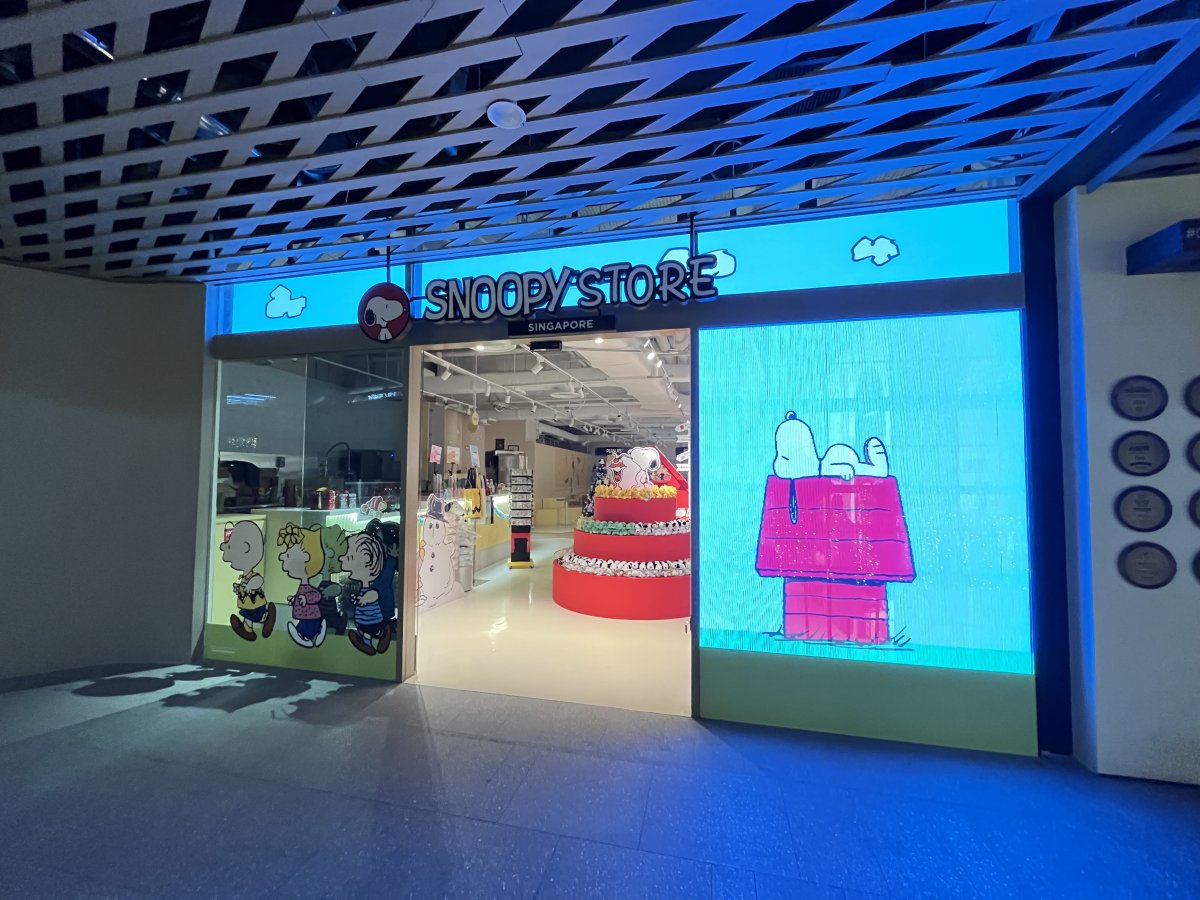
Can a digital screen actually make your shop look more open, or is it just an expensive way to block your customers' view? For many retailers in Orchard Road or Funan, the fear of losing that crucial visual connection to the store interior often outweighs the desire for high-impact advertising. It's a valid concern; a poorly chosen screen can turn a welcoming glass facade into a dark, uninviting wall. Choosing the right Transparent LED display for retail requires a precise balance between brightness, resolution, and light transmission. This guide will help you navigate those technical trade-offs to transform your storefront into a high-conversion digital asset. We'll show you how to maintain store transparency while delivering sharp visuals that stop foot traffic. You'll also learn the practicalities of the Singapore market, from meeting URA aesthetic guidelines to securing BCA structural permits. From pixel pitch selection to long-term maintenance in our humid climate, we provide the engineering clarity needed to ensure your investment remains both compliant and reliable for years to come.
Key Takeaways
- Learn how to maintain store visibility while using high-impact digital content to attract passersby without creating a visual barrier.
- Understand how to select the right Transparent LED display for retail by balancing pixel pitch with the required transparency ratio for your specific glass facade.
- Navigate Singapore-specific compliance requirements, from URA aesthetic guidelines and BCA structural permits to mall management brightness restrictions.
- Identify the critical role of professional site surveys in determining the best anchoring methods for glass-mounted or ceiling-hung installations.
- Ensure long-term ROI by prioritizing professional system integration and local maintenance contracts to combat humidity-related wear in our tropical climate.
Table of Contents
- The Strategic Value of Transparent LED in Modern Retail Design
- Technical Specifications: Balancing Pixel Pitch and Transparency Ratios
- Singapore-Specific Installation and Regulatory Considerations
- Creative Applications: Beyond the Storefront Window
- Ensuring Long-Term ROI Through Professional AV Integration
The Strategic Value of Transparent LED in Modern Retail Design
A Transparent LED display for retail serves as a high-brightness digital canvas that doesn't compromise the architectural integrity of a glass storefront. Unlike conventional LED cabinets which act as opaque walls, these systems use a modular, strip-based architecture to allow light transmission. This technology is becoming the standard for premium shopping belts in Singapore, where maintaining a visual connection between the pavement and the shop floor is critical for conversion. By using vertical or horizontal LED strips with specific gaps, the display achieves transparency levels often exceeding 70%, making the hardware nearly invisible from a distance while the content remains vibrant.
The "Open Storefront" philosophy is about removing barriers. If a customer can't see the interior layout, the brand loses the opportunity to showcase its atmosphere. High-end retailers in locations like Marina Bay Sands or Orchard Road rely on depth to invite shoppers in. While some luxury brands explore OLED technology for smaller, high-contrast transparent screens, larger storefronts typically utilize transparent LED modules for their superior brightness and scalability. These systems ensure that digital messaging doesn't come at the cost of the store's "open" feel.
Maintaining Brand Transparency and Interior Depth
Transparency is a design strategy. By preserving the flow of natural light, these displays prevent the store from feeling claustrophobic. Customers can view physical merchandise through a digital overlay, creating a "floating" content effect that elevates brand positioning. It's about augmenting the glass, not replacing it. This is why projects like the Watsons Transparent Shopfront focus on balancing content density with visibility. The depth created by this layered approach allows the store interior to become part of the advertisement itself, drawing the eye toward the products on the shelves.
The Shift from Static Signage to Dynamic Retail Canvases
Traditional static posters are becoming a liability in fast-moving markets. The logistics of printing, shipping, and manually installing vinyl for every Great Singapore Sale (GSS) or Lunar New Year campaign are inefficient and create unnecessary waste. A Transparent LED display for retail allows for instantaneous content updates via a central management system, ensuring your storefront is always synchronized with current promotions. This agility improves store visibility from a distance, especially in high-traffic malls where competing for attention is a constant challenge. It's a move from a fixed recurring expense to a versatile, long-term communication asset that reduces the friction of campaign execution.
Technical Specifications: Balancing Pixel Pitch and Transparency Ratios
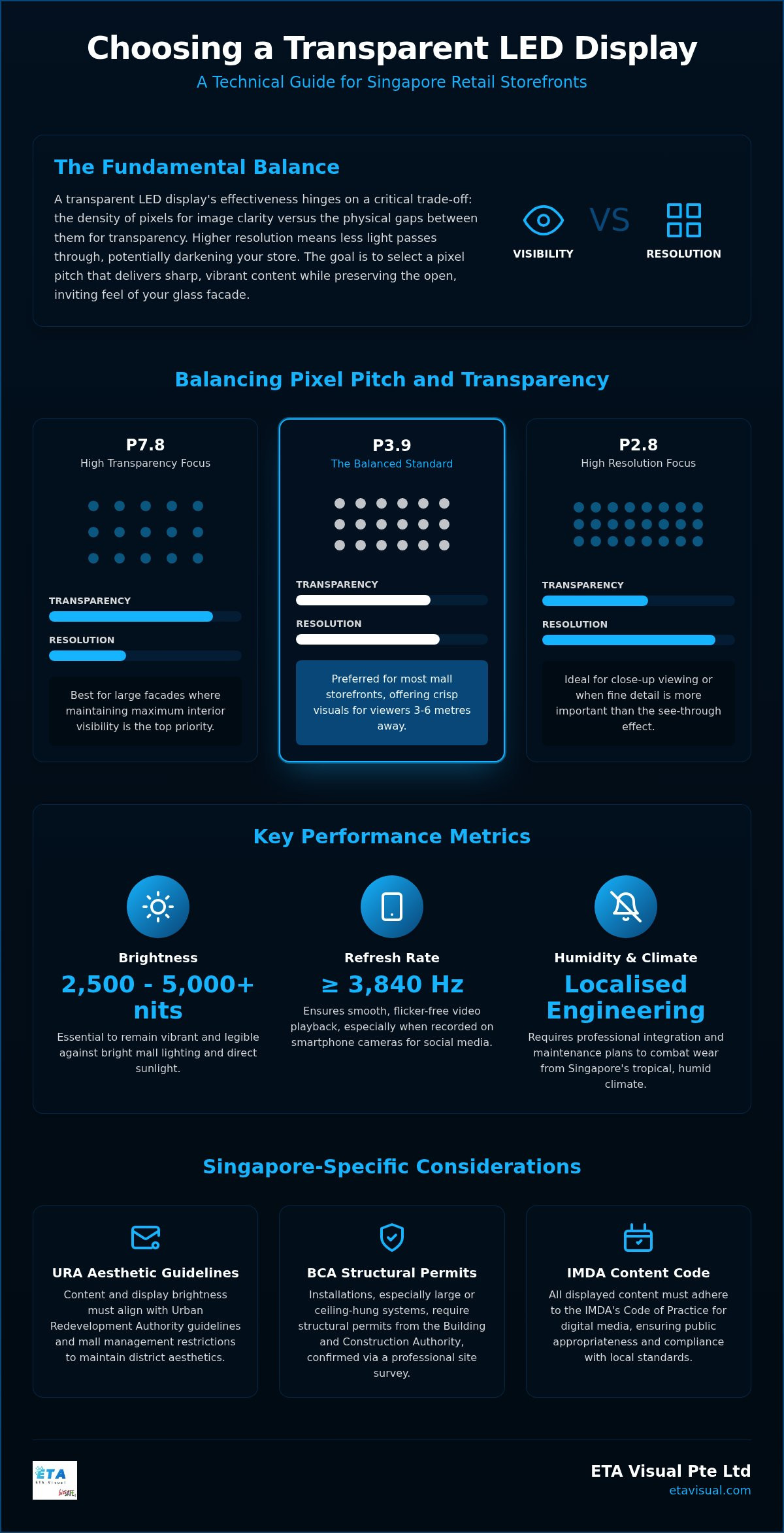
Engineering a Transparent LED display for retail involves a fundamental technical compromise. If you pack pixels closer together for higher resolution, you naturally reduce the physical gaps that allow light to pass through. For glass-facing installations in bright environments like Jewel Changi or ION Orchard, brightness levels must typically sit between 2,500 and 5,000 nits to remain legible against the afternoon sun. Beyond brightness, the refresh rate is a critical specification. Using a refresh rate of 3,840Hz or higher ensures that your visuals appear solid and flicker-free on smartphone cameras, which is essential for modern social media marketing. Content must also be managed responsibly, adhering to the IMDA Code of Practice for digital media to ensure compliance with local standards.
Choosing the Right Pixel Pitch for Your Storefront
Pixel pitch is the distance between the center of two adjacent LED pixels, which determines the width of the transparent gaps in the screen structure. For mall storefronts where customers view the screen from 3 to 6 meters away, P3.9 modules are generally the preferred standard. They provide a crisp image for brand logos and product videos without turning the glass into an opaque barrier. P7.8 modules are better suited for larger facades where high transparency is the priority over fine detail, whereas P2.8 offers superior clarity for close-up viewing but significantly reduces the "see-through" effect. Finding the right balance depends on your specific storefront layout and the typical distance of your foot traffic.
Transparency Ratios and Visual Impact
A transparency ratio of 75% to 80% is often the benchmark for a truly invisible hardware effect. When transparency drops below 60%, the screen becomes much more noticeable as a physical object, which can disrupt the flow of a premium store design. The structural frame also influences this; we prioritize slim, lightweight aluminum profiles that align with existing window mullions. Contrast is maintained through high-brightness LEDs that stand out against the store's interior lighting. Since there's no solid black mask, the display relies on the "void" of the store's depth to create visual punch. A well-engineered Transparent LED display for retail doesn't just show content; it integrates with the store architecture by using the interior as a natural backdrop.
Singapore-Specific Installation and Regulatory Considerations
Operating a Transparent LED display for retail in high-traffic areas like Orchard Road or Marina Bay requires adherence to both government regulations and mall-specific bylaws. Beyond the URA aesthetic guidelines, you must satisfy the property's Management Corporation Strata Title (MCST) requirements. These often include specific brightness caps for evening hours and strict operating schedules to ensure the display doesn't disturb the mall's overall lighting scheme. Logistical planning is equally vital. All equipment must be moved through designated loading bays, and installation is almost always restricted to graveyard shifts after the mall closes to the public to avoid disrupting shoppers.
Compliance with Local Building and Safety Standards
Working with building management on electrical load requirements is a non-negotiable step. A Transparent LED display for retail requires a stable power source, and we often coordinate with a Licensed Electrical Worker (LEW) to ensure the shop's electrical infrastructure can support the system without tripping breakers. Fire safety is another priority in commercial spaces. We ensure all AV components meet local fire rating standards and that the installation doesn't obstruct existing sprinkler heads or smoke detectors. Using certified, high-grade components is the only way to guarantee long-term safety and avoid costly compliance issues during annual building inspections.
Managing Heat and Humidity in Storefront Windows
While transparent screens are designed with gaps for light, they still generate heat, especially when mounted directly behind a sun-facing glass window. In Singapore's tropical climate, heat build-up can quickly degrade LED life if not managed through proper passive cooling or active ventilation. Humidity is the other silent enemy. High moisture levels can lead to oxidation on PCB boards and connectors. We recommend regular preventive maintenance to inspect for signs of moisture ingress and to clean dust from cooling vents. Proper cabling and power supply placement are also essential; placing these components in well-ventilated areas away from direct sunlight prevents the "oven effect" often seen in poorly designed storefront installations.
Creative Applications: Beyond the Storefront Window
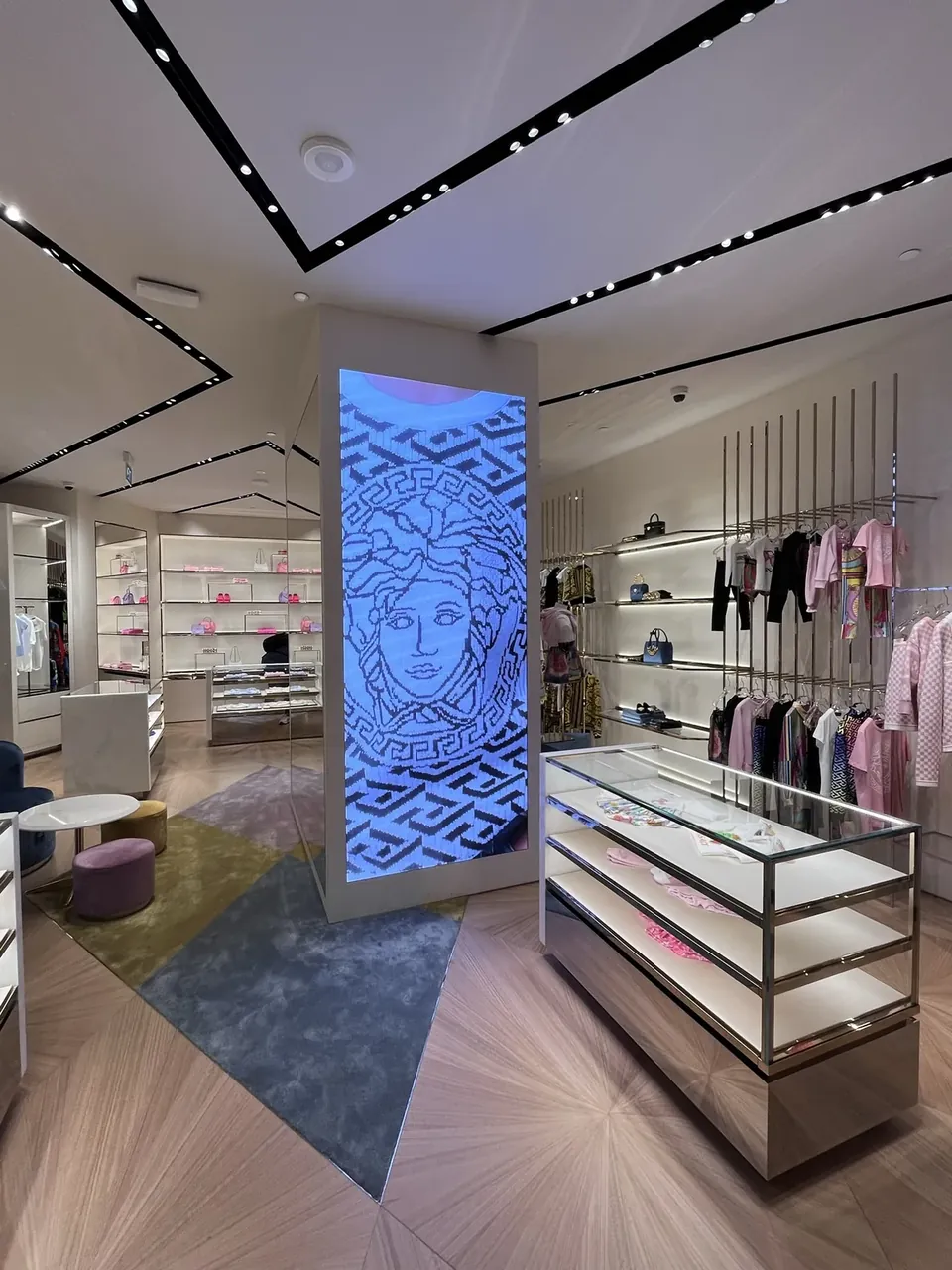
While the primary use of a Transparent LED display for retail is often the external window, its utility extends deep into the store's interior. Designers are moving away from traditional opaque walls to create a more fluid shopping environment. These displays can function as interactive partitions, defining specific zones like a luxury lounge or a "new arrivals" section without visually severing the space. This maintains the "open storefront" philosophy throughout the entire customer journey, ensuring that sightlines remain clear and the store feels spacious rather than cluttered.
Digital product showcases represent another sophisticated application. By placing a transparent screen in front of physical merchandise, retailers can overlay technical specifications, pricing, or lifestyle videos directly onto the product. This "phygital" approach is a significant benefit of a Transparent LED display for retail, as it bridges the gap between digital marketing and physical shelves. This was effectively demonstrated in the Watsons Transparent Shopfront integration, where the technology provided deep product information without requiring the customer to look away from the item they were considering.
Enhancing the In-Store Customer Journey
Using transparent screens as informational hubs allows for wayfinding that feels integrated into the architecture. Instead of bulky kiosks, floating digital arrows can guide shoppers toward fitting rooms or checkout counters. Retailers also use these arrays to create social-media-friendly backdrops. A vibrant, semi-transparent video wall provides a dynamic setting for customers to take photos, effectively turning your store into a content-generation hub. This encourages organic brand exposure while keeping the interior aesthetic light and modern.
Corporate and Hospitality Adaptations
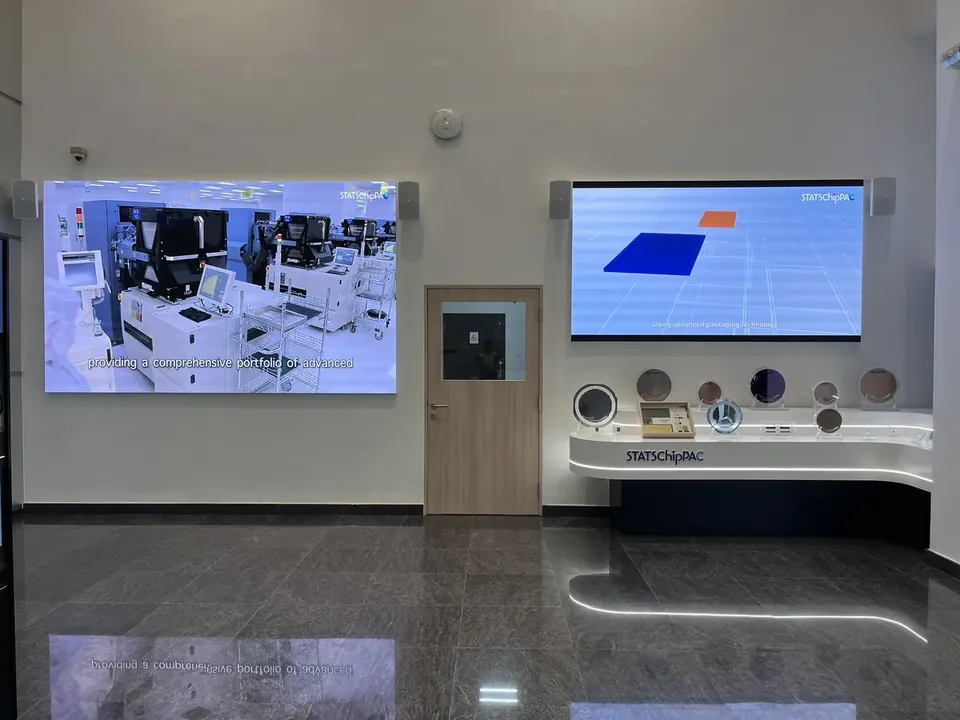
The versatility of Transparent Led Display Singapore technology has led to its adoption in hotel lobbies and corporate reception areas. In these environments, the screens often serve as high-impact branding tools that don't block natural light from large glass facades. You can find related use cases in Led Display Hospitality Singapore projects, where displays are used for immersive architectural features. These include ceiling-mounted arrays that simulate a digital sky or display abstract art, proving that transparency is a functional design choice for any commercial space prioritizing both impact and openness.
Ensuring Long-Term ROI Through Professional AV Integration
Buying a Transparent LED display for retail is only half the battle. A hardware reseller will often ship you panels and leave you to coordinate with third-party contractors who may not understand the specific engineering requirements of LED systems. As a specialized system integrator, we take full accountability for the project's success. This begins with a detailed site survey. We don't just measure the glass dimensions; we assess the structural load-bearing capacity of your window mullions and coordinate with mall engineers on dedicated power circuits. Without this rigorous assessment, you risk structural sagging or electrical instability that can lead to system downtime or even safety violations within the mall environment.
The Lifecycle of an AV Integration Project
A professional project follows a methodical progression from initial system design and procurement to specialized installation during mall-approved graveyard shifts. Once the screen is live, the focus shifts to long-term reliability and uptime. Firmware updates are essential to maintain compatibility with modern media players and to optimize the refresh rate for flicker-free visuals. We provide Av Maintenance Singapore contracts to protect your investment against premature pixel failure. In our tropical climate, humidity can lead to oxidation on internal connectors. Regular preventive maintenance ensures that these small issues are caught early, maintaining the clarity of your digital storefront.
Optimising Content for Transparent Screens
Content for a Transparent LED display for retail requires a specific design logic to be effective. To maximize the "see-through" effect, your creative team should use black space strategically. In transparent LED technology, black pixels are essentially "off," which allows the customer to see clearly into your store interior. High-contrast visuals with vibrant colours work best, as they appear to float in mid-air against the store's depth. Managing brightness levels is also a key factor in ROI. Running a screen at full brightness at night is unnecessary and can lead to complaints from mall management. We implement automated scheduling to dim the display after hours, which reduces power consumption and significantly extends the lifespan of the LED diodes.
Elevating Your Retail Presence with Precision Integration
Transforming a glass facade into a high-impact digital asset requires more than just hardware; it demands a deep understanding of transparency ratios and local compliance. Successfully implementing a Transparent LED display for retail hinges on balancing visual clarity with the "open storefront" philosophy that drives modern footfall. From securing mall management approvals to managing heat dissipation in our humid climate, every technical detail matters. We ensure that your screen doesn't just look good on day one but remains a reliable asset for years to come.
As a specialist AV system integrator with a proven track record among luxury retail brands, we provide the technical oversight needed to manage these complexities. Our local Singapore-based support team remains reachable and physically present to ensure your installation performs reliably. We take full ownership of the project lifecycle. This allows you to focus on your brand while we handle the engineering.
We look forward to helping you design a storefront that captures attention while preserving the inviting depth of your store interior.
Can I see through a transparent LED display from both sides?
Visibility is unidirectional for the digital content, but transparency is bidirectional for light. From the back, shoppers inside the store see the structure of the LED strips, which typically doesn't block the view of the street. From the front, the Transparent LED display for retail shows vibrant visuals while allowing the store interior to remain visible through the gaps. It's an effective way to maintain an open feel while advertising.
How much does a transparent LED display typically cost in Singapore?
Costs are project-dependent and influenced by pixel pitch, brightness, and total surface area. A finer pitch like P2.8 typically costs more than a wider P7.8 module due to higher LED density. In Singapore, your budget must also account for professional engineering (PE) fees, licensed electrical worker (LEW) endorsements, and mall-specific installation logistics. We provide comprehensive quotations following a site survey to ensure all structural and regulatory costs are accurately captured.
Is it difficult to install a transparent LED screen on an existing glass window?
Installation on existing glass is common but requires specialized anchoring. We don't stick the display directly to the glass. Instead, we use lightweight aluminum frames anchored to the window mullions or suspended from the ceiling. This approach ensures structural safety and prevents stress on the glass panels. A site survey is essential to determine if your existing window frames can support the additional weight of the LED modules.
What happens if a single LED pixel fails on a transparent display?
These systems are modular, so a single pixel failure doesn't require replacing the entire screen. We can typically replace individual LED strips or small sub-modules quite quickly. Having a preventive maintenance contract ensures our technical team can perform these repairs during mall off-hours. This maintains the visual integrity of your Transparent LED display for retail without disrupting your daily business operations or the customer's shopping experience.
Do transparent LED displays consume more power than regular LED screens?
No, they're generally more energy-efficient than traditional solid LED cabinets. Because a significant portion of the screen consists of transparent gaps, there are fewer LEDs to power. Since black content is rendered by turning the LEDs off, screens with high-transparency designs typically consume 30% to 50% less power than standard displays. This lower power draw also helps manage heat dissipation in sun-facing Singapore storefronts.
Are there specific content requirements for transparent screens?
Content should be designed with the transparency of the hardware in mind. Using pure black backgrounds is the most effective strategy; it makes those areas of the screen completely see-through. High-contrast elements and vibrant colours ensure your messaging "pops" against the background of your store's interior. We recommend avoiding full-white backgrounds. They block visibility and can be uncomfortably bright for shoppers walking near the glass.
How do I clean a transparent LED display without damaging the components?
Maintenance should be handled with care to avoid damaging the delicate LED beads. We recommend using a dry microfiber cloth or a soft-bristled brush to remove dust from the LED strips. You shouldn't ever use harsh chemicals or spray liquids directly onto the display components. For professional deep cleaning, our maintenance teams use specialized tools that ensure the longevity of the modules while keeping the glass facade looking pristine.
Do I need special permits for a storefront LED display in a Singapore mall?
Yes, most commercial installations in Singapore require multiple layers of approval. You typically need a BCA structural permit and a URA signage license depending on the size and location of the display. Additionally, mall management (MCST) will have their own rules regarding brightness levels, operating hours, and installation windows. We handle the technical documentation and coordinate with the relevant authorities to ensure your storefront remains fully compliant.
Visual planning reference
| Planning factor | What to define | Why it matters |
|---|---|---|
| Viewing positions | Nearest viewing distance and audience locations | Supports an appropriate pixel-pitch and screen-size decision. |
| Content workflow | Input sources, resolutions and control workflow | Helps ensure information remains readable and simple to operate. |
| Installation conditions | Structure, access, power, ventilation and maintenance access | Aligns the display scope with the physical site before procurement. |
Want an accurate budget for your space?
We'll do a free site survey and prepare a clear, itemised quotation — no obligation.
Frequently asked questions
Visibility is unidirectional for the digital content, but transparency is bidirectional for light. From the back, shoppers inside the store see the structure of the LED strips, which typically doesn't block the view of the street. From the front, the Transparent LED display for retail shows vibrant visuals while allowing the store interior to remain visible through the gaps. It's an effective way to maintain an open feel while advertising.
Costs are project-dependent and influenced by pixel pitch, brightness, and total surface area. A finer pitch like P2.8 typically costs more than a wider P7.8 module due to higher LED density. In Singapore, your budget must also account for professional engineering (PE) fees, licensed electrical worker (LEW) endorsements, and mall-specific installation logistics. We provide comprehensive quotations following a site survey to ensure all structural and regulatory costs are accurately captured.
Installation on existing glass is common but requires specialized anchoring. We don't stick the display directly to the glass. Instead, we use lightweight aluminum frames anchored to the window mullions or suspended from the ceiling. This approach ensures structural safety and prevents stress on the glass panels. A site survey is essential to determine if your existing window frames can support the additional weight of the LED modules.
These systems are modular, so a single pixel failure doesn't require replacing the entire screen. We can typically replace individual LED strips or small sub-modules quite quickly. Having a preventive maintenance contract ensures our technical team can perform these repairs during mall off-hours. This maintains the visual integrity of your Transparent LED display for retail without disrupting your daily business operations or the customer's shopping experience.
No, they're generally more energy-efficient than traditional solid LED cabinets. Because a significant portion of the screen consists of transparent gaps, there are fewer LEDs to power. Since black content is rendered by turning the LEDs off, screens with high-transparency designs typically consume 30% to 50% less power than standard displays. This lower power draw also helps manage heat dissipation in sun-facing Singapore storefronts.
Content should be designed with the transparency of the hardware in mind. Using pure black backgrounds is the most effective strategy; it makes those areas of the screen completely see-through. High-contrast elements and vibrant colours ensure your messaging "pops" against the background of your store's interior. We recommend avoiding full-white backgrounds. They block visibility and can be uncomfortably bright for shoppers walking near the glass.
Plan the next step
Continue with a relevant solution and real Singapore project evidence.