Large Format Display for Building Facades: Fit and Installation
Written and reviewed by the ETA Visual Engineering & Project Team. Guidance is updated when project, product or Singapore site-planning practices change.
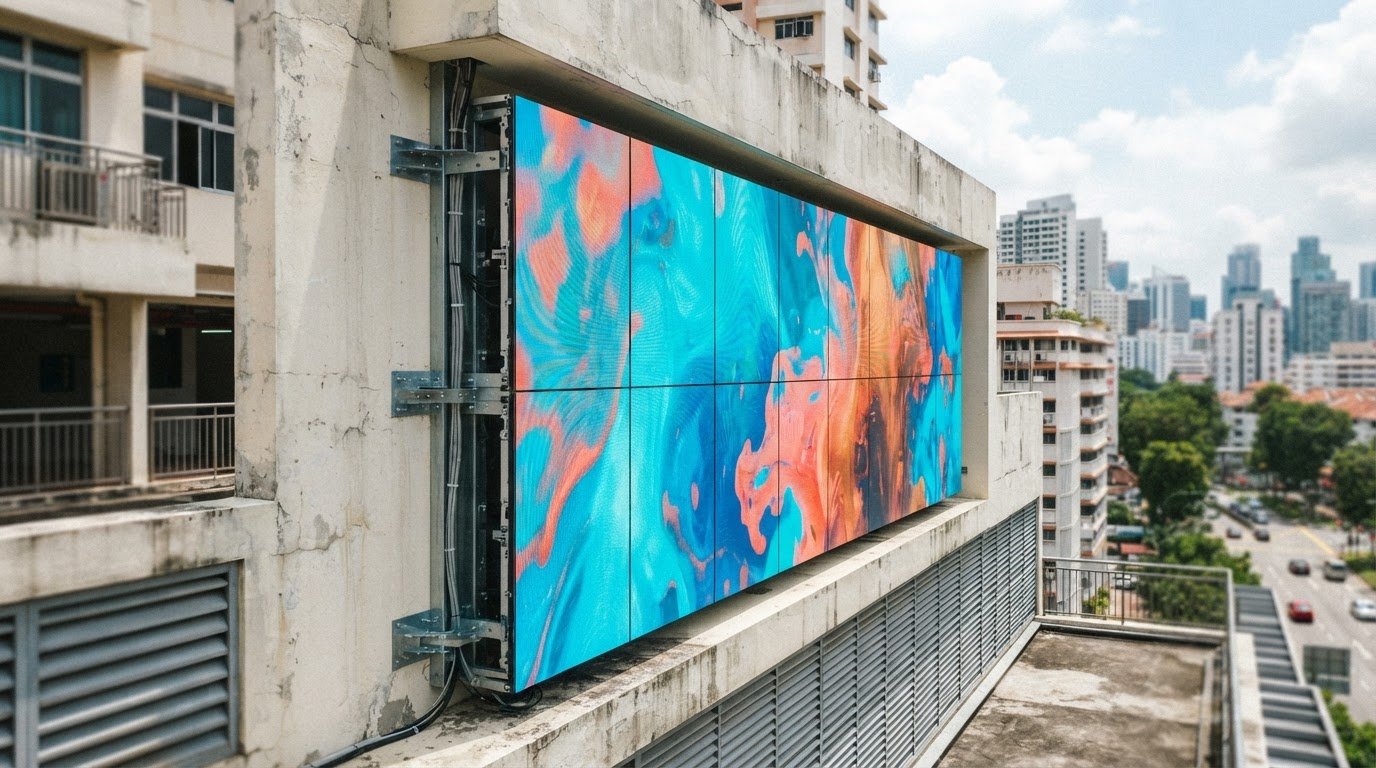
An existing facade can often support a large LED display, but choosing a screen involves more than its size. A large format display for a building facade must suit the building’s structure, available fixing points and viewing conditions. Glass, solid walls and open facades may each call for a different display approach. It’s natural to focus first on the screen’s visual impact. But reliable installation also depends on the supporting structure, power and signal routes, weather exposure and access for maintenance. In Singapore, the design should account for outdoor conditions and coordinate installation access with building management. This guide explains how to assess an existing facade and choose between conventional outdoor LED, transparent LED and other integration options. You’ll learn what structural support, brightness and pixel pitch involve, how installation and service access shape the design, and what to consider when connecting the display to power and content systems. The goal is to clarify the key decisions before installation.
Key Takeaways
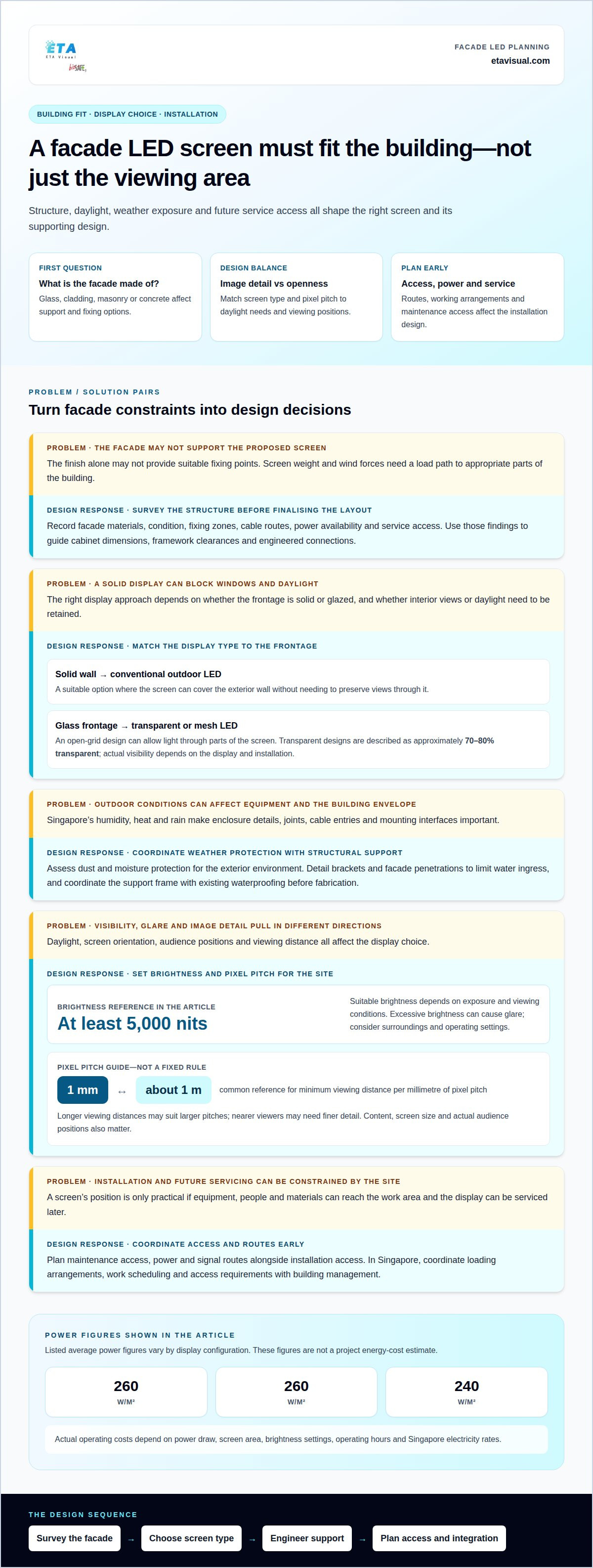
- An existing facade may be suitable for an LED screen, but its materials, structure and fixing points need to support the proposed design.
- Choose between solid, transparent or mesh display approaches based on the facade, daylight transmission needs and viewing conditions.
- Brightness, weather protection and pixel pitch should be matched to the screen’s location and viewing distance.
- Plan installation and maintenance access early, including building management coordination, loading arrangements and work scheduling in Singapore.
- Structural support, screen configuration, integration and service access all shape the project scope and budget.
Table of Contents
- Can a large LED display screen be fitted to an existing facade?
- What structural work does a facade LED screen need?
- Brightness, weather protection, and pixel pitch
- How are facade screens reached for service?
- Singapore-specific facade installation considerations
- Facade LED screen integration options
- Common mistakes and budget considerations
- ETA Visual: Transparent LED Displays
Can a large LED display screen be fitted to an existing facade?
Yes, an existing facade can support a screen if its structure and fixing points suit the proposed installation. A large format display for a building facade must also account for viewing conditions, daylight transmission, weather exposure and future service access.
Outdoor Display Types
Outdoor facade displays include conventional LED panels for solid walls and transparent or mesh screens for glass. This choice matters because a solid screen can block windows, while an open design can preserve some daylight and views. Listed average power figures for one display are 260, 260 or 240 W/m², depending on configuration. Operating costs depend on actual power draw, screen area, brightness settings, operating hours and Singapore electricity rates.
Transparency and Daylight Visibility
Transparent LED uses an open-grid design that lets light pass through parts of the screen. Screens described with this design are approximately 70-80% transparent, though visibility through the facade depends on the display and installation. A mesh display may suit a glass frontage where daylight or interior views matter. For a solid exterior wall, conventional outdoor LED may fit better. The design should balance openness with image detail and daylight visibility.
Weather Resistance and Durability
Outdoor LED displays are designed for exterior environments, with high brightness and protection against dust and moisture. That matters in Singapore, where humidity, heat and rain put facade equipment in demanding conditions. Enclosure, joints, cable entries and mounting details should suit the site. A survey assesses the facade’s materials, condition and fixing points to determine whether they can support the screen and framework. Those findings inform the display and mounting design.
What structural work does a facade LED screen need?
In Singapore, the design must account for the building structure, wind exposure, screen weight and facade waterproofing. The support required depends on the existing materials and fixing points, as well as the proposed screen layout.
Wind Loads and Support Structures
A support structure transfers the screen’s weight and wind forces to suitable parts of the building. Wind-load calculations should account for the screen’s dimensions, mounting position, exposure and framework design, rather than treating the display as a simple wall fixture. Larger projects commonly use engineered steelwork designed around the LED cabinet layout and available building connections. The structural review also considers how loads reach the building’s primary structure, not just the facade finish.
Surveys and Structural Preparation
A site survey records the facade area, building structure, cable routes, power availability and maintenance access. It also identifies materials such as glass, cladding, masonry or concrete, since each affects how a screen can be supported. The review should establish the condition of proposed fixing zones and whether they connect to load-bearing elements. These findings guide cabinet dimensions, framework clearances and any preparation needed before installation. A commercial site survey helps bring these checks into the project design.
Structural and Waterproofing Requirements
Structural requirements include verified support capacity, engineered connections and a wind-load assessment for the installation site. Waterproofing also needs careful attention: brackets, cable entries and other facade penetrations must be detailed to limit water ingress and protect the building envelope. For example, a screen mounted over cladding may need a separate support frame connected to the structure, with penetrations sealed as part of the facade detail. Coordinating these interfaces before fabrication helps prevent clashes between the display, steelwork and existing waterproofing.
Brightness, weather protection, and pixel pitch
Screen selection balances daytime visibility, viewing distance and the facade’s openness. For advertising, assess glare, light spill towards neighbouring properties and sightlines from roads or occupied spaces. Screen orientation and brightness settings can help manage these effects.
Brightness and Weather Protection
Brightness describes the light output needed to keep content visible against outdoor ambient light. A recommendation for facade LED screens is at least 5,000 nits, though the suitable level depends on exposure and viewing conditions. Excessive brightness can cause glare, so the design should account for surroundings and operating settings. Outdoor displays are designed for exterior environments, with protection against dust and moisture. In Singapore, enclosure design and installation details should suit rain, humidity and heat.
Viewing Distance and Pixel Pitch
Pixel pitch is the distance between LED pixels, and it affects image detail at a given viewing distance. A common selection reference is about 1 metre of minimum viewing distance per 1 millimetre of pixel pitch. Treat this as a guide, not a fixed rule: content, screen size and typical audience positions also matter. A pixel pitch guide explains how the spacing influences perceived image detail.
For example, a facade viewed mainly from across a road may not need the same pixel pitch as one seen up close from a plaza. Larger pitches can suit longer viewing distances, while finer pitches retain detail for nearer viewers. Transparent screens add another consideration: their open structure lets daylight through, but screen density and viewing conditions affect the balance between image detail and visibility through the facade. Choose brightness, pixel pitch and transparency together, then review the intended content from representative viewing positions.
How are facade screens reached for service?
Service access affects screen layout, installation and future repairs. Where a facade has no safe rear access, front-service modules can let technicians reach components from the display side.
The design and installation process typically covers a site survey, system and access planning, structural preparation, screen installation and commissioning. The schedule depends on the design, fabrication, building access arrangements and available installation windows. Planning these stages together helps coordinate technical work with site operations.
Front-service modules are LED components that can be removed from the front of the screen. This arrangement can suit a display mounted close to a wall, where a technician cannot reach the rear. The module design must match the screen system, and removal requires a clear working position in front. For example, a narrow walkway may limit the tools and space available for module replacement.
Access planning also covers the route to the screen, lifting arrangements and safe working positions. In Singapore, building management may coordinate loading bay use, permitted work hours and access equipment. The maintenance plan should identify how technicians reach power supplies, signal connections and other serviceable components, not only the LED face. A LED display maintenance plan helps organise routine inspection and servicing.
Screen lifespan depends on operating conditions, installation quality and maintenance. A high-quality outdoor LED screen can last 8-10 years with proper maintenance. Heat, moisture, dust and prolonged operation affect components, so inspections and prompt fault diagnosis matter. Preventive maintenance contracts can formalise scheduled checks and support ongoing service planning.
Singapore-specific facade installation considerations
Singapore’s tropical climate exposes facade displays to heat, humidity, heavy rain and changing outdoor conditions. During the site survey, note whether the screen is beneath a canopy or exposed to the weather, and record drainage paths around the mounting area. Cable entries, enclosure details and water run-off should be coordinated with the facade design, not left for last-minute adjustments. Nearby planting or ledges can also affect cleaning and service access.
Building management coordination shapes the installation plan. Confirm the loading bay, delivery route, lift capacity and temporary storage area with the site team. A facade screen may require lifting equipment or work at height, so plan access and the work zone around building operations. Agree on suitable working hours, security procedures and any noise or access restrictions before scheduling installation. At a mall, coordinate these arrangements with the facilities team and affected tenants.
Coordinate screen illumination with the building’s overall facade design. Consider how the display looks alongside existing signs, windows and architectural lighting, both while operating and when content is paused. This helps the screen feel integrated with the building rather than like an unrelated addition. Review the proposed appearance with the building team during design coordination.
Plan maintenance access alongside installation access. The design should account for how technicians will reach screen modules, power connections and signal components, and where equipment can be handled safely during service. In a building with limited rear access, servicing may need to take place from the front. Record access routes, building contact procedures and equipment isolation arrangements in the handover plan. These details help facilities teams organise future inspections while limiting disruption to tenants and other building users.
Facade LED screen integration options
The right integration approach depends on the facade material, desired visual effect and how much daylight needs to pass through. A digital display can be mounted over a solid wall, integrated with a glass frontage or designed as part of the building’s architecture.
An LED video wall uses cabinets or modules assembled into a continuous screen. It suits a solid facade where a defined display surface is needed, such as a hotel wall showing campaigns or a retail frontage carrying changing promotions. The modules must align to create a uniform surface, while the support framework and service access are designed around the building. This approach prioritises a clear, direct image rather than visibility through the screen.
A transparent or mesh installation is more suitable when a glass facade needs to retain daylight or views. For example, an office could use an open-grid screen across selected window bays, leaving other glazing unobstructed. The choice between a full transparent panel and a mesh-style arrangement depends on the facade pattern, visual content and desired openness. LED display technology covers how different display formats affect system design.
A media facade makes display technology part of the building’s exterior design, using visual content to complement its architectural lines. Projection mapping works differently: projectors cast images onto an existing surface, so the surface shape, projector position and ambient light affect the result. An LED screen forms its image on the display itself and requires mounting, power and signal integration.
For a glass frontage, prioritise transparency and daylight needs. For an opaque wall with long-distance advertising, consider a conventional outdoor LED screen. For architectural effects, coordinate the screen geometry with the facade design before settling on the display layout.
Common mistakes and budget considerations
A common mistake is choosing a screen before defining its purpose. A retail frontage for close pedestrian viewing may need different image detail from a hotel display viewed across a road. Starting with the audience, content and facade conditions helps match screen size, pixel pitch and display type to the site.
Another costly oversight is treating the LED panels as the whole project. The scope may also include structural steelwork, electrical supply, signal distribution, control equipment, content playback, installation access and commissioning. For example, a screen requiring a new support frame and lifting equipment has different project needs from one installed on an existing prepared structure.
- Allow for access: Include loading routes, lifting arrangements and building work-hour restrictions in the installation plan.
- Plan for service: A design without practical access to modules and components can make future maintenance more complex.
- Match the facade: A solid-wall display and a transparent screen across glass require different integration details.
- Consider operating needs: Screen area, brightness settings, operating hours and power requirements affect ongoing energy use.
For a useful budget, define the complete system rather than comparing screen hardware alone. The project scope should describe the display configuration, mounting framework, electrical and signal connections, installation method, commissioning and maintenance provision. This makes it easier to identify what drives the design and how building constraints affect the work. In Singapore, loading bay arrangements and installation windows can also shape project planning.
A site survey helps establish requirements before the design is finalised. It connects the facade’s structure and access conditions with the screen, control system and service plan. The resulting scope gives the project team a clearer basis for budgeting, scheduling and coordination.
ETA Visual: Transparent LED Displays
ETA Visual can help assess whether a transparent LED display, outdoor LED billboard or another screen format suits your facade. The right choice depends on the building surface, viewing conditions, daylight needs and access for maintenance.
A transparent LED display may suit glass facades where businesses want digital content while retaining some daylight and visibility through the screen. For a solid exterior wall, an outdoor LED billboard may be more appropriate. Indoor P0.9~P5 LED screens suit indoor viewing environments, while Flexible & Curved LED can support designs with curved surfaces. Each format has different integration requirements, so the facade and intended use should guide selection.
ETA Visual’s work can bring display selection together with site survey, system design, installation, commissioning and maintenance. A survey considers the available facade area, building structure, sunlight exposure, cable routes, power availability and servicing access. These details inform how the display, support framework and system connections fit the site. They also help establish whether the screen can preserve desired views or needs a more solid display surface.
For example, a retailer with a glazed frontage may prioritise transparency, while a hotel seeking a prominent exterior advertising surface may consider an outdoor LED billboard. Viewing distance, content and operating conditions also shape the design. Discussing these practical requirements early helps match the screen format to the building and its intended use.
Contact ETA Visual to discuss a facade display project.
Plan the next step for your facade
Before committing to a large format display for a building facade, define what the screen needs to achieve for the building and its audience. A clear brief connects the visual concept with structural review, installation planning and ongoing service needs from the outset.
ETA Visual offers Transparent LED Displays for projects where visibility through glazing matters, Outdoor LED Billboards for exterior display applications, and Indoor P0.9~P5 LED Screens for indoor environments. The right option depends on the facade, viewing conditions and intended use. Discussing these requirements early helps shape a practical system design and a coordinated installation plan.
A considered design gives your team a strong starting point for turning the facade into a useful, well-integrated display.
Does a façade screen need a municipal permit?
Permit requirements depend on the building, display location and proposed signage, so don’t assume a screen is exempt. In Singapore, establish applicable planning and signage requirements before finalising the design, and coordinate with the building owner or management team. The review may affect screen placement, illumination and installation arrangements. Address this early to avoid redesigning the display after its mounting and content approach have been developed.
LED screen facade: can you integrate an LED screen into facades or architectural elements?
Yes, an LED screen can be integrated into a facade or architectural feature if the building’s structure and design support it. For example, a display can sit within a defined wall section, follow a curved feature or cover selected glazing. Each approach affects the support framework, cable routing and appearance when the screen is off. Coordinate the display layout with the architect’s facade drawings and building services before fixing cabinet dimensions.
What should you consider before installing an Outdoor LED Display?
Assess the screen’s purpose, position and operating environment before selecting an outdoor display. Consider what viewers should see, likely viewing angles, direct sunlight, rain exposure, nearby windows and intended content. The design also needs to account for power and signal routes, structural support, access equipment and servicing. For a commercial building, include delivery routes and work-area coordination in the installation plan so site operations and display work can be scheduled together.
When is a giant display the right choice?
A giant display makes sense when the viewing area, audience and content call for a large visual surface. It may suit a broad building frontage used for campaigns or a venue where people view content from across an open space. Screen area alone does not ensure readability: content scale, viewing distance, brightness and surrounding architecture all matter. If most viewers pass close to one small section, a more targeted display may serve the site better.
Which types of LED Displays are used on building facades?
Facade projects commonly use conventional outdoor LED screens, transparent LED and mesh-style displays. Conventional screens create a more solid image surface, while transparent and mesh formats allow some light or visibility through their open structure. The right type depends on whether the facade is solid or glazed and whether maintaining views or daylight matters. For example, a glass frontage may call for a different approach from an opaque wall beside a hotel entrance.
What types of large-format displays are suitable for building facades?
Suitable formats include outdoor LED billboards for exterior advertising, transparent LED for selected glass facades and mesh displays where an open appearance is needed. A solid outdoor screen can suit an opaque wall, while a transparent format may better preserve the connection between the building’s interior and exterior. The choice also depends on the facade’s shape, the display’s role and the desired visual effect. Match the format to the building, not just the content concept.
What LED pixel pitch, brightness, and resolution are suitable for outdoor facade displays?
Pixel pitch should reflect viewing distance and content detail, while brightness needs to suit outdoor ambient light without causing unnecessary glare. A commonly used reference is about 1 metre of minimum viewing distance per 1 millimetre of pixel pitch, but it is not a fixed standard. For outdoor facade LED screens, a recommendation is at least 5,000 nits. Resolution follows the screen dimensions and pixel pitch, so decide these together.
What maintenance, lifespan, and warranty should buyers expect for facade LED displays?
Plan for routine inspection, cleaning suited to the display, and access to replaceable modules and components. A high-quality outdoor LED screen can last 8-10 years with proper maintenance, though actual service life depends on operating conditions and upkeep. Warranty coverage varies by product and contract. Review what components and labour it covers, its exclusions, and the process for reporting faults. Also clarify how maintenance access will work when the display is mounted high on a facade.
Visual planning reference
| Planning factor | What to define | Why it matters |
|---|---|---|
| Viewing positions | Nearest viewing distance and audience locations | Supports an appropriate pixel-pitch and screen-size decision. |
| Content workflow | Input sources, resolutions and control workflow | Helps ensure information remains readable and simple to operate. |
| Installation conditions | Structure, access, power, ventilation and maintenance access | Aligns the display scope with the physical site before procurement. |
Want an accurate budget for your space?
We'll do a free site survey and prepare a clear, itemised quotation — no obligation.
Frequently asked questions
Permit requirements depend on the building, display location and proposed signage, so don’t assume a screen is exempt. In Singapore, establish applicable planning and signage requirements before finalising the design, and coordinate with the building owner or management team. The review may affect screen placement, illumination and installation arrangements. Address this early to avoid redesigning the display after its mounting and content approach have been developed.
Yes, an LED screen can be integrated into a facade or architectural feature if the building’s structure and design support it. For example, a display can sit within a defined wall section, follow a curved feature or cover selected glazing. Each approach affects the support framework, cable routing and appearance when the screen is off. Coordinate the display layout with the architect’s facade drawings and building services before fixing cabinet dimensions.
Assess the screen’s purpose, position and operating environment before selecting an outdoor display. Consider what viewers should see, likely viewing angles, direct sunlight, rain exposure, nearby windows and intended content. The design also needs to account for power and signal routes, structural support, access equipment and servicing. For a commercial building, include delivery routes and work-area coordination in the installation plan so site operations and display work can be scheduled together.
A giant display makes sense when the viewing area, audience and content call for a large visual surface. It may suit a broad building frontage used for campaigns or a venue where people view content from across an open space. Screen area alone does not ensure readability: content scale, viewing distance, brightness and surrounding architecture all matter. If most viewers pass close to one small section, a more targeted display may serve the site better.
Facade projects commonly use conventional outdoor LED screens, transparent LED and mesh-style displays. Conventional screens create a more solid image surface, while transparent and mesh formats allow some light or visibility through their open structure. The right type depends on whether the facade is solid or glazed and whether maintaining views or daylight matters. For example, a glass frontage may call for a different approach from an opaque wall beside a hotel entrance.
Suitable formats include outdoor LED billboards for exterior advertising, transparent LED for selected glass facades and mesh displays where an open appearance is needed. A solid outdoor screen can suit an opaque wall, while a transparent format may better preserve the connection between the building’s interior and exterior. The choice also depends on the facade’s shape, the display’s role and the desired visual effect. Match the format to the building, not just the content concept.
Plan the next step
Continue with a relevant solution and real Singapore project evidence.