Pixel Pitch Explained: How to Choose the Right LED Display for Your Singapore Space
Written and reviewed by the ETA Visual Engineering & Project Team. Guidance is updated when project, product or Singapore site-planning practices change.
Walk into any LED display showroom or browse a supplier's catalogue and you'll immediately encounter a string of numbers: P1.2, P1.86, P2.5, P3.91. These are pixel pitch values — and they are the single most important specification you need to understand before committing to an LED display for your Singapore space. Get the pitch right and your screen looks stunning at the price point it deserves. Get it wrong and you either overspend on resolution nobody can see, or end up with a pixelated display that undermines your brand. This guide explains what pixel pitch means, how it affects image quality and cost, and exactly how to choose the right value for retail shopfronts, corporate lobbies, hospitality venues and more.
What pixel pitch actually means
Pixel pitch is the distance in millimetres between the centre of one LED cluster (pixel) and the centre of the next. A P2.5 screen has pixels spaced 2.5 mm apart; a P1.2 screen packs them 1.2 mm apart. The smaller the number, the more pixels per square metre, and the sharper the image at close range.
This matters because LED displays are not like LCD monitors where you sit 60 cm away. A retail shopfront screen might be viewed from 1.5 m; a lobby feature wall from 4–6 m; a conference room display from 3–8 m. Each of those scenarios calls for a different pitch, and choosing the wrong one is the most common — and most expensive — mistake buyers make.
The viewing distance rule of thumb
A widely used starting point is the 'minimum viewing distance' formula: multiply the pixel pitch by roughly 1,000 to get the closest comfortable viewing distance in millimetres. So a P2.5 screen looks sharp from about 2.5 m away; a P1.86 screen from about 1.86 m; a P3.91 screen from about 3.9 m.
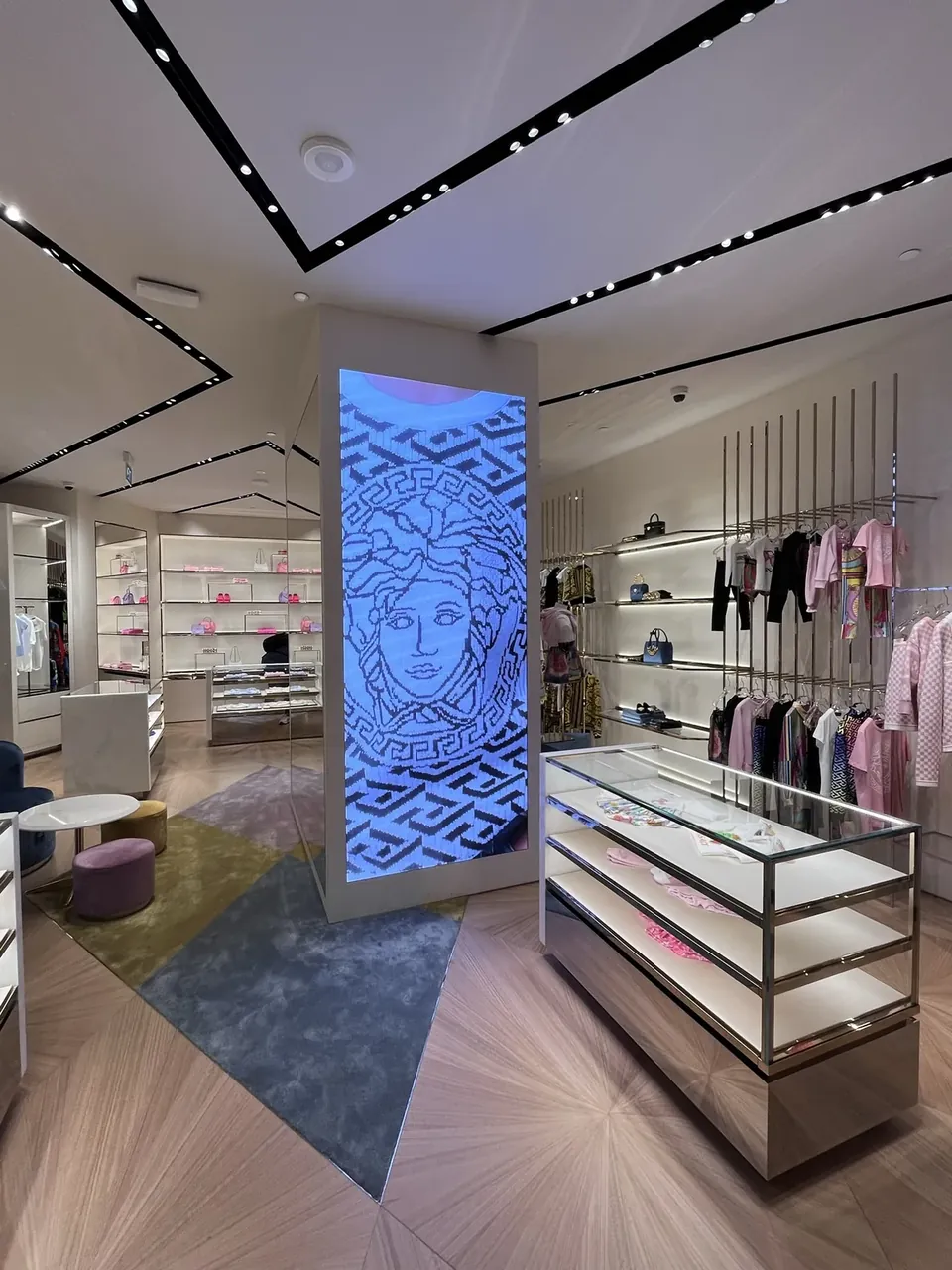
In practice, Singapore retail environments often push viewers closer than the formula suggests — a shopper pausing at a shopfront glass may be just 1–1.5 m from the screen. That's why fine-pitch panels (P1.2–P2.5) dominate luxury retail, while P3.91 and coarser pitches suit larger lobbies, event stages and spaces where the closest viewer is always several metres back.
At ETA Visual we always conduct a site survey before recommending a pitch. We measure the actual closest viewing point — not the theoretical average — because that single measurement drives the specification more than anything else.
Common pixel pitch values and where they work best in Singapore
P0.9–P1.5 (ultra-fine pitch): Reserved for applications where viewers stand within one metre — broadcast studios, high-end boardrooms, luxury brand flagship displays and control rooms. Image quality is exceptional; cost per square metre is at the top of the range.
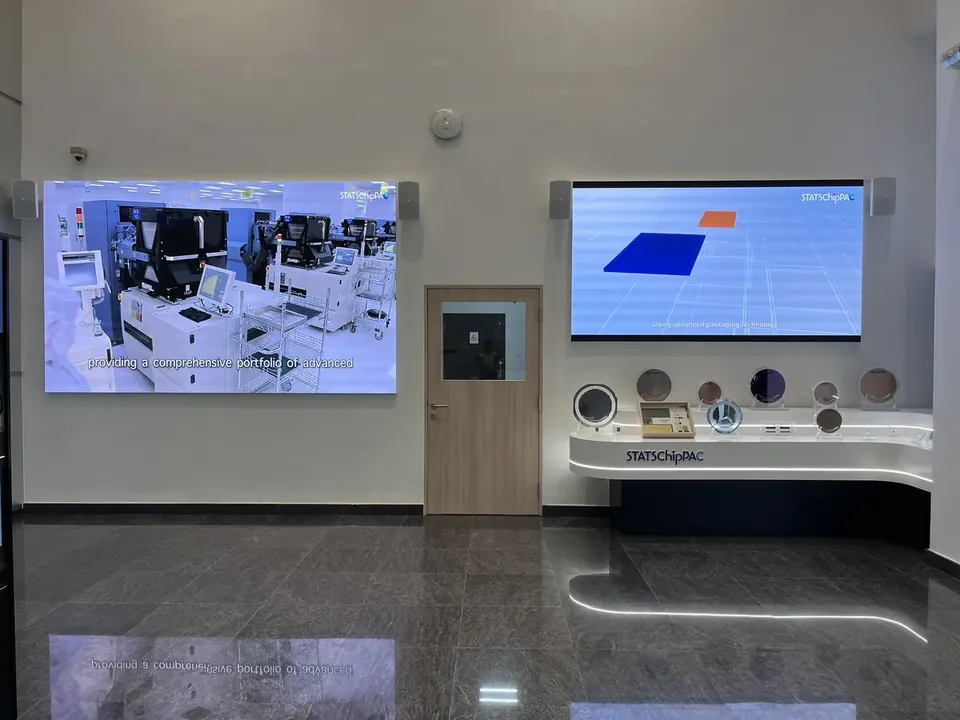
P1.86–P2.5 (fine pitch): The most popular range for Singapore retail and corporate. It covers shopfront displays, hotel lobby feature walls, restaurant brand walls and conference room video walls where viewers are typically 1.5–4 m away.
P3.91 (mid-range): A versatile pitch for larger formats where the closest viewer is 4 m or more away. It is widely used for retail shopfronts with deep setbacks, event LED walls, exhibition booths and corporate atriums.
P4 and coarser: Best suited to large indoor spaces with long viewing distances — sports venues, large auditoriums, transportation hubs and warehouse-scale retail.
Why finer pitch costs more — and when it's worth it
Each step finer in pitch roughly doubles the number of LED chips per square metre. More chips mean higher panel manufacturing cost, more complex PCB design, and more demanding quality control. A P1.2 screen can cost three to four times as much per square metre as a P3.91 screen of identical brand and build quality.
That premium is absolutely worth paying when your viewing distance demands it. A luxury jewellery brand whose customers press close to a shopfront glass needs P1.86 or finer — a P3.91 screen would look visibly pixelated and damage the brand. Conversely, a P1.2 screen installed in a hotel lobby where nobody stands closer than 5 m is money spent on resolution that no human eye can perceive.
Flexible and transparent LED: pitch still applies
Flexible LED panels (used for curved installations like the Tiger Den at T4, the HOKA store in Raffles City and the Ant Group expo booth) and transparent LED (used for glass shopfronts like the Snoopy display at Resorts World Sentosa and Watsons in Bugis Junction) follow exactly the same pixel pitch logic. The form factor changes; the viewing distance calculation does not.
For transparent LED, pitch is especially important because the screen must balance visibility of the content with transparency of the glass behind it. A coarser pitch means more open space between pixels — higher transparency but lower resolution.
How to specify the right pitch for your project
Start with the closest viewing distance in your space — not the average, not the maximum, but the closest point where a viewer will regularly stand. Apply the pitch formula as a starting point, then adjust for content type (video vs static graphics), ambient light conditions, and brand positioning.
Then get a site survey. Viewing distance measurements on paper are useful; measurements taken in your actual space with your actual lighting conditions are definitive. ETA Visual's site surveys are free and result in a clear, itemised specification — so you know exactly what you're buying and why.
| Pixel Pitch | Min. Viewing Distance | Typical Applications | Relative Cost/m² |
|---|---|---|---|
| P0.9–P1.5 | ~1 m or less | Boardrooms, broadcast, luxury flagship retail | Highest |
| P1.86–P2.5 | 1.5–3 m | Retail shopfronts, hotel lobbies, restaurant walls, conference rooms | High |
| P3.91 | 3.5–5 m | Large retail, event walls, exhibition booths, corporate atriums | Mid |
| P4–P6 | 4–6 m | Large indoor venues, transportation hubs, auditoriums | Lower |
| P6+ | 6 m+ | Outdoor-scale indoor displays, warehouses, stadiums | Lowest |
Want an accurate budget for your space?
We'll do a free site survey and prepare a clear, itemised quotation — no obligation.
Frequently asked questions
Most Singapore retail shopfronts work best with P1.86 or P2.5, since shoppers typically view the screen from 1.5–3 m away. For very close-viewing luxury showcases, P1.2–P1.5 may be appropriate. A site survey will give you a definitive answer based on your actual viewing geometry.
In most cases, yes. If the closest regular viewing point is 2.5 m or more, P2.5 delivers sharp, professional imagery. For lobbies where visitors approach within 1.5 m, P1.86 is a safer choice. For large atriums where nobody stands closer than 4 m, P3.91 is equally sharp and more economical.
P1.86 packs roughly 80% more pixels per square metre than P2.5, making it noticeably sharper at close range (under 2 m). The difference is clearly visible when viewing text or fine graphic detail up close. At 3 m or more, most viewers cannot distinguish the two.
Yes — if your viewing distance allows it. Choosing P3.91 over P2.5 for a space where nobody stands closer than 4 m is smart budgeting, not a compromise. The image looks identical from that distance.
Yes, exactly the same logic applies. For flexible curved installations, match pitch to the closest viewing distance as you would for a flat screen. For transparent LED, also consider the transparency trade-off — finer pitch reduces the see-through effect.
Plan the next step
Use these project examples to match pixel pitch to viewing distance and content detail.
ETA Visual designs, supplies and installs indoor LED video walls (P0.9–P5), transparent LED and flexible curved displays for retail and commercial spaces across Singapore.
ETA Visual designs, supplies and installs seamless indoor LED video walls for corporate lobbies, meeting rooms and control rooms across Singapore.