5 Ways Digital Displays Support Brand Identity and Visibility
Written and reviewed by the ETA Visual Engineering & Project Team. Guidance is updated when project, product or Singapore site-planning practices change.
What does a screen say about your brand before a customer reads a word? Enhancing brand image with digital displays starts with presenting your visual identity consistently, then using relevant, well-designed content to keep it visible and recognisable. In Singapore’s retail, office and hospitality settings, a screen can also share timely messages with the people already in that space. Brand visibility matters because customers need to notice and recognise a business before they can form an impression. Visibility alone, however, is not enough: brand identity is what a company chooses to communicate, while brand image is the perception people form through their experiences. Digital displays can help connect the two, but cluttered content or inconsistent visuals can weaken that impression. This article outlines practical ways digital displays can support visibility, awareness, trust, loyalty and a stronger corporate image. It covers how consistent visual design, purposeful content, audience-relevant messaging and thoughtful screen placement work together, and why the display system and its content need to support the same goals.
Key Takeaways
- Keep colours, logos and visual style consistent across screens so customers can recognise your brand across different spaces.
- Use concise, legible content that suits the screen’s location and the audience’s needs.
- Refresh promotional messages as priorities change, and use audience responses to guide future content.
- Understand the difference between the identity a business presents and the image customers form through their experiences.
- Choose a display format that fits the space and supports the visual impression you want to create.
Table of Contents
- 1. Brand identity and marketing strategies
- 2. Brand awareness, trust, and customer loyalty
- 3. Digital communications’ roles in brand-building
- 4. What is brand visibility and why does it matter?
- 5. Corporate image, corporate identity and visual identity
- ETA Visual: Transparent LED Displays
1\. Brand identity and marketing strategies
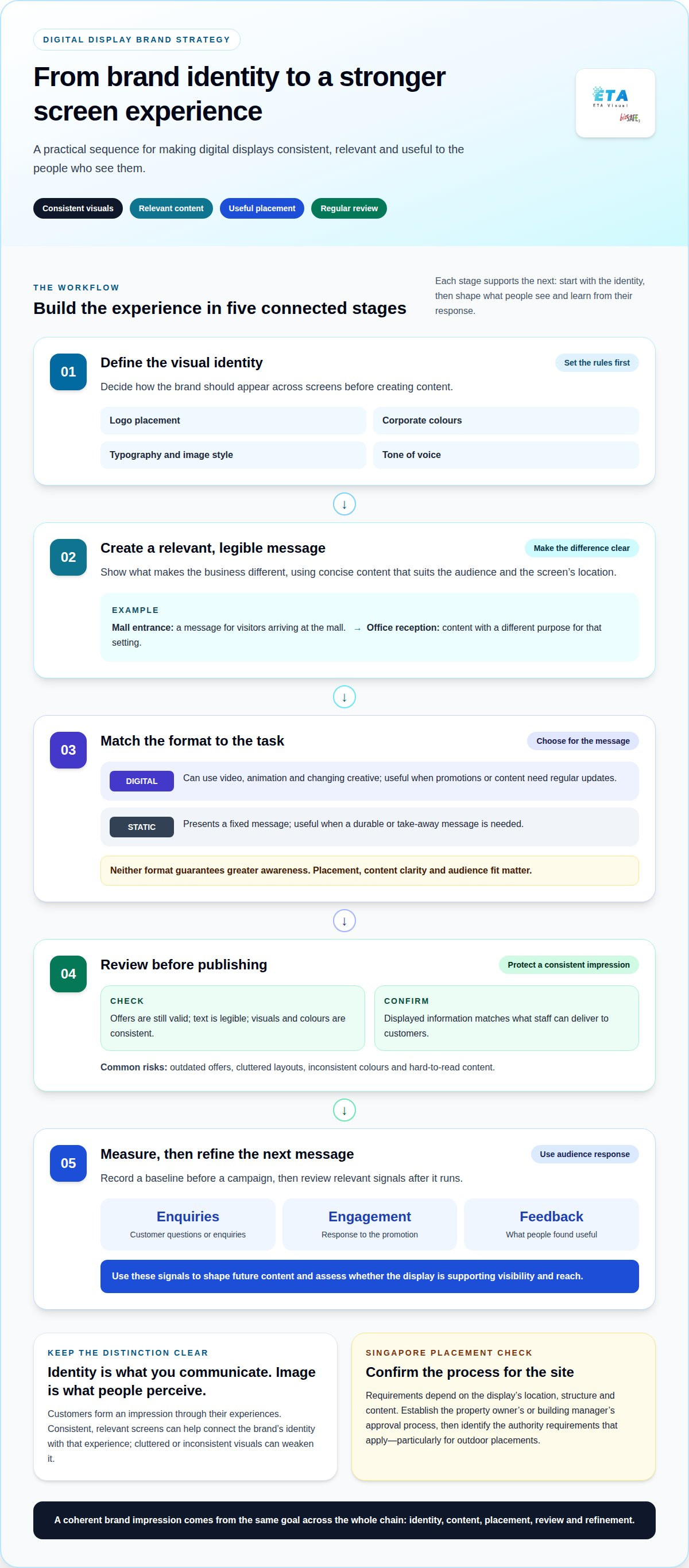
Start with a defined identity, then make every screen express it consistently. Set the visual rules first: logo placement, corporate colours, typography, image style and tone of voice. For example, a hotel using calm photography and restrained colours can carry that look from its lobby screen to promotional content. These strategies help customers recognise the business and distinguish it from competitors, contributing to a positive, coherent brand image.
Show what makes the business different rather than displaying a logo without context. A retailer could feature a seasonal product, a service benefit and a clear next step, all within its established visual style. Content should suit the screen’s location and audience: a mall entrance message has a different purpose from an office reception display. This focus supports positioning and keeps the brand relevant to the people who encounter it.
Digital displays and static signage support brand awareness in different ways. Static signage presents a fixed message, while digital displays can use video, animation and changing creative to attract attention or update a promotion. Neither format guarantees greater awareness; results depend on placement, content clarity and how well the message suits its audience.
Replacing some printed marketing materials with digital content can reduce paper use and make updates simpler. A café, for example, can change a menu promotion on screen instead of reprinting a board whenever an offer changes. Use print when a durable, take-away message is useful, and digital screens when content needs regular revision. Match the medium to the communication task.
Digital marketing also shapes brand image beyond the screen. A display can direct customers towards a website or campaign, but the visual identity and message should remain consistent across those touchpoints. For motion-led promotion, content timing should suit the display system; the guide to LED refresh-rate engineering for Singapore displays explains how refresh performance relates to what viewers see.
In Singapore, requirements for digital signage and outdoor advertising depend on the display’s location, structure and content. Establish the property owner’s or building manager’s approval process, then identify the authority requirements that apply to the installation, particularly for outdoor placements.
Common risks include outdated offers, cluttered layouts, inconsistent colours and hard-to-read content. Set a review step before publishing, check that promotions remain valid, and use legible text with relevant imagery. An expired offer displayed at a retail entrance, for example, can undermine trust instead of creating a positive impression.
Measure whether the strategy is reaching its intended audience. Record a baseline before a campaign, then review relevant indicators such as customer enquiries, promotion engagement or feedback after it runs. These signals help refine the next visual message and show whether digital displays are supporting visibility and reach.
2\. Brand awareness, trust, and customer loyalty
Recognition grows when people encounter the same brand cues at useful moments. A visitor who sees a hotel’s logo, colours and welcome message at reception can connect that arrival with the hotel’s booking communications. A display supports awareness by making the brand visible during a real customer journey, not simply repeating its name. Familiarity can aid recognition, while trust depends on whether the experience matches the promise.
Trust grows through relevant, accurate communication. A shopping mall can use screens to show current wayfinding information, opening details or event updates. Leaving an expired promotion on screen can create confusion and weaken customers’ perception of the business. A content owner should review live messages, remove expired claims and ensure displayed information matches what staff can deliver.
Dynamic content can give different moments a clear purpose. A café might feature breakfast choices earlier in the day and a later dining promotion afterwards. A hotel could use its lobby display for conference event details, then return to general guest information. This makes communication more useful to each audience. Schedule changes around genuine customer needs, rather than changing content simply to create movement.
Engagement can also come from giving customers a useful action. A retail display could direct shoppers to product details, while an interactive screen could let visitors explore options at their own pace. Good interaction has a clear starting point, readable instructions and a helpful outcome. If the screen is difficult to use or offers no value, it can interrupt the customer experience instead of improving it. Interactive display design in Singapore considers how these experiences fit their application.
Customer loyalty needs more than a memorable visual. A screen can reinforce an emotional connection with a specific story, such as how a hotel supports an event or how a retailer helps customers choose a product. The message should feel relevant to the relationship, not like a generic slogan. Review customer questions, feedback and campaign responses, then shape the next message around what people found useful.
To build lasting recognition, connect brand communication to service delivery. For example, a clinic that displays clear appointment guidance should provide the same clarity when visitors arrive. In Singapore’s busy retail and hospitality environments, useful content can reduce uncertainty during brief visits. That practical consistency helps awareness become a positive experience, giving customers a reason to remember the brand and return.
3\. Digital communications’ roles in brand-building
Digital displays can enhance brand image by making visual messages visible in customer spaces and giving audiences relevant information. Motion, timely updates or interaction can support engagement, while consistent communication reinforces what a business wants people to remember.
Keep brand communication consistent across screens, websites, social media and printed materials. A retailer, for example, can use the same logo, colour palette and campaign language in its shop window and social posts. Set shared visual and writing guidelines, then apply them across channels. Adapt the layout to each format while keeping the brand recognisable.
Tailor advertising to the screen’s location and viewing context. A hotel lobby display can prioritise event directions, while a shopping centre screen can promote a store opening or current activity. Content can also change by time of day as audience needs shift. Keep each message focused, relevant and easy to understand at a glance.
Internal communication helps employees deliver the experience promised by external messages. A company can use office screens to share a service update, campaign launch or event briefing with staff. When teams understand the message and its purpose, they can explain it consistently to customers. This connection between internal information and customer-facing communication supports a trusted brand experience.
External communication works best when it invites a useful response instead of simply broadcasting claims. A hotel might use a screen to explain an upcoming event and direct visitors to a clear information point. A retailer could highlight a product feature and show where shoppers can find it. Make the next step obvious and ensure staff can support it.
Community engagement gives brand communication a local focus. A business supporting a neighbourhood event can use its displays to share event information, celebrate participants or explain its involvement. For example, a mall could feature a community programme alongside practical visitor information. This makes the message more specific than a generic brand slogan and connects advertising with an activity people can recognise.
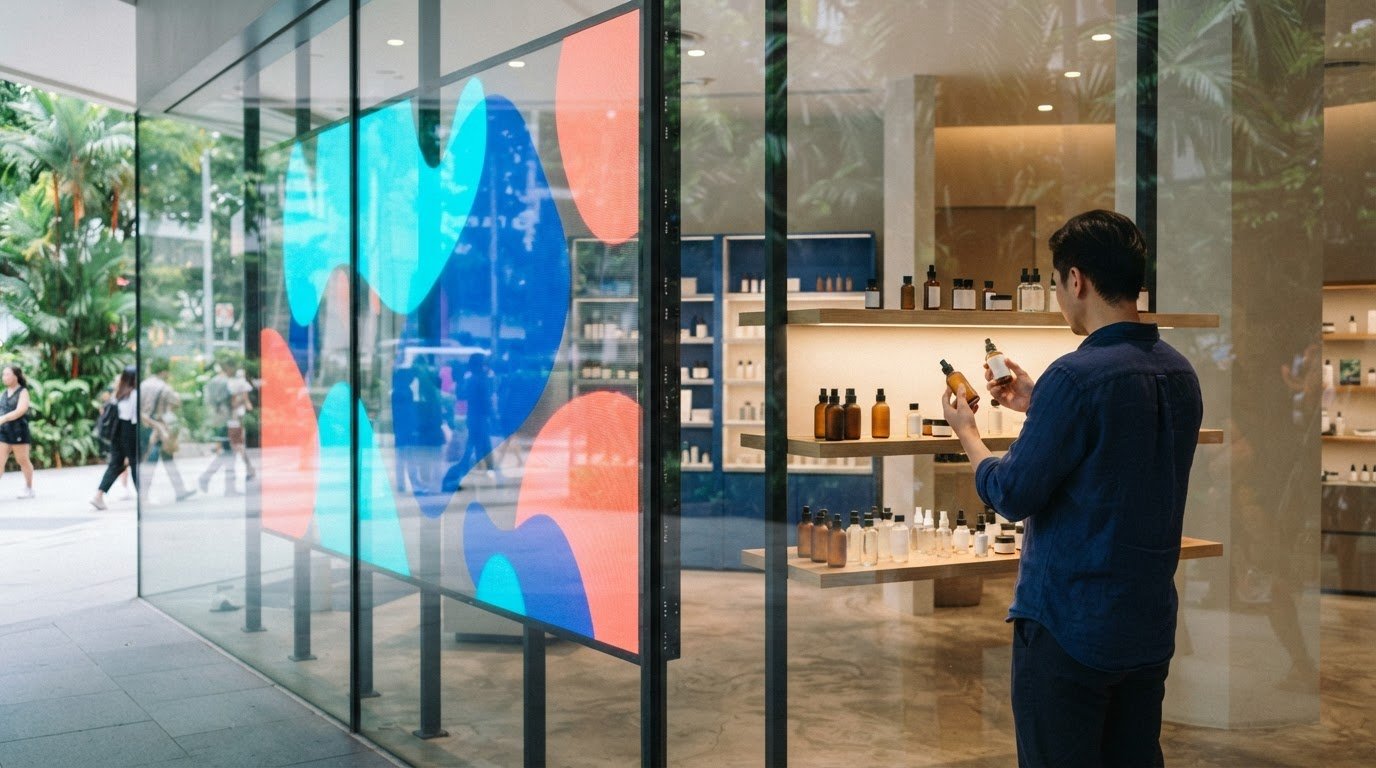
Screen format also shapes how communication fits a physical space. In a retail frontage, transparent LED displays can present visual content while retaining visibility through the display. Their role depends on the design and placement; the transparent LED display applications guide covers these considerations.
Finally, review engagement signals before adjusting a campaign. Compare customer questions, event participation or responses to a promoted action with the communication’s intended purpose. If visitors repeatedly ask for directions despite seeing a wayfinding message, revise its wording or placement. This practical feedback loop helps keep each channel clear, relevant and aligned with the brand.
4\. What is brand visibility and why does it matter?
Brand visibility is how readily people notice and recognise a business where they make decisions. A customer might encounter a store display, a directory listing and a social media promotion during a visit to a shopping mall. Consistent visual cues connect those encounters, making the brand easier to identify and its message easier to remember.
Consistency starts with practical brand guidelines. Set rules for logo use, corporate colours, typography, image treatment and tone of voice. For example, a café can use the same colour palette and product photography across its menu screens, website and printed takeaway materials. Layouts may differ between channels, but the visual identity should remain recognisable.
Align the message with each channel’s role. A website can explain services in detail, while a screen near a shop entrance can highlight a current promotion. Social media can invite comments or shares. These formats need not repeat identical content; each should communicate the same brand promise in a way that suits its audience and how people use the channel.
Apply the same discipline across multiple screens. A retailer with displays at its entrance and checkout can use a shared template, then tailor each message to its location. The entrance might feature a campaign visual, while the checkout screen provides product or service information. Keep logos, colours and wording aligned across both screens.
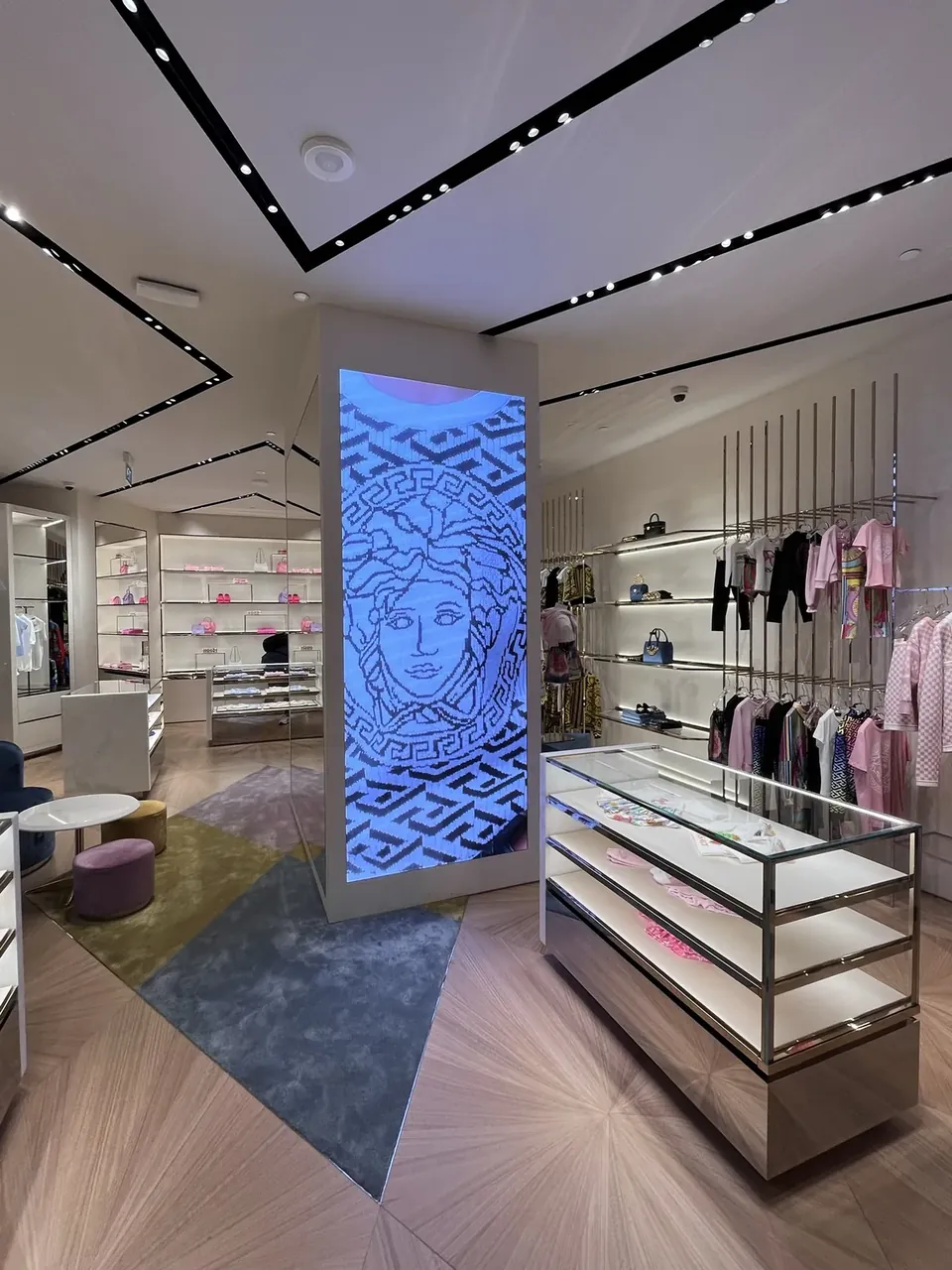
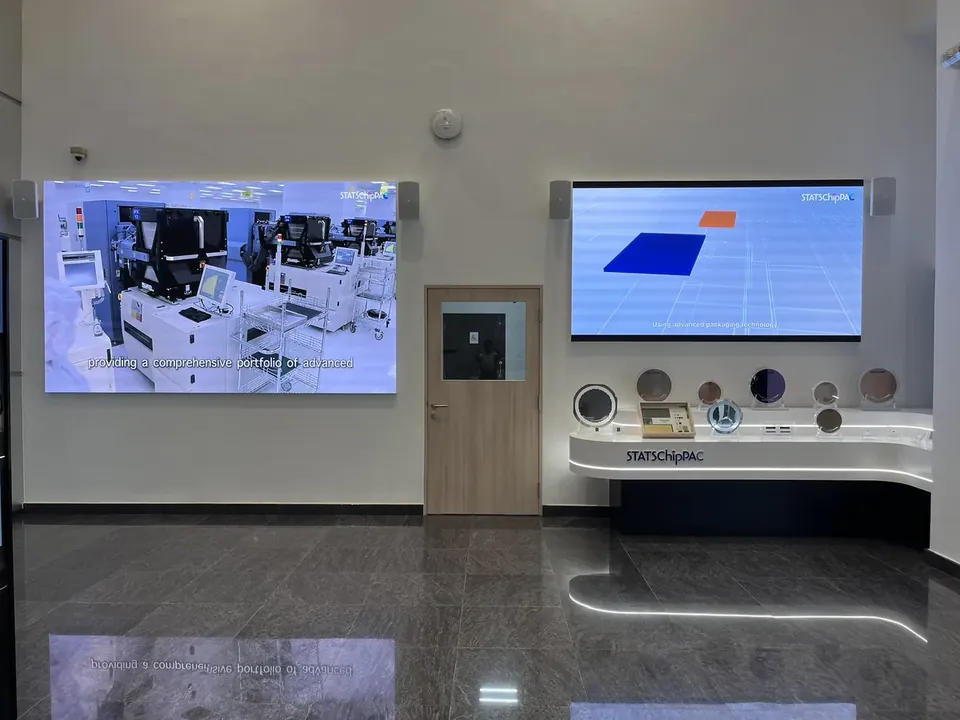
For retail branding, indoor LED screens can support prominent visuals in shopfronts, feature areas or mall interiors. Corporate spaces may use indoor screens for reception messages, workplace communication or presentations. Transparent LED Displays are another format to consider, with the choice guided by the content and site requirements. A guide to indoor LED displays for business spaces explores how the application shapes display planning.
Choose a screen type by matching its role to the space. Consider viewing position, ambient light, the visual detail in the content and whether people pass quickly or stop. A mall entrance campaign needs a clear message at a glance; a corporate lobby may allow more time for a considered brand story. These choices affect how effectively a display attracts attention.
For a global brand operating in Singapore, preserve its core identity while adapting relevant details. Keep approved logos and brand colours consistent, but make local promotions, language choices and imagery meaningful to the intended audience. A campaign for a Singapore store, for instance, should reflect its actual products and customer context rather than rely on generic global creative.
Review how each channel performs against its purpose. If a screen aims to promote an event, track enquiries or attendance; if it supports wayfinding, note recurring visitor questions. Use these observations to adjust placement, content and timing. This makes brand visibility a practical communication objective, not simply a count of installed screens.
5\. Corporate image, corporate identity and visual identity
These terms describe different parts of how a business presents itself and is understood. Corporate identity is what an organisation wants to convey, such as its purpose, values and service standards. Visual identity is the graphic expression of that identity, including its logo, colours, typography and imagery. Corporate image is the perception consumers form through their contact with the business.
The distinction matters because a screen can display identity, but it cannot shape image on its own. A hotel may communicate attentive service through polished visuals and clear welcome messages. If guests then encounter confusing directions or inconsistent service, their experience can conflict with the corporate message. Digital content and on-site delivery should support the same intended impression.
Translate corporate identity into a visual system before producing screen content. Define approved logo versions, colour use, type styles, image treatment and tone. Then create templates for different display formats. For example, a corporate lobby screen can use the same visual language as presentation slides, with content adjusted for the greater viewing distance.
A useful test is whether the screen communicates the intended brand character without relying on its logo alone. A financial services firm might use clear layouts, restrained imagery and concise language to signal precision. A family attraction could use lively photography and welcoming messages. In either case, the visual choices should reflect the organisation’s actual identity, not a generic style.
Digital displays can also help bring a corporate identity to life through specific stories. Coca-Cola’s Share a Coke campaign used bottles with individual names to create a personalised experience. A business can apply the underlying principle by making communication feel relevant to its audience, while keeping its core identity recognisable across campaigns.
To assess whether the desired corporate image is taking shape, compare the intended identity with customer feedback. A hotel could review visitor comments about arrival information and assess whether its lobby content supports a welcoming impression. Brand awareness and recognition are useful signals, but they do not replace feedback about actual interactions and service experiences.
For a practical review, document the impression the organisation intends to create, audit current display content and compare each message with its visual guidelines. Remove imagery that distracts, correct inconsistent logos and ensure text is legible in its setting. Then review customer responses and refine the content. This helps visual identity contribute to the corporate image consumers experience.
Choose images and videos that support the message rather than distract from it. Digital signage visuals should be relevant and easy to follow. A brand’s visual identity is the graphic expression of its corporate identity, extending beyond the company name to other visual elements. Colours, a logo and design contribute to visual identity, while brand image reflects the reputation shaped by consumer experiences and stories.
Corporate image describes how people perceive a brand, while corporate identity is what a company wants to convey about itself. Brand image is public perception shaped by people’s interactions with the business. A thoughtfully designed website can also contribute to a positive brand impression.
ETA Visual: Transparent LED Displays
ETA Visual designs and integrates Transparent LED Displays for commercial spaces. The project design considers the intended content, location and installation requirements, helping ensure the display system suits its role and setting.
Other options include Indoor P0.9~P5 LED Screens, Outdoor LED Billboards and Flexible & Curved LED. ETA Visual supports project delivery through system design, installation, commissioning and maintenance, coordinating the display with the requirements of the space.
Contact ETA Visual to discuss how a display could fit your project.
Turn brand intent into a display plan
Make the next step a clear project brief. Define the audience, the impression you want to create and the action viewers should take. Then connect those goals to the space, content and display format. A plan for enhancing brand image with digital displays works best when visual identity, viewing environment and day-to-day content needs are considered together.
For a Singapore retail frontage, that brief might centre on visibility through glass; a corporate lobby may need a more considered brand presentation. Indoor P0.9~P5 LED Screens, Outdoor LED Billboards and Transparent LED Displays each serve different settings. The right choice starts with the intended use and site requirements, not a screen selected in isolation.
ETA Visual can shape the system around those requirements, from design through integration and commissioning. A clear brief gives the project practical direction and keeps the brand’s intent connected to the finished display.
With a clear purpose and a suitable display plan, you can make your next brand experience more deliberate from the start.
What is brand visibility and why does it matter?
Brand visibility matters because customers cannot consider a business they do not notice or recall. To assess it, ask a small sample of visitors which brands come to mind in a category before showing them any names. Repeat the question after a campaign period and compare the responses. Pair this with enquiries that mention the display or promotion to see whether awareness is translating into action.
Why is a positive brand image important?
A positive brand image can make customers more willing to consider a business when they have several options. It can also help employees and business partners understand what the organisation stands for. For example, a reputation for dependable service gives staff a practical standard to uphold in customer interactions. Review feedback alongside service issues to see whether the intended impression matches people’s actual experiences.
What content and design principles make digital signage strengthen brand identity?
Give each screen a clear content hierarchy: one main message, supporting information and a visible next step. Use suitable image resolution and check that text remains legible at the actual viewing distance. Before publishing, preview the final asset on the intended screen and confirm that names, dates and promotional details are correct. A documented approval process also helps teams manage content changes without introducing inconsistent versions.
Visual planning reference
| Planning factor | What to define | Why it matters |
|---|---|---|
| Viewing positions | Nearest viewing distance and audience locations | Supports an appropriate pixel-pitch and screen-size decision. |
| Content workflow | Input sources, resolutions and control workflow | Helps ensure information remains readable and simple to operate. |
| Installation conditions | Structure, access, power, ventilation and maintenance access | Aligns the display scope with the physical site before procurement. |
Want an accurate budget for your space?
We'll do a free site survey and prepare a clear, itemised quotation — no obligation.
Frequently asked questions
Brand visibility matters because customers cannot consider a business they do not notice or recall. To assess it, ask a small sample of visitors which brands come to mind in a category before showing them any names. Repeat the question after a campaign period and compare the responses. Pair this with enquiries that mention the display or promotion to see whether awareness is translating into action.
A positive brand image can make customers more willing to consider a business when they have several options. It can also help employees and business partners understand what the organisation stands for. For example, a reputation for dependable service gives staff a practical standard to uphold in customer interactions. Review feedback alongside service issues to see whether the intended impression matches people’s actual experiences.
Give each screen a clear content hierarchy: one main message, supporting information and a visible next step. Use suitable image resolution and check that text remains legible at the actual viewing distance. Before publishing, preview the final asset on the intended screen and confirm that names, dates and promotional details are correct. A documented approval process also helps teams manage content changes without introducing inconsistent versions.
Confirm the viewing distance, display size, content type, installation conditions and signal-source requirements before selecting a system.
Pixel pitch should be selected against the closest intended viewing distance, the information density of the content and the available budget.
A practical brief includes wall dimensions, viewing positions, ambient-light conditions, content workflow, electrical provisions and access constraints.
Plan the next step
Continue with a relevant solution and real Singapore project evidence.