Singapore AV System Integrators: Commercial Guide
Written and reviewed by the ETA Visual Engineering & Project Team. Guidance is updated when project, product or Singapore site-planning practices change.
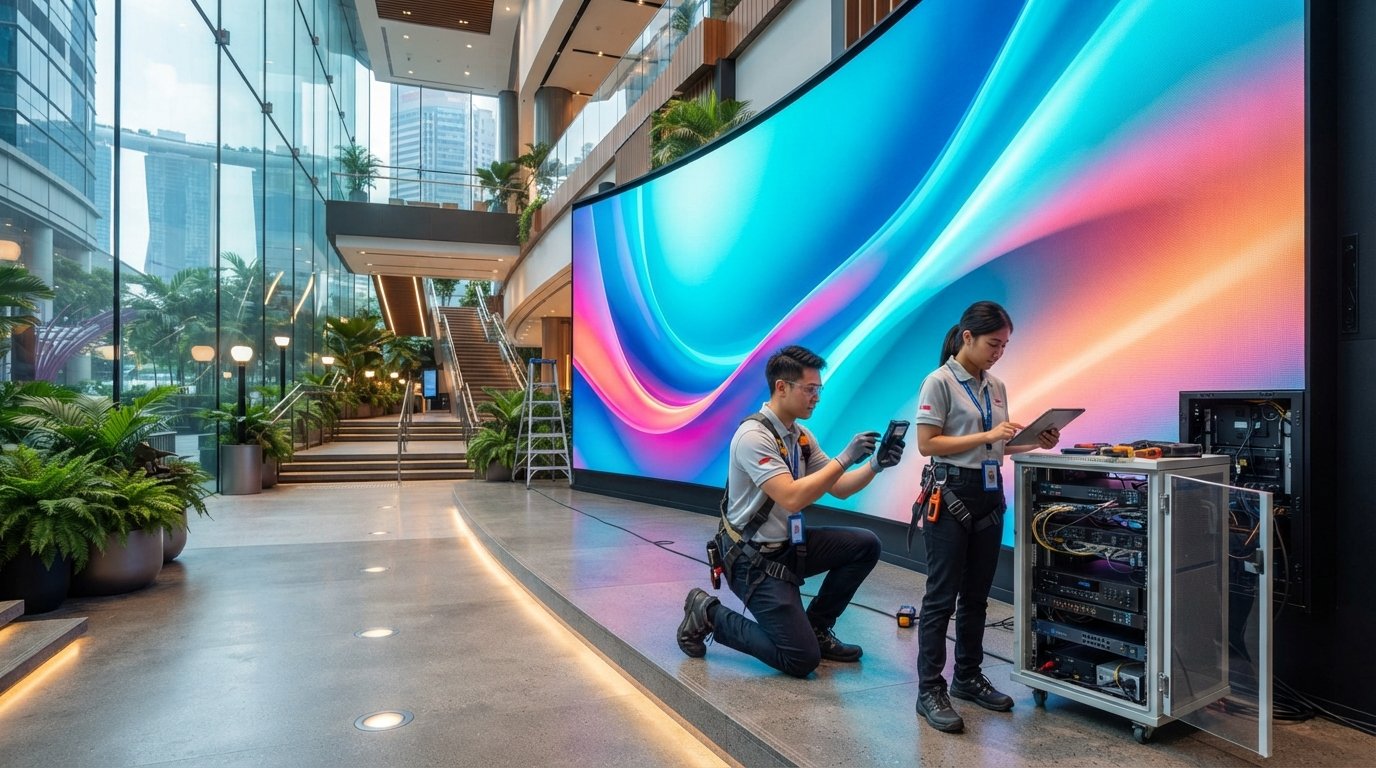
The most expensive display on the market won't survive long if it isn't engineered for Singapore's tropical environment and rigorous building codes. Too many project leads and facilities managers learn the hard way that box resellers simply drop off hardware and vanish, leaving clients stranded with premature circuit failures and zero technical support. Working with experienced AV system integrators changes that equation entirely, bridging the gap between specialised hardware, local site realities, and long-term reliability. If you've ever dealt with restrictive mall fit-out hours, loading bay clearance headaches, or the stress of unexplained screen blackouts, you already know the stakes. This commercial guide shows you how to evaluate and partner with the right AV specialist to deliver dependable, turnkey LED video walls and commercial audio systems that perform 24/7. We examine key technical requirements, local BCA and fire safety standards, and the operational criteria essential for protecting your investment.
Key Takeaways
- Understand the vital distinction between box resellers and professional AV system integrators who take full lifecycle ownership from site survey to long-term servicing.
- Discover how to conduct structured site surveys and signal architecture design to prevent costly structural, electrical, and thermal oversights.
- Learn the essential evaluation criteria for vetting integration partners, focusing on specialized LED experience and a verified local track record.
- Navigate complex local building logistics, including shopping mall fit-out restrictions, loading bay limits, and tropical humidity management.
- Protect your commercial investment through proactive preventive maintenance contracts and responsive on-site repair protocols.
Table of Contents
- The Strategic Value of AV System Integrators in Singapore
- The Integrated Lifecycle: From System Design to Commissioning
- Key Criteria for Evaluating Professional AV Integrators
- Navigating Singapore-Specific Installation and Environmental Challenges
- Ensuring Long-Term ROI with Post-Installation Support
The Strategic Value of AV System Integrators in Singapore
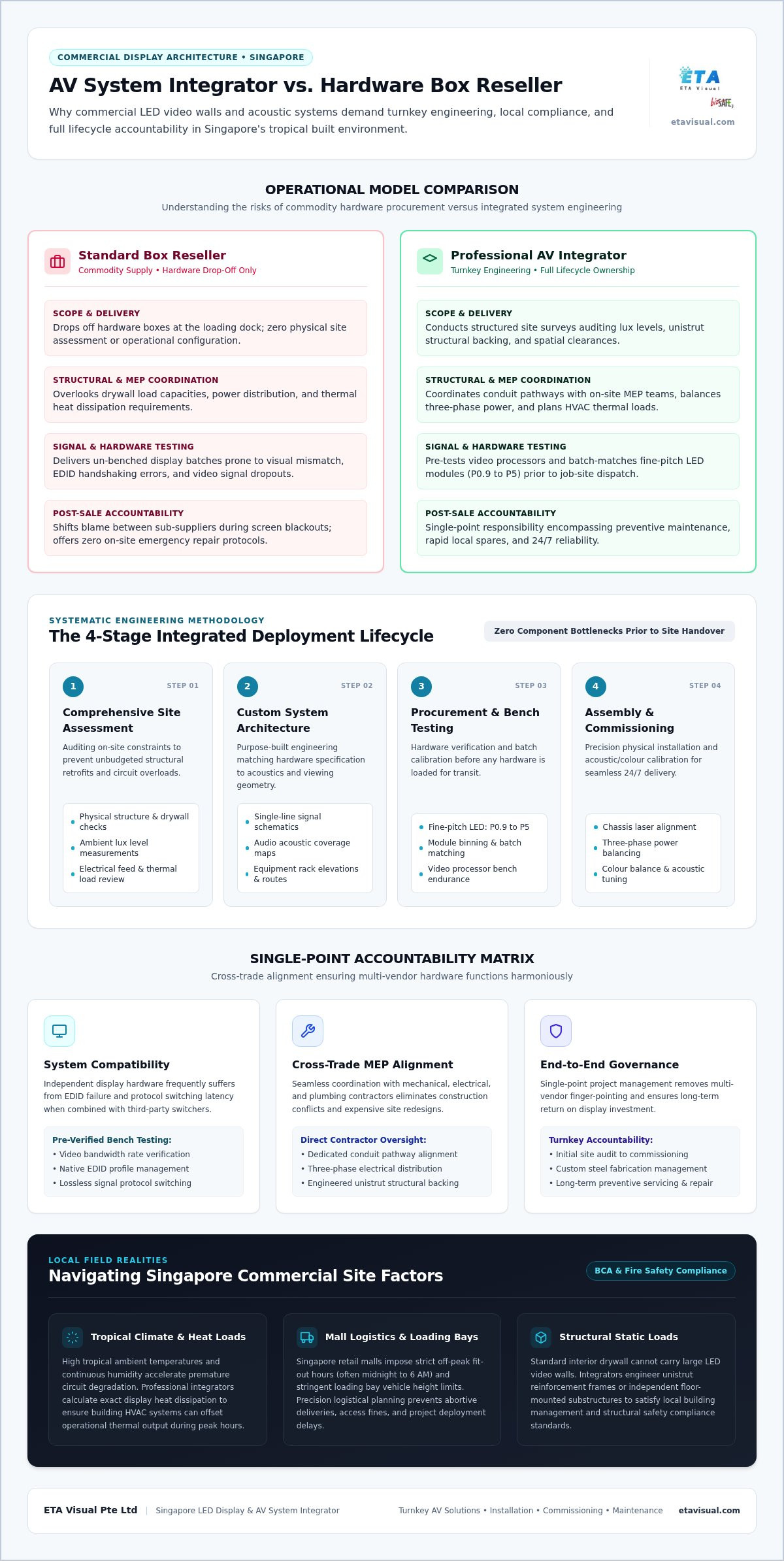
Commercial visual systems are often treated as simple commodity purchases. A business selects a display from a catalogue, arranges delivery, and expects it to perform without issue. In reality, commercial AV hardware cannot function effectively in isolation. Professional AV system integrators serve as the vital bridge between equipment manufacturers and practical business outcomes. By designing purpose-built architectures rather than simply supplying hardware, integrators ensure that every component, from video processing to structural bracing, operates reliably within its intended space.
In Singapore, this technical oversight is crucial. Local commercial properties operate under strict compliance codes and spatial constraints. General contractors or standard box resellers frequently overlook the structural and electrical implications of mounting substantial digital displays. Acting as a specialised systems integrator, an accountable partner calculates exact heat loads, signal attenuation over distance, and electrical distribution. This disciplined engineering directly reduces your total cost of ownership by preventing premature component failure, unbudgeted structural retrofits, and disruptive business downtime.
Beyond Hardware: The Consultant Role
A true integration partner begins with your operational requirements rather than a catalogue of SKUs. Deploying high-impact retail LED displays to capture footfall demands completely different refresh rates, brightness levels, and mounting depths than installing an interactive board in a corporate meeting space. Qualified integrators take a hardware-agnostic stance, recommending pixel pitches and audio configurations that directly serve your intended viewing distances and room acoustics. They also coordinate directly with interior designers, structural engineers, and client IT teams, ensuring smooth integration with existing networks and architectural finishes.
Accountability and Project Ownership
Complex visual and acoustic installations bring together multiple vendors, spanning display panels, video controllers, audio processing units, and custom mounts. When an unintegrated setup encounters signal degradation or handshaking errors, independent hardware suppliers routinely shift blame. An experienced integrator eliminates that risk through single-point accountability:
- System Compatibility: Pre-verifying video bandwidth, EDID management, and protocol switching before hardware ever arrives at the job site.
- Cross-Trade Coordination: Aligning conduit paths, power feeds, and structural backing with on-site MEP (Mechanical, Electrical, and Plumbing) contractors.
- End-to-End Governance: Taking direct responsibility from the initial site survey through custom unistrut fabrication to final software commissioning.
Entrusting your project to dedicated AV system integrators protects your capital investment, ensuring your display infrastructure delivers clean visual performance from day one.
The Integrated Lifecycle: From System Design to Commissioning
A successful commercial display deployment isn't an ad-hoc unboxing exercise; it's a disciplined four-stage engineering lifecycle. Professional AV system integrators follow a methodical progression that eliminates technical bottlenecks before they reach your premises:
- Phase 1: Comprehensive Site Assessment: Auditing physical structures, ambient lux levels, electrical distribution, and thermal loads.
- Phase 2: Custom System Architecture: Drafting single-line signal schematics, audio coverage maps, and equipment rack elevations.
- Phase 3: Component Procurement and Bench Testing: Batch-matching fine-pitch LED modules (P0.9 to P5) and testing video processors prior to dispatch.
- Phase 4: Mechanical Assembly and Commissioning: Laser-aligning chassis, balancing three-phase power, and calibrating colour balance and acoustics.
The Importance of a Professional Site Survey
A rigorous physical site assessment prevents structural and electrical surprises long before hardware arrives. For large video walls, integrators evaluate whether drywall partitions require unistrut reinforcement or independent floor mounts to carry the static load. Engineers calculate whether existing HVAC systems can offset the operational thermal output during peak hours.
Cabling pathways must also be planned systematically. Structured cabling routes should align with the IMDA Code of Practice for Info-communication Facilities in Buildings to ensure proper conduit sizing, bend radiuses, and segregation between data and high-voltage power feeds. To understand the exact parameters covered during this initial engineering audit, review our guide to AV Site Survey Services in Singapore.
Engineering for High-Resolution LED Displays
Fine-pitch displays between P0.9 and P2.5 demand precise optical alignment and design-led engineering. Integrators calculate minimum viewing distances using the 1 millimetre per 1 metre rule of thumb, ensuring shoppers or visitors see crisp, unified visuals without visible pixel grids. At the same time, camera capture requirements in retail flagship stores and presentation suites dictate refresh rates of at least 3,840Hz to prevent moiré patterns and visual banding during filming.
Media servers must be mapped pixel-for-pixel across custom canvas resolutions, preventing video scaling artefacts and frame drops during high-bitrate playback. If you're planning an upcoming commercial installation, you can explore custom LED video wall solutions engineered to your venue's precise architectural parameters.
Key Criteria for Evaluating Professional AV Integrators
Selecting the right commercial partner requires looking past polished sales presentations. Many firms market themselves as full-service providers, yet function merely as brokers who sub-contract physical deployment to untrained general labour. Evaluating prospective AV system integrators against strict operational benchmarks ensures your project remains structurally sound, on schedule, and technically viable over its entire operating lifespan.
Focus your assessment on four fundamental operational areas:
- Specialisation vs. Generalisation: Verify whether the firm specialises in core display disciplines like fine-pitch LED video walls or treats pro AV as a secondary trade.
- Direct Technical Ownership: Determine if installation and calibration are executed by an in-house engineering team or brokered out to third-party sub-contractors.
- Local Operational Infrastructure: Confirm the presence of local spare-parts warehousing to avoid multi-week international shipping delays for replacement receiving cards or driver ICs.
- Response Commitments: Review Service Level Agreements (SLAs) for emergency on-site repair to ensure rapid restoration during unplanned outages.
Portfolio and Case Study Review
A proven track record in your specific sector is the clearest indicator of execution competence. Deploying high-ambient-light displays within flagship retail spaces like LED display retail Singapore applications involves strict aesthetic tolerances and challenging window configurations. In contrast, corporate boardrooms demand flawless unified communications and zero acoustic echo.
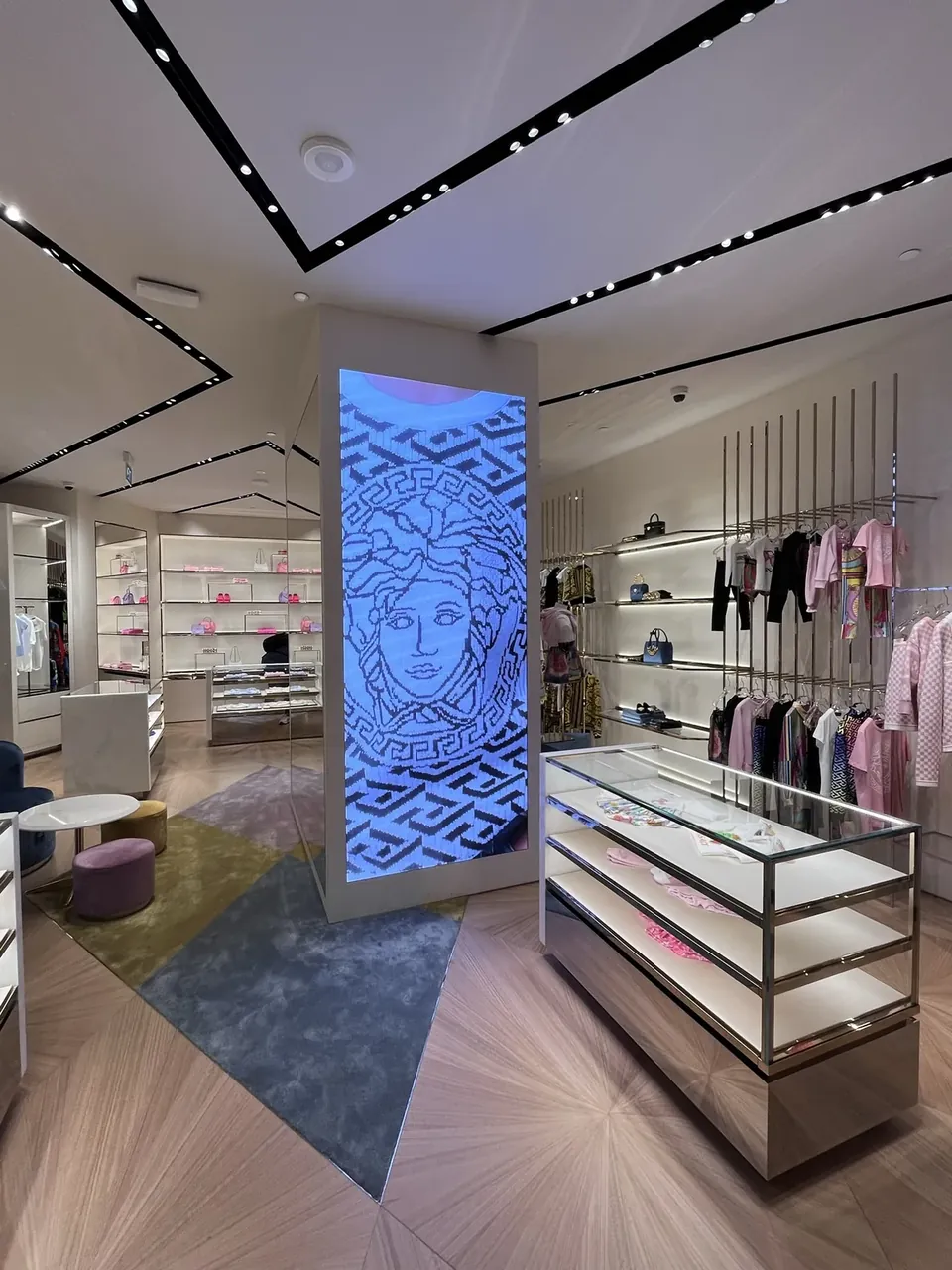
Inspect past case studies to assess the scale and complexity of completed installations. Reviewing documented commercial work across demanding environments, such as installations for global brands like Zara and Porsche, demonstrates an integrator's ability to satisfy strict corporate visual guidelines and maintain flawless handover standards.
Certifications and Industry Standards
Commercial venues in Singapore demand strict regulatory and safety adherence before tools can touch the floor. Professional integrators align their technical workflows with ANSI-accredited benchmarks established by the Audiovisual and Integrated Experience Association (AVIXA), ensuring precise signal reproduction and display ergonomics.
On-site safety compliance is equally critical. Landlords and commercial property developers mandate active safety certifications, typically requiring contractors to hold at least bizSAFE Level 3 status before approving a Permit to Work (PTW). Pairing certified safety management with manufacturer authorizations for digital signal processors, media servers, and LED drivers ensures that your AV system integrators execute work safely without voiding component warranties.
Navigating Singapore-Specific Installation and Environmental Challenges
Deploying commercial visual and acoustic systems locally involves operational hurdles rarely covered in generic manufacturer manuals. Commercial spaces present a testing combination of equatorial climate extremes, stringent structural safety oversight, and heavily managed landlord fit-out rules. Experienced AV system integrators design around these specific regional constraints, keeping installations compliant and hardware fully functional over years of continuous run-time.
Local building codes leave little room for error. Electrical distribution must strictly adhere to the SS 638 Code of Practice, requiring a Licensed Electrical Worker (LEW) to endorse single-line diagrams before building owners grant power turn-on. At the same time, commercial background audio networks must interface directly with fire alarm trip relays, ensuring immediate acoustic muting during an emergency broadcast.
Tropical Climate Considerations
Singapore maintains year-round ambient temperatures between 26°C and 34°C, paired with relative humidity that frequently hovers between 70% and 90%. This constant moisture penetration accelerates circuit corrosion and triggers "caterpillar" failure lines across standard indoor LED modules. Dedicated integrators counter this degradation through targeted engineering solutions:
- Protective Packaging: Utilising Glue-on-Board (GOB) or Chip-on-Board (COB) surface encapsulation to create an impermeable barrier against moisture and atmospheric dust.
- Thermal Clearance: Calculating custom plenum space behind recessed displays, incorporating low-noise exhaust fans to pull heat away from sensitive power supplies.
- Scheduled Servicing: Establishing preventive maintenance cycles to clean internal filter meshes, examine solder points, and prevent PCB oxidation.
Commercial Logistical Realities
Retail shopping malls and Grade-A commercial properties enforce strict building management guidelines to prevent disruption to tenants and visitors. Noisy works like masonry drilling for unistrut brackets are strictly restricted to overnight windows, usually between 10:00 PM and 7:00 AM. Missing these cut-offs or failing to submit compliant Risk Assessments halts project progress immediately.
Loading dock infrastructure presents another practical bottleneck. Many downtown loading bays limit overhead vehicle clearance to between 2.2m and 2.8m, prohibiting high-cube shipping containers and demanding smaller, tail-gate trucks. These clearance restrictions are especially critical when coordinating heavy logistics for Outdoor LED Billboards, which require crane permits, road closure clearances, and Professional Engineer (PE) structural calculations.
Ensuring Long-Term ROI with Post-Installation Support
The capital expenditure poured into a commercial display system yields returns only when visual performance and hardware stability remain steady across years of continuous operation. Leaving complex hardware unmonitored invites cumulative micro-faults. Capable AV system integrators treat site handover not as the end of a transaction, but as the foundation of an ongoing technical partnership. Through proactive telemetry, firmware lifecycle management, and batch-matched spare parts, structured post-installation support protects your brand's public presence.
Preventive vs. Reactive Maintenance
Waiting for a display to fail before calling a technician costs significantly more than regular servicing, both in emergency dispatch charges and brand reputation during peak trading periods. Reactive fixes cannot reverse the heat-stressed deterioration that causes multi-module outages. By contrast, structured preventive maintenance catches failing driver ICs, elevated operating temperatures, and degraded ribbons before a total blackout occurs.
Integrators perform scheduled diagnostic routines to clean internal fans, re-seat loose ribbon cables, test power supply voltages, and recalibrate chromatic uniformity. Explore how our dedicated AV maintenance Singapore contracts protect operational uptime through scheduled servicing and priority technical labour.
Training and Handover
System reliability also depends on equipping your on-site team with proper operational knowledge. Once calibration is complete, professional integrators conduct structured training sessions. These walk facility managers and retail staff through correct power sequencing, input source switching, basic content management, and preliminary fault isolation.
Alongside practical training, reputable integrators provide complete "as-built" documentation. This comprehensive package includes:
- Single-Line Diagrams: Accurate electrical and signal schematics reflecting final physical conduit routing.
- Network Schedules: Complete IP address tables, port mappings, and sub-net configurations for networked media players.
- Hardware Ledgers: Serialised records of installed receiving cards, power supply units, and spare module batch numbers.
This technical transparency ensures future maintenance runs smoothly without guesswork. When component repairs are needed, having local engineering teams deploy genuine replacement components keeps commercial downtime to an absolute minimum.
Ready to upgrade your commercial infrastructure? Discuss your project with an LED/AV specialist to establish a dependable visual display system built for long-term reliability.
Partnering for Long-Term AV Performance
A high-impact commercial display represents far more than an assembly of aluminium cabinets and surface-mounted diodes. Long-term reliability rests entirely on the engineering precision applied before, during, and after installation. Vetting capable AV system integrators protects your organisation against premature circuit breakdown, unbudgeted structural alterations, and non-compliance with strict local safety mandates.
ETA Visual delivers dependable, end-to-end project management across Southeast Asia, backed by over eight years of experience in the Singapore commercial sector. As specialists in fine-pitch LED screens ranging from P0.9 to P5, our team has completed visual installations for prestigious global retail brands, including Zara, Coach, and Porsche. We take complete ownership of your project lifecycle, combining robust architectural engineering with rapid on-site repair and dedicated preventive maintenance.
Equipping your commercial space with resilient visual infrastructure begins with an honest, technically rigorous conversation about your operational goals.
What exactly does an AV system integrator do?
An AV system integrator designs, installs, and commissions end-to-end audiovisual systems tailored to a commercial space. Rather than merely supplying hardware, qualified AV system integrators evaluate site structural loads, thermal output, power balancing, and signal transmission. They coordinate multi-vendor components such as video wall processors, audio distribution, and control hardware into a cohesive network, ensuring long-term operational stability and compliance with local building standards.
How much do AV system design fees typically cost in Singapore?
Design fees vary depending on project scale, architectural complexity, and engineering demands. Most commercial integrators bundle engineering design fees directly into the turnkey project proposal rather than billing an isolated hourly rate. Standalone consultancy fees apply when full engineering documentation, Licensed Electrical Worker endorsement, or Professional Engineer structural calculations are needed prior to tender. Requesting a site survey helps determine the exact engineering scope required.
Can an AV integrator help with both LED displays and commercial audio?
Yes, full-service integrators regularly deliver unified visual and acoustic systems. Combining high-resolution LED screens with commercial background music or conference room audio ensures streamlined control and full component compatibility. A dedicated integrator manages signal processing across both domains, eliminates audio-to-video latency issues, and coordinates the mandatory dry-contact relay interfacing required to mute venue sound during building fire alarm activations.
Why should I hire a local Singapore integrator instead of buying directly from a manufacturer?
Overseas manufacturers drop-ship boxed modules, leaving clients to navigate local regulatory submissions, physical rigging, and structural engineering alone. Professional local AV system integrators possess hands-on familiarity with Singapore building regulations, BCA licensing, and after-hours commercial mall logistics. Crucially, local integrators maintain local spare-parts inventory and deploy rapid-response technical teams for emergency on-site repairs, which overseas suppliers simply cannot provide.
How long does a typical commercial AV installation take in Singapore?
Physical installation timelines typically range from a few evenings for a compact indoor retail display to several weeks for large video walls or multi-zone commercial systems. Because shopping malls and Grade-A office buildings restrict noisy structural work to night shifts, total project duration often hinges on pre-fabrication efficiency. Completing off-site unistrut framing and hardware pre-commissioning significantly shortens on-site assembly time.
What are the power and structural requirements for a large LED video wall?
Large LED video walls exert significant structural loads, requiring verified backing structures, custom unistrut framing, and Professional Engineer endorsement for heavy wall-mounted or suspended arrays. Electrically, high-brightness panels draw considerable current, demanding dedicated three-phase power feeds and balanced distribution in compliance with Singapore standard SS 638. Adequate rear ventilation or HVAC plenum planning is also mandatory to disperse ongoing thermal loads.
Do AV integrators provide content management software for digital signage?
Yes, integrators configure complete content management systems (CMS) and dedicated media servers alongside the physical display hardware. They set up cloud-based or on-premise software platforms that allow marketing and operations teams to schedule playback, divide screen canvases, and update media remotely. Proper configuration ensures video resolutions match display aspect ratios pixel-for-pixel, preventing distortion, visual stutter, or unscheduled content crashes.
What happens if my LED screen fails outside of office hours?
Hardware recovery depends on the terms defined in your Service Level Agreement (SLA). When evaluating maintenance contracts, businesses should verify whether emergency on-site repair covers weekend and evening response windows or standard business hours only. Professional integrators typically provide client teams with basic triage protocols and maintain local batch-matched spare parts to ensure faulty modules or power supplies can be replaced promptly.
Visual planning reference
| Planning factor | What to define | Why it matters |
|---|---|---|
| Viewing positions | Nearest viewing distance and audience locations | Supports an appropriate pixel-pitch and screen-size decision. |
| Content workflow | Input sources, resolutions and control workflow | Helps ensure information remains readable and simple to operate. |
| Installation conditions | Structure, access, power, ventilation and maintenance access | Aligns the display scope with the physical site before procurement. |
Want an accurate budget for your space?
We'll do a free site survey and prepare a clear, itemised quotation — no obligation.
Frequently asked questions
An AV system integrator designs, installs, and commissions end-to-end audiovisual systems tailored to a commercial space. Rather than merely supplying hardware, qualified AV system integrators evaluate site structural loads, thermal output, power balancing, and signal transmission. They coordinate multi-vendor components such as video wall processors, audio distribution, and control hardware into a cohesive network, ensuring long-term operational stability and compliance with local building standards.
Design fees vary depending on project scale, architectural complexity, and engineering demands. Most commercial integrators bundle engineering design fees directly into the turnkey project proposal rather than billing an isolated hourly rate. Standalone consultancy fees apply when full engineering documentation, Licensed Electrical Worker endorsement, or Professional Engineer structural calculations are needed prior to tender. Requesting a site survey helps determine the exact engineering scope required.
Yes, full-service integrators regularly deliver unified visual and acoustic systems. Combining high-resolution LED screens with commercial background music or conference room audio ensures streamlined control and full component compatibility. A dedicated integrator manages signal processing across both domains, eliminates audio-to-video latency issues, and coordinates the mandatory dry-contact relay interfacing required to mute venue sound during building fire alarm activations.
Overseas manufacturers drop-ship boxed modules, leaving clients to navigate local regulatory submissions, physical rigging, and structural engineering alone. Professional local AV system integrators possess hands-on familiarity with Singapore building regulations, BCA licensing, and after-hours commercial mall logistics. Crucially, local integrators maintain local spare-parts inventory and deploy rapid-response technical teams for emergency on-site repairs, which overseas suppliers simply cannot provide.
Physical installation timelines typically range from a few evenings for a compact indoor retail display to several weeks for large video walls or multi-zone commercial systems. Because shopping malls and Grade-A office buildings restrict noisy structural work to night shifts, total project duration often hinges on pre-fabrication efficiency. Completing off-site unistrut framing and hardware pre-commissioning significantly shortens on-site assembly time.
Large LED video walls exert significant structural loads, requiring verified backing structures, custom unistrut framing, and Professional Engineer endorsement for heavy wall-mounted or suspended arrays. Electrically, high-brightness panels draw considerable current, demanding dedicated three-phase power feeds and balanced distribution in compliance with Singapore standard SS 638. Adequate rear ventilation or HVAC plenum planning is also mandatory to disperse ongoing thermal loads.
Plan the next step
Continue with a relevant solution and real Singapore project evidence.