Outdoor LED Billboards in Singapore: A Professional Guide to Selection and Installation
Written and reviewed by the ETA Visual Engineering & Project Team. Guidance is updated when project, product or Singapore site-planning practices change.
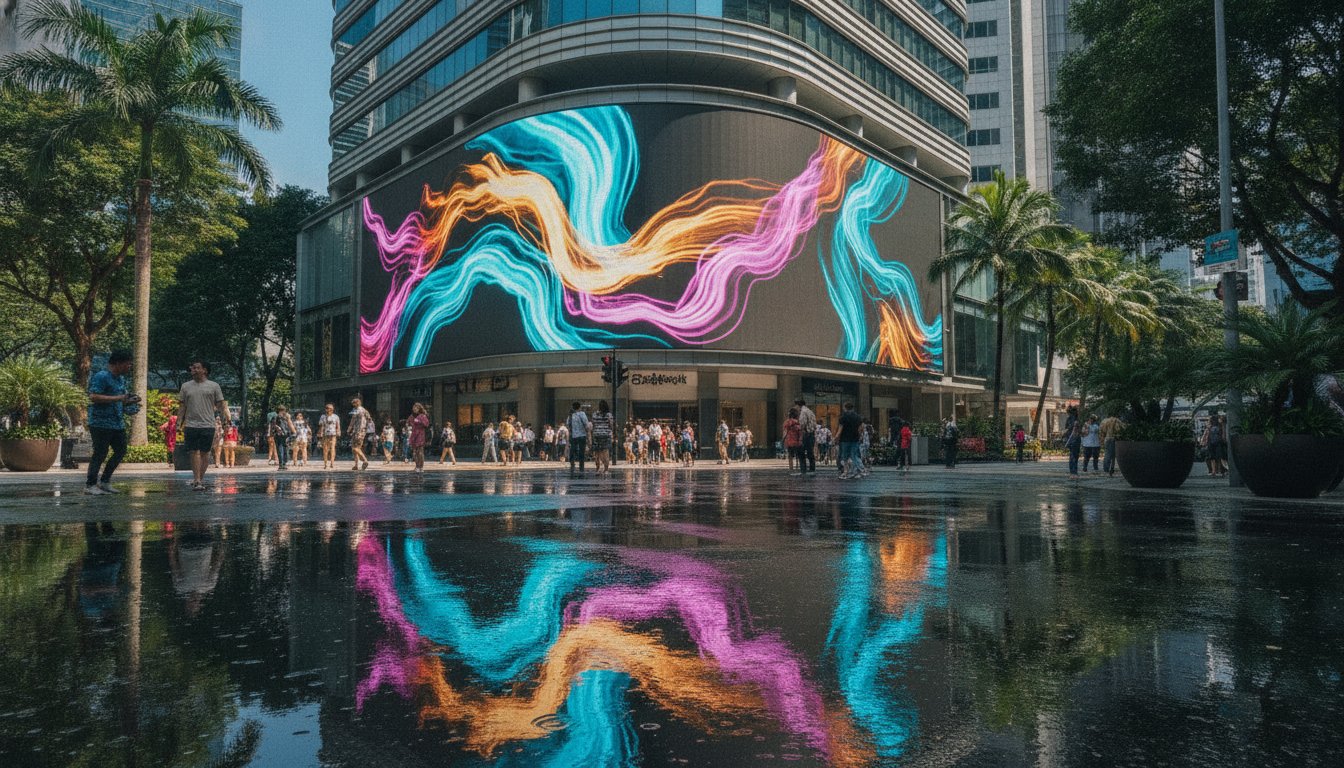
What if the high-resolution screen you've just commissioned becomes a flickering, moisture-damaged liability after only six months of service? In Singapore, the reality of deploying outdoor LED billboards involves much more than just picking a bright screen; it's a constant battle against 90% humidity and intense tropical downpours. It's understandable if you feel overwhelmed by technical jargon like pixel pitch and nits, especially when the real priority is ensuring your hardware survives the local climate without frequent hardware failure. This guide provides a professional framework for selecting, engineering, and maintaining high-impact displays tailored for our unique commercial requirements. You'll learn how to navigate complex structural permit requirements and calculate long-term maintenance costs with precision. We'll examine everything from heat dissipation strategies to seamless content management integration, giving you the clarity needed to deliver a durable, high-brightness solution that remains operational through every monsoon season.
Key Takeaways
- Learn why Outdoor LED billboards require specific Ingress Protection (IP) ratings of IP65 or higher to survive Singapore's intense rainfall and high humidity.
- Understand the relationship between pixel pitch and optimal viewing distance to ensure your display delivers maximum visual impact for your specific site location.
- Identify the necessary brightness levels, measured in nits, required to maintain clear visibility and colour accuracy against the afternoon sun.
- Discover why a comprehensive site survey is essential for navigating local structural requirements, BCA permits, and electrical integration.
- Recognise the difference between a hardware reseller and a system integrator when managing long-term maintenance and preventive service contracts.
Table of Contents
Understanding Outdoor LED Billboard Technology
Outdoor LED billboards are sophisticated digital assets designed for high-impact communication in public spaces. Unlike standard television screens or indoor displays, they use specialised LED display technology to maintain visibility under direct sunlight while withstanding harsh weather conditions. The transition from traditional static posters to digital out-of-home (DOOH) media has transformed Singapore's commercial hubs, allowing property owners to rotate multiple advertisements and display dynamic, real-time content.
The engineering behind these displays is robust. While indoor screens prioritize fine detail and close-up viewing, outdoor modules are built for durability and extreme brightness. A standard billboard consists of several critical components that must work in unison to ensure uptime:
- LED Modules: The building blocks that contain the individual light-emitting diodes.
- Receiving Cards: Components that translate data signals into visual instructions for each pixel.
- Power Supply Units (PSUs): Converters that provide stable DC power to the modules.
- Cabinetry: The structural housing that provides environmental protection and structural integrity.
SMD vs. DIP Technology in Outdoor Applications
Choosing the right diode technology depends on your specific site requirements. Surface Mounted Diode (SMD) technology is now the industry standard for most modern billboards. It offers superior colour blending and wider viewing angles, making it ideal for street-level displays where pedestrians and drivers approach from various directions. Dual In-line Package (DIP) technology was once the go-to for maximum brightness, but advancements in high-brightness SMD have largely closed that gap. Most projects in Singapore now favour SMD for its cleaner aesthetic and better visual performance.
The Role of the Digital Signage Player
The hardware is only as effective as the software driving it. A digital signage player acts as the brain of the system, scheduling content and pushing it to the screen. For businesses managing multiple outdoor LED billboards across the city, cloud-based management is essential. It allows for instant updates from a central office, ensuring that your messaging is always relevant. Whether you choose a local server for high-security environments or a flexible cloud solution, seamless integration with Digital Signage Singapore platforms ensures your investment remains a versatile marketing tool rather than a static fixture.
Key Technical Specifications: Pixel Pitch and Brightness
Selecting the right technical specifications for outdoor LED billboards is a matter of balancing visual performance with operational efficiency. In Singapore's dense urban environment, a billboard must compete with both high ambient light and architectural clutter. Technical metrics like pixel pitch, brightness, and refresh rate determine whether your content looks professional or becomes a visual distraction.
Determining Optimal Pixel Pitch
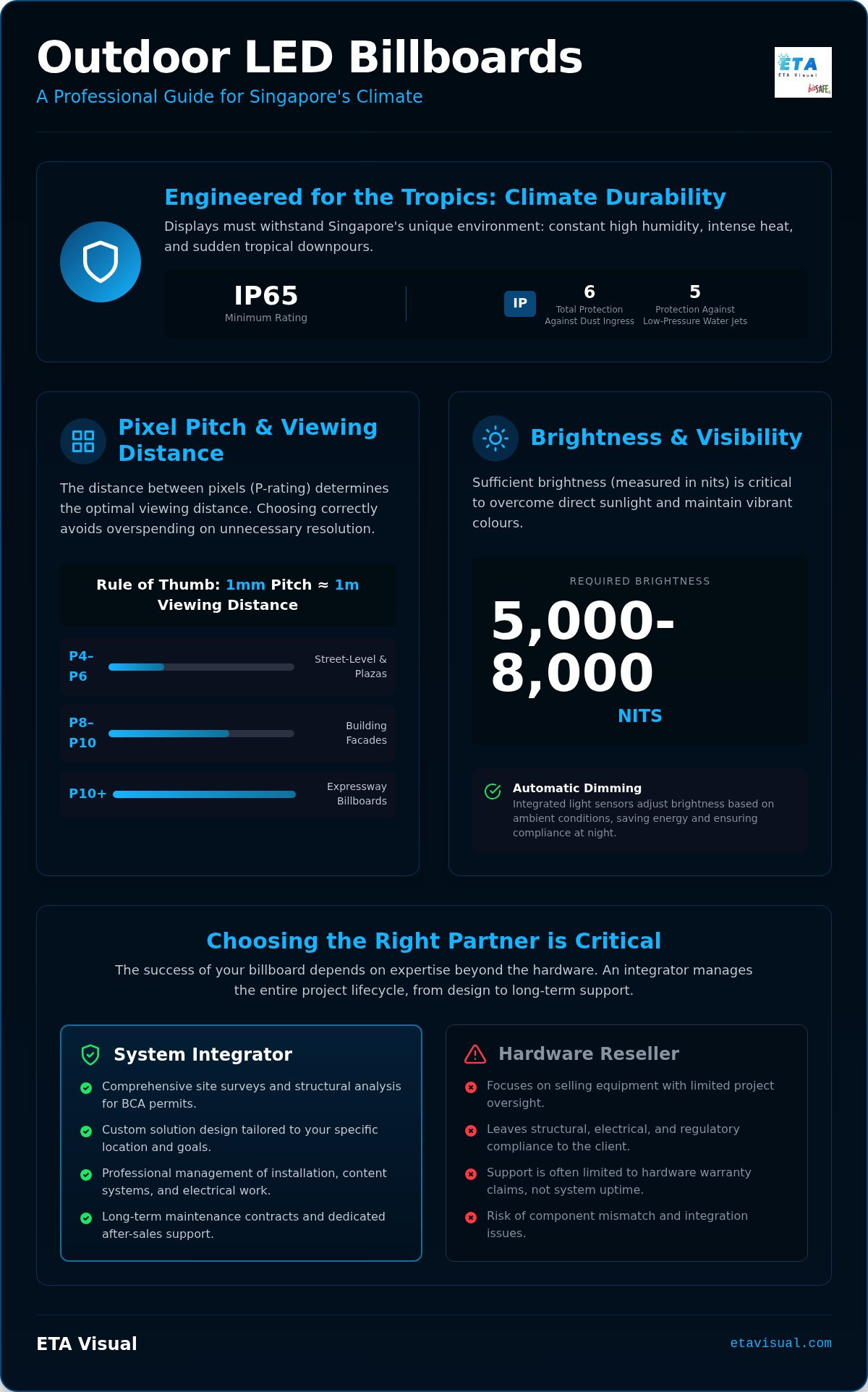
Pixel pitch, or the P-rating, refers to the distance in millimetres between the centre of each LED pixel. For outdoor applications, common pitches typically range from P4 to P10. A standard rule of thumb suggests that 1mm of pitch requires approximately 1 metre of viewing distance for the human eye to perceive a sharp, cohesive image. For example, a P6 screen is best viewed from at least 6 metres away.
It's a common mistake to assume that a smaller pixel pitch is always better. While a P4 module provides higher resolution, it's often unnecessary for billboards mounted high on building facades or along expressways where the audience is over 50 metres away. In these cases, a P8 or P10 screen provides sufficient clarity while being more cost-effective and easier to maintain. Choosing the correct pitch ensures you don't overspend on resolution that your audience cannot perceive.
Brightness and Automatic Dimming
Visibility against Singapore's intense afternoon sun requires a minimum brightness level, typically ranging from 5,000 to 8,000 nits. Anything less may result in a washed-out image that fails to capture attention. However, maintaining maximum brightness 24/7 is neither efficient nor legal in many urban zones. High brightness generates significant heat, which can degrade hardware if not managed correctly.
Integrated light sensors are essential for automatic dimming. These sensors adjust the screen's output based on ambient conditions, ensuring the display is bright during the day and comfortably legible at night. This practice is crucial for complying with Singapore's Building Control Regulations regarding light nuisance and energy conservation. Proper dimming also extends the lifespan of the LED diodes by reducing heat generation during night-time operation.
Beyond brightness, high refresh rates (typically 3,840Hz or higher) are necessary to prevent flickering when the screen is photographed or filmed by passers-by. For high-end retail branding, superior colour depth and contrast ratios ensure that brand assets are rendered with absolute accuracy. If you're unsure which specifications suit your specific location, you can speak with an LED/AV specialist to arrange a detailed site assessment.
Engineering for the Singapore Environment: Tropical Durability
Singapore's tropical climate isn't just a backdrop; it's a primary engineering challenge for outdoor LED billboards. With humidity levels frequently exceeding 90% and sudden, heavy downpours, these displays must be built to prevent moisture ingress. High humidity leads to oxidation of internal components, while intense heat can accelerate the degradation of the LED diodes. If your hardware isn't specifically designed for this environment, you'll likely face frequent hardware failure and a significantly shortened lifespan.
To combat these factors, an Ingress Protection (IP) rating of at least IP65 for both the front and rear of the cabinet is the professional standard. This rating ensures the display is dust-tight and protected against high-pressure water jets from any direction. Beyond the screen itself, ensuring compliance with the BCA Outdoor Advertising Signage Regulations is critical. These guidelines ensure that installations are structurally sound and capable of withstanding local wind loads, especially for high-rise placements where wind pressure is significantly higher.
Corrosion Resistance and Cabinet Materials
The choice of cabinet material directly affects the long-term stability of the installation. While steel cabinets are common in drier climates, aluminium is the preferred choice in Singapore due to its natural resistance to corrosion. Coastal areas or rooftop installations are particularly prone to salt-spray and moisture damage. Beyond the external housing, internal Printed Circuit Boards (PCBs) should receive a conformal coating. This protective layer acts as a barrier against moisture and atmospheric pollutants, preventing short circuits and maintaining system uptime.
Heat Dissipation Strategies
Effective thermal management is vital to prevent 'colour shift', a phenomenon where excessive heat causes LEDs to lose their colour accuracy over time. Passive cooling designs use large surface-area heat sinks to radiate heat away from the components. However, in Singapore's stagnant, humid air, active cooling with forced-air ventilation is often necessary to maintain safe operating temperatures. Ensuring there's adequate airflow behind the billboard structure prevents heat from building up within the enclosure. Meticulous attention to ventilation doesn't just protect the electronics; it ensures the display remains bright and vibrant for its entire operational life.
Total Cost of Ownership: Beyond the Initial Billboard Price
While many buyers focus on the 'factory price' of a screen, the initial purchase is only one part of the financial picture. For outdoor LED billboards in Singapore, the Total Cost of Ownership (TCO) includes several layers of capital and operational expenditure. A successful deployment requires budgeting for the entire project lifecycle, from structural engineering to long-term energy consumption.
The capital investment typically breaks down into three core areas: hardware procurement, structural fabrication, and professional installation. In Singapore, structural work often involves reinforced steel frames and concrete foundations, especially for ground-mounted signs. Installation costs include mobile crane rentals, specialised lifting equipment, and the coordination of traffic management if the site is near a public road. A dead screen in a high-traffic commercial zone isn't just a technical failure; it's a loss of advertising revenue that can quickly exceed the cost of the repair itself.
Power consumption is another significant recurring cost. High-brightness modules required for visibility against the sun consume substantial electricity. Opting for energy-efficient LED modules might carry a higher upfront cost, but the reduction in monthly utility bills often justifies the investment over a five-year period. Managing these variables requires a disciplined approach to project planning and a clear understanding of your site's specific electrical capacity.
Operational Expenses (OPEX)
Beyond hardware, you must account for the daily costs of keeping the display running. Electricity costs vary depending on whether the billboard operates 24/7 or follows an 18/7 cycle, typically from 6:00 AM to midnight. Software licensing for content management systems (CMS) and professional content creation are ongoing necessities. Additionally, property owners must budget for public liability insurance and the periodic renewal of advertisement licences and structural certifications required by building management or local authorities.
The Value of Maintenance Contracts
Reactive repair is almost always more expensive than preventive care. In high-traffic zones like Orchard Road or the CBD, a flickering module reflects poorly on the brand and disrupts campaign schedules. A structured AV Maintenance Singapore programme includes regular site inspections and remote monitoring. These systems can detect power supply fluctuations or module failures before they become visible to the public, allowing for rapid-response repairs that protect your asset's uptime and long-term stability.
Selecting the Right AV Integrator for Your Outdoor Project
A hardware reseller delivers a product; a system integrator delivers a solution. This distinction is critical when commissioning outdoor LED billboards, as the physical screen is only one component of a functioning DOOH asset. In Singapore, where building management standards and BCA requirements are stringent, partnering with an accountable specialist ensures that your project moves from design to deployment without unforeseen technical or regulatory hurdles. A professional integrator takes ownership of the entire lifecycle, providing the engineering expertise that a simple distributor cannot offer.
Successful installations rely on a partner who understands the local landscape. This includes navigating the logistics of loading bays in busy malls, coordinating with building management for after-hours work, and ensuring that all electrical installations meet local safety standards. When you work with a local guide for your technical infrastructure, you gain the security of knowing that your partner is physically present to manage site-specific challenges and provide rapid-response support when needed.
The Site Survey Process
A comprehensive site survey is the foundation of a reliable installation. It's during this stage that potential obstructions, such as street furniture or landscaping, are identified to ensure optimal viewing angles for your target audience. Engineers assess mounting points for structural integrity and confirm that existing power infrastructure can handle the load of a high-brightness display. Identifying these factors early reduces hidden costs that often arise from last-minute structural reinforcements or electrical upgrades. A thorough survey also considers environmental hazards, such as proximity to coastal salt-spray or areas prone to high wind pressure, allowing for the selection of appropriate cabinet materials and sealing techniques.
Case Study: High-Impact Retail Billboard
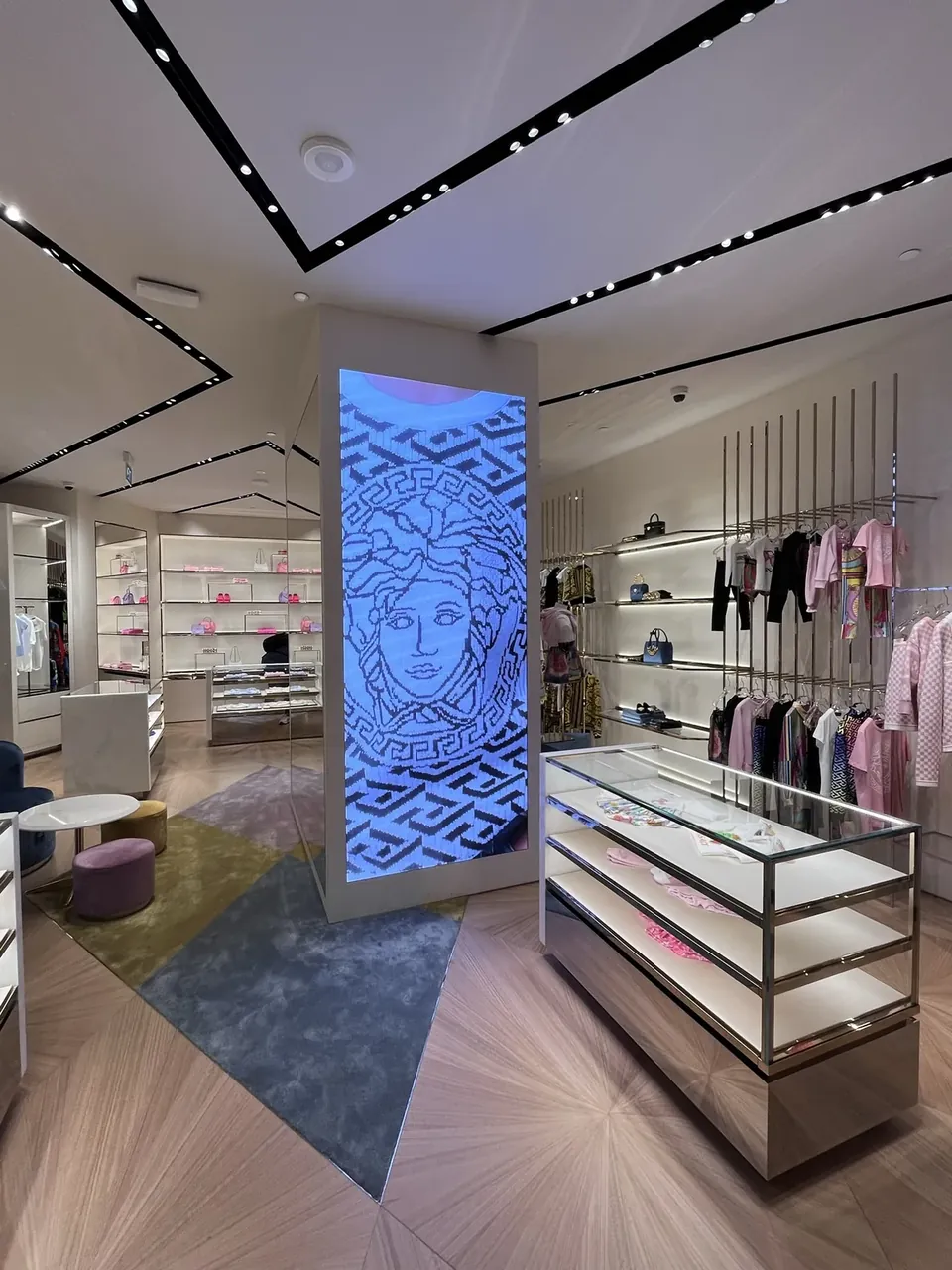
Integrating large-scale displays into modern storefronts requires a delicate balance between brand aesthetics and technical performance. In high-end retail environments, the billboard must complement the architectural design while maintaining the extreme brightness necessary to compete with ambient light. We've managed complex integrations for luxury brands where the structural work had to be invisible to the public, requiring meticulous coordination between architects and our engineering team. You can view examples of these precision-engineered solutions in our Work portfolio, which showcases our track record with corporate and retail clients across Singapore.
Beyond the initial installation, evaluate your partner based on their after-sales support infrastructure. Local spare parts availability is essential for maintaining high uptime. If a module fails, you don't want to wait weeks for a replacement to ship from overseas. A dedicated integrator maintains a local inventory of receiving cards, power supplies, and LED modules, ensuring that emergency on-site repairs are handled with minimal disruption to your advertising schedule.
Future-Proofing Your Digital Out-of-Home Investment
Deploying outdoor LED billboards in Singapore requires a disciplined approach that prioritises structural engineering and tropical-grade protection over simple hardware specifications. Successful projects balance visual impact with long-term durability, ensuring that components can withstand 90% humidity and intense heat without degrading. By focusing on the total cost of ownership and partnering with an accountable specialist, you eliminate the risks associated with hardware failure and regulatory non-compliance.
Our team brings 8+ years of commercial AV integration expertise to every project, acting as a local guide for your technical infrastructure. We don't just sell screens; we design resilient systems backed by Singapore-based technical support. Our comprehensive maintenance contracts are designed to achieve 99.9% uptime, giving you the security of a high-performance display that survives the monsoon season and the afternoon sun alike.
Taking the first step with a professional site assessment ensures your high-impact display remains a reliable, high-brightness asset for years to come. We're ready to help you navigate the complexities of local installation with precision and accountability.
What is the typical lifespan of an outdoor LED billboard in Singapore?
An outdoor LED billboard typically has a lifespan of 5 to 10 years, though environmental factors in Singapore can influence this significantly. The combination of high ambient heat and constant humidity places stress on internal components like power supplies and diodes. To maximise longevity, it's vital to use modules with superior heat dissipation and to adhere to a structured preventive maintenance contract that addresses potential issues before they cause permanent hardware failure.
Do I need a permit for an outdoor LED billboard installation?
Yes, most installations require permits from the Building and Construction Authority (BCA) and potentially the Urban Redevelopment Authority (URA). These regulations ensure structural safety and prevent light nuisance in urban areas. Property owners should consult with a qualified person (QP) to manage the submission process. It's important to verify specific requirements for your building type and location before beginning any structural work to ensure compliance with local building management standards.
How much brightness (nits) is required for a billboard in direct sunlight?
Visibility against direct afternoon sun requires a minimum of 5,000 to 8,000 nits. If the display is positioned to face the sun directly, opting for the higher end of this range ensures the image doesn't appear washed out. High-brightness modules must be paired with automatic dimming sensors. These sensors reduce output at night to comply with local light pollution standards while also saving energy and reducing heat-related wear on the LEDs over time.
What is the difference between front-service and rear-service LED modules?
The choice between front and rear service depends on the physical access available at your installation site. Front-service modules are removed from the display's face, making them ideal for wall-mounted billboards where there is no space behind the structure. Rear-service modules require a dedicated walkway or access door behind the screen. While rear-service is common for large, standalone billboards, front-service designs are increasingly popular for integrated retail storefronts where space is at a premium.
Can outdoor LED screens handle Singapore's heavy tropical rain?
Yes, outdoor LED billboards are engineered to handle Singapore's intense tropical downpours by using IP65-rated enclosures. This rating signifies that the display is completely protected against dust and low-pressure water jets from any direction. Beyond the IP rating, professional installers ensure that all connectors are properly sealed and that the cabinetry includes effective drainage systems to prevent water from pooling inside the structure during the prolonged rain events typical of the monsoon season.
How often should an outdoor LED billboard undergo maintenance?
Preventive maintenance should typically be performed at least twice a year to ensure system reliability. These inspections include checking for moisture ingress, cleaning ventilation filters, and verifying the structural integrity of mounting brackets. In high-traffic or coastal areas, quarterly checks may be necessary to address salt-spray or dust buildup. Regular servicing is the most effective way to maintain 99.9% uptime and protect your long-term capital investment from the effects of tropical corrosion.
What pixel pitch is best for a billboard viewed from 20 metres away?
For a viewing distance of 20 metres, a pixel pitch of P6 to P10 is generally recommended. Following the standard rule of thumb, a P6 screen provides high clarity for viewers at this range, while a P10 module offers a more cost-effective solution if the billboard is mounted at a greater height. Choosing the correct pitch prevents you from overspending on resolution that the human eye cannot distinguish from a distance, ensuring optimal budget allocation.
How do I control the content on my outdoor LED screen remotely?
Content is managed remotely through a cloud-based Digital Signage Player integrated with your display system. This allows you to schedule advertisements, update messaging in real-time, and monitor the health of the screen from any location with internet access. For multi-site deployments across Singapore, a central Content Management System (CMS) ensures consistency across all billboards. You can also set automated schedules to trigger specific content based on the time of day, ensuring maximum audience relevance.
Visual planning reference
| Planning factor | What to define | Why it matters |
|---|---|---|
| Viewing positions | Nearest viewing distance and audience locations | Supports an appropriate pixel-pitch and screen-size decision. |
| Content workflow | Input sources, resolutions and control workflow | Helps ensure information remains readable and simple to operate. |
| Installation conditions | Structure, access, power, ventilation and maintenance access | Aligns the display scope with the physical site before procurement. |
Want an accurate budget for your space?
We'll do a free site survey and prepare a clear, itemised quotation — no obligation.
Frequently asked questions
An outdoor LED billboard typically has a lifespan of 5 to 10 years, though environmental factors in Singapore can influence this significantly. The combination of high ambient heat and constant humidity places stress on internal components like power supplies and diodes. To maximise longevity, it's vital to use modules with superior heat dissipation and to adhere to a structured preventive maintenance contract that addresses potential issues before they cause permanent hardware failure.
Yes, most installations require permits from the Building and Construction Authority (BCA) and potentially the Urban Redevelopment Authority (URA). These regulations ensure structural safety and prevent light nuisance in urban areas. Property owners should consult with a qualified person (QP) to manage the submission process. It's important to verify specific requirements for your building type and location before beginning any structural work to ensure compliance with local building management standards.
Visibility against direct afternoon sun requires a minimum of 5,000 to 8,000 nits. If the display is positioned to face the sun directly, opting for the higher end of this range ensures the image doesn't appear washed out. High-brightness modules must be paired with automatic dimming sensors. These sensors reduce output at night to comply with local light pollution standards while also saving energy and reducing heat-related wear on the LEDs over time.
The choice between front and rear service depends on the physical access available at your installation site. Front-service modules are removed from the display's face, making them ideal for wall-mounted billboards where there is no space behind the structure. Rear-service modules require a dedicated walkway or access door behind the screen. While rear-service is common for large, standalone billboards, front-service designs are increasingly popular for integrated retail storefronts where space is at a premium.
Yes, outdoor LED billboards are engineered to handle Singapore's intense tropical downpours by using IP65-rated enclosures. This rating signifies that the display is completely protected against dust and low-pressure water jets from any direction. Beyond the IP rating, professional installers ensure that all connectors are properly sealed and that the cabinetry includes effective drainage systems to prevent water from pooling inside the structure during the prolonged rain events typical of the monsoon season.
Preventive maintenance should typically be performed at least twice a year to ensure system reliability. These inspections include checking for moisture ingress, cleaning ventilation filters, and verifying the structural integrity of mounting brackets. In high-traffic or coastal areas, quarterly checks may be necessary to address salt-spray or dust buildup. Regular servicing is the most effective way to maintain 99.9% uptime and protect your long-term capital investment from the effects of tropical corrosion.
Plan the next step
Continue with a relevant solution and real Singapore project evidence.