MRT Digital Advertising LED Displays in Singapore
Written and reviewed by the ETA Visual Engineering & Project Team. Guidance is updated when project, product or Singapore site-planning practices change.
MRT advertising LED displays are not ordinary indoor screens installed in a public place. They sit inside an operating transport environment with fixed access windows, public-facing handover requirements, coordinated power and network interfaces, and a commercial need for consistently strong advertising content. This guide turns the planning lessons from five ETA Visual MRT image cases into a practical framework for teams considering a station-based digital advertising LED deployment in Singapore.
Start with the operating environment, not only the screen
A station display has to work as part of a larger operating environment. The decision is not just about pixel pitch or screen size. It involves access after operating hours, safe working procedures, structural and electrical readiness, equipment locations, network paths, media operations and the condition in which the area must be returned for public use the next morning.
For an advertising programme, the commercial objective also matters. A screen that is reliable but inconsistent in colour, contrast or content control weakens the value of the advertising inventory. The brief should therefore connect the visual standard, operating model and delivery sequence before equipment is selected.
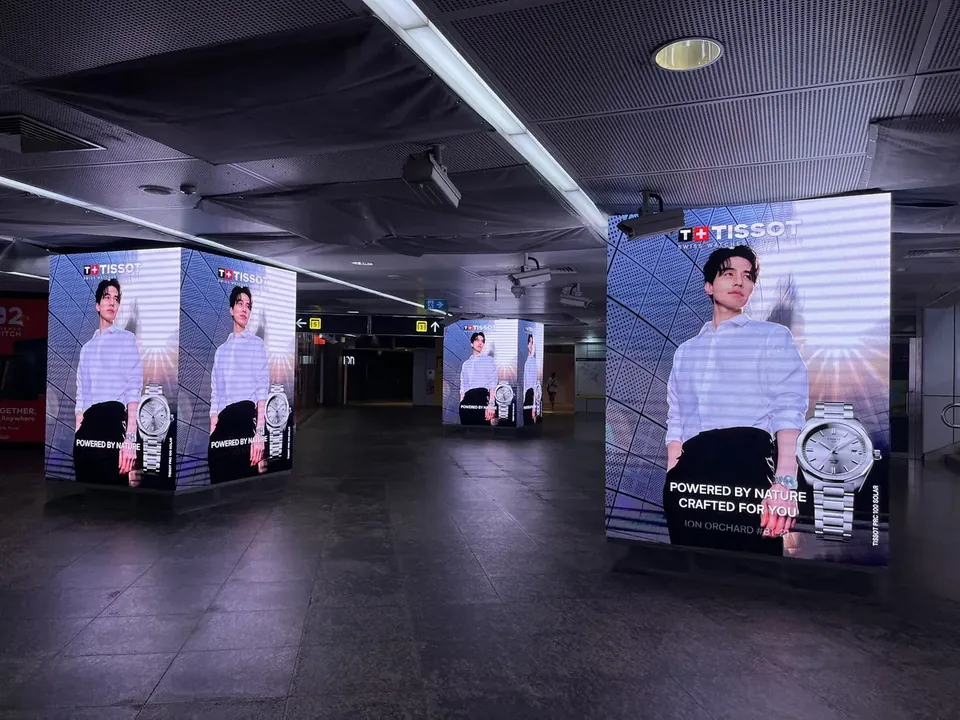
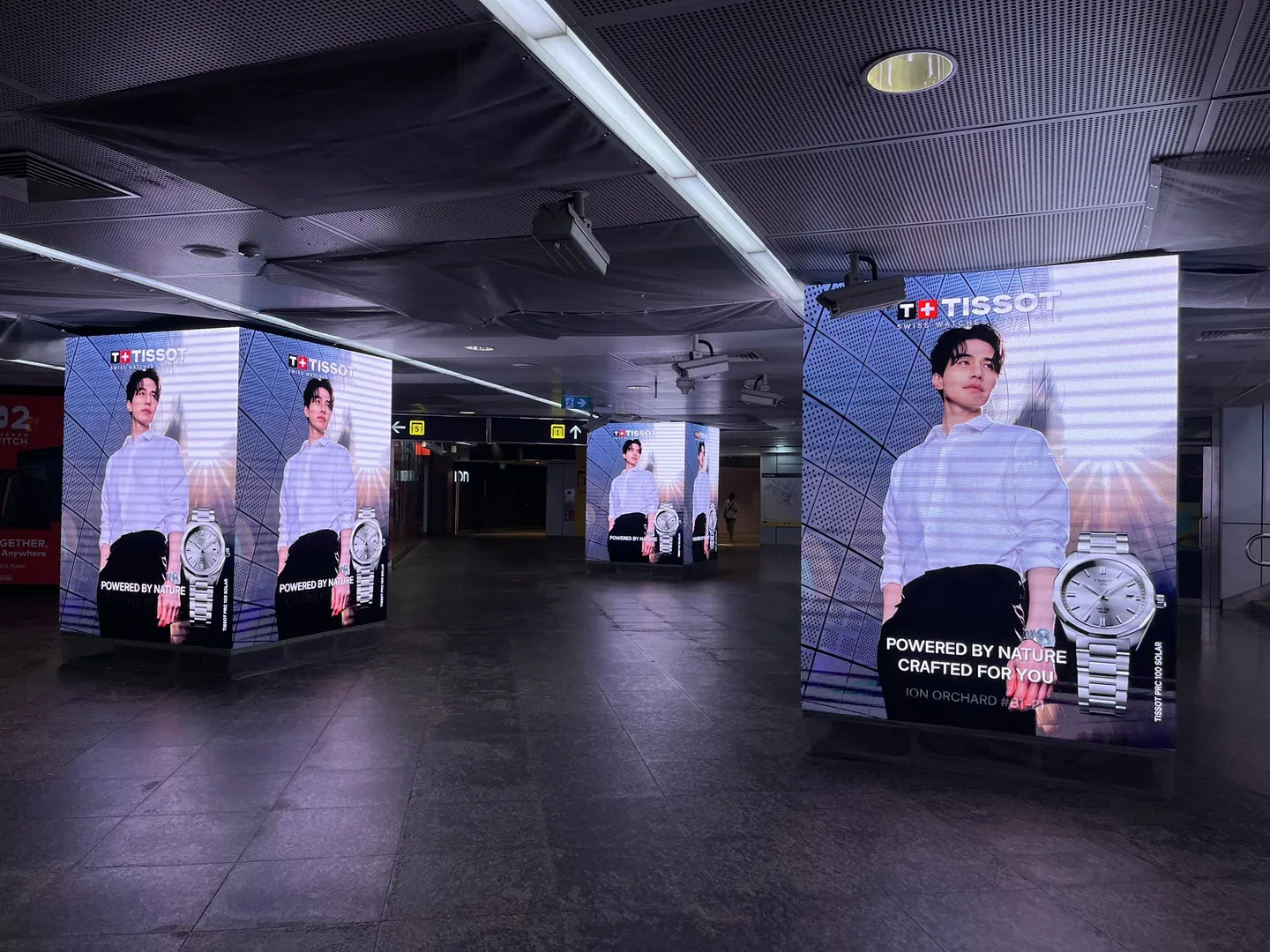
The Orchard MRT Phase 1 LED advertising case shows why early site interfaces and an agreed night-work sequence are essential when the installation window is short.
Define the advertising and viewing brief before choosing technology
Start with the journey and the content. Is the display primarily viewed by passing commuters, by people waiting in a concourse, or from a closer dwell position? Will the content be brand video, still campaigns, time-based information or a mixture? These questions shape viewing distance, physical form, brightness, colour performance and the controls required for day-to-day content operation.
For close-viewing applications, fine pixel pitch supports detail and more comfortable viewing. The existing station image cases use recorded P1.95 COB or P1.5 GOB configurations according to their own conditions. A single programme specification should never be copied blindly onto every station; geometry, audience position, surrounding light and the supporting build all need to be checked.
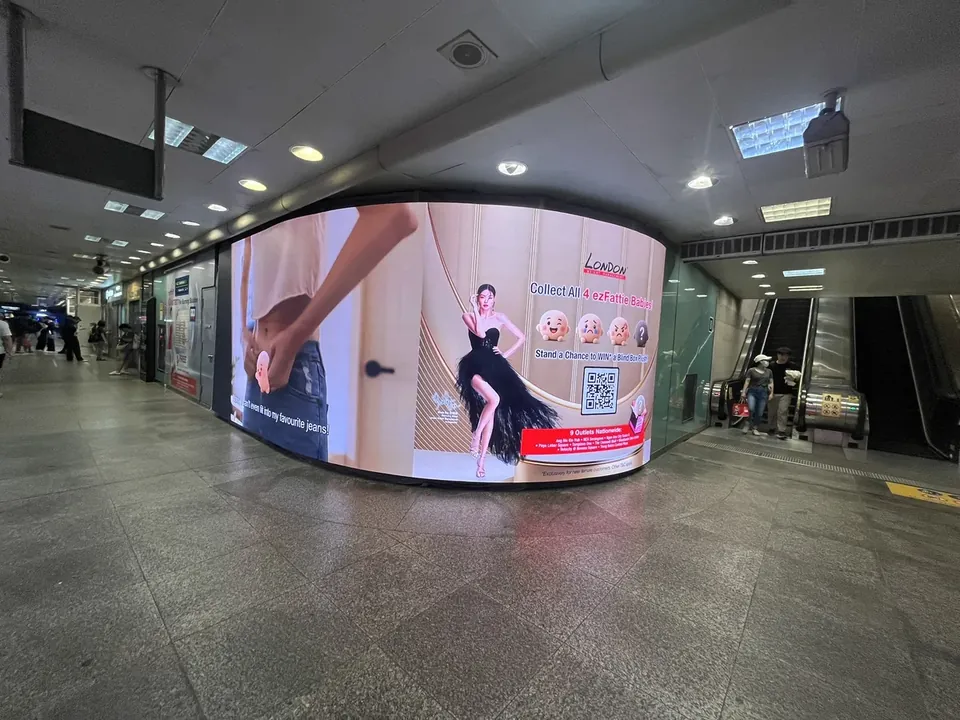
The Bugis MRT curved LED case illustrates a different design question: a flexible curved screen must respond to concourse geometry as well as advertising impact.
Plan resilience for a public, high-traffic environment
A transport environment brings repeated footfall, cleaning regimes, vibration, humidity and unavoidable physical proximity. Product selection should be considered alongside service access, module replacement practicality, protection of the display surface, ventilation, cable routing and the ability to troubleshoot without disrupting the surrounding station environment.
COB and GOB technologies can be assessed as part of a wider resilience strategy, but they are not a substitute for sound system design. A dependable result comes from the display technology, mounting method, electrical interfaces, data path, mechanical protection and commissioning plan working together.
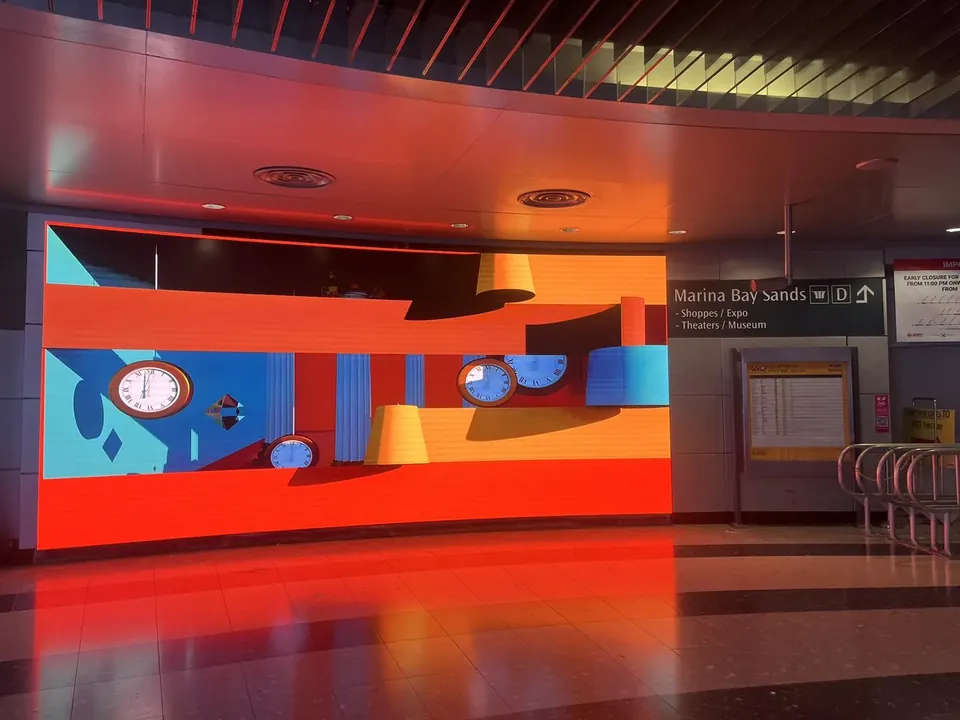
The Bayfront MRT COB LED case focuses on this balance between advertising quality, public-environment reliability and a properly prepared installation interface.
Treat content distribution as part of the LED system
A digital advertising screen only creates value when the right content reaches the right display at the right time. The content platform, player or controller, network topology, equipment cabinet, user permissions and campaign workflow should be agreed before commissioning. This prevents the common mistake of completing the physical LED installation and then improvising the media operations afterwards.
For a multi-display programme, a private network and server environment can give the advertising operator tighter control over distribution and media management. The precise architecture should reflect the client, operator, cybersecurity and maintenance requirements rather than being treated as a generic add-on.
The Orchard MRT Phase 2 integration case demonstrates the connection between a fine-pitch display, coordinated infrastructure and controlled digital content distribution.
Design the overnight installation backwards from handover
Where work is restricted to post-operation hours, the programme must be designed backwards from the required morning handover. Clearance, cleaning, testing, protection removal and public-area readiness are part of the shift, not optional work after the installation is complete. A short night window leaves little capacity to solve missing power points, inaccessible routes or unprepared structural work on site.
Before an installation night, confirm approved drawings, access routes, work permits, power isolation arrangements, structural interfaces, network termination, equipment delivery, lifting or handling method, staging area, waste removal and the named contacts for each party. The practical question is not simply whether the screen can be fitted; it is whether the whole space can be returned safely and cleanly on time.
The Serangoon MRT station LED case highlights the value of main-contractor coordination and rapid issue resolution when the on-site window cannot move.
Use station-specific evidence to refine the final brief
The five ETA Visual MRT image cases should be read as planning evidence, not as a one-size-fits-all package. Orchard Phase 1 is useful for overnight delivery sequencing; Orchard Phase 2 for digital system integration; Bayfront for reliability and visual quality; Serangoon for multi-party coordination; and Bugis for curved-screen geometry in a busy concourse.
A final project brief should record the audience and content purpose, exact display dimensions and pitch, mounting and structure, power and network interfaces, content-control workflow, access constraints, testing plan, maintenance strategy and handover condition. This gives procurement, construction and operations teams a shared standard before the first night shift begins.
For a wider overview of fixed indoor LED planning, review ETA Visual's LED display solutions in Singapore and request a site survey with the proposed location, access rules and advertising operating model.
| Workstream | Planning question | Ready-to-proceed evidence |
|---|---|---|
| Audience and content | Who views the screen, from where and for how long? | Content brief, viewing-distance assumptions and campaign format agreed. |
| Display selection | Which pitch, form factor and protection approach suit this station location? | Screen schedule, display drawings and installation constraints reviewed. |
| Infrastructure | Are power, structure, network and equipment locations prepared? | Approved interfaces, cable routes and cabinet plan confirmed before site entry. |
| Night work | Can installation, testing, clearing and cleaning finish before operations resume? | Shift sequence, access plan, materials staging and handover checklist agreed. |
| Content operations | How will campaigns be distributed, scheduled and supported? | Content workflow, permissions, network ownership and operational contacts confirmed. |
Want an accurate budget for your space?
We'll do a free site survey and prepare a clear, itemised quotation — no obligation.
Frequently asked questions
Plan the audience and content brief, display form, structure, power, network, equipment cabinet, access rules, night-work sequence, testing, cleaning and morning handover. Treat these as one coordinated system rather than separate purchase and installation tasks.
The usable work window can be limited to the period after station operations end and before the area must be ready for public use again. Installation teams must complete equipment work, testing, clearance and cleaning within the approved sequence, so prepared site interfaces are critical.
They can be considered for demanding indoor public environments, but the correct choice depends on viewing distance, screen geometry, surface protection, visual requirements, mounting, service access and the overall project design. Technology should be selected with the full operating environment in mind.
Content management should be designed with the LED system. The project team should define the media workflow, player or controller, network topology, server or platform, permissions and support process before commissioning the physical displays.
ETA Visual supports indoor LED display planning, supply, installation and integration. A useful first step is a site survey that considers the display location, viewing conditions, access restrictions, infrastructure and the intended content operation.
Plan the next step
Review station-specific project evidence before setting the display, operating and overnight delivery brief.