LED Video Wall Cost in Singapore: What Actually Drives the Price (2026)
Written and reviewed by the ETA Visual Engineering & Project Team. Guidance is updated when project, product or Singapore site-planning practices change.
'How much does an LED video wall cost in Singapore?' is the first question almost every client asks — and the honest answer is that price is driven by a handful of clear factors rather than a single rate card. Once you understand what moves the number, you can budget realistically and avoid both overspending on specifications you don't need and under-spec'ing a screen that disappoints. This guide breaks down the real cost drivers from the perspective of a Singapore AV system integrator that supplies and installs LED every week.
1. Pixel pitch is the single biggest price driver
Pixel pitch (the distance between LED pixels, written as P0.9, P1.5, P2.5 and so on) determines how close people can stand before the image looks pixelated. A finer pitch packs in far more LEDs per square metre, so the cost per square metre rises sharply as the pitch gets smaller.
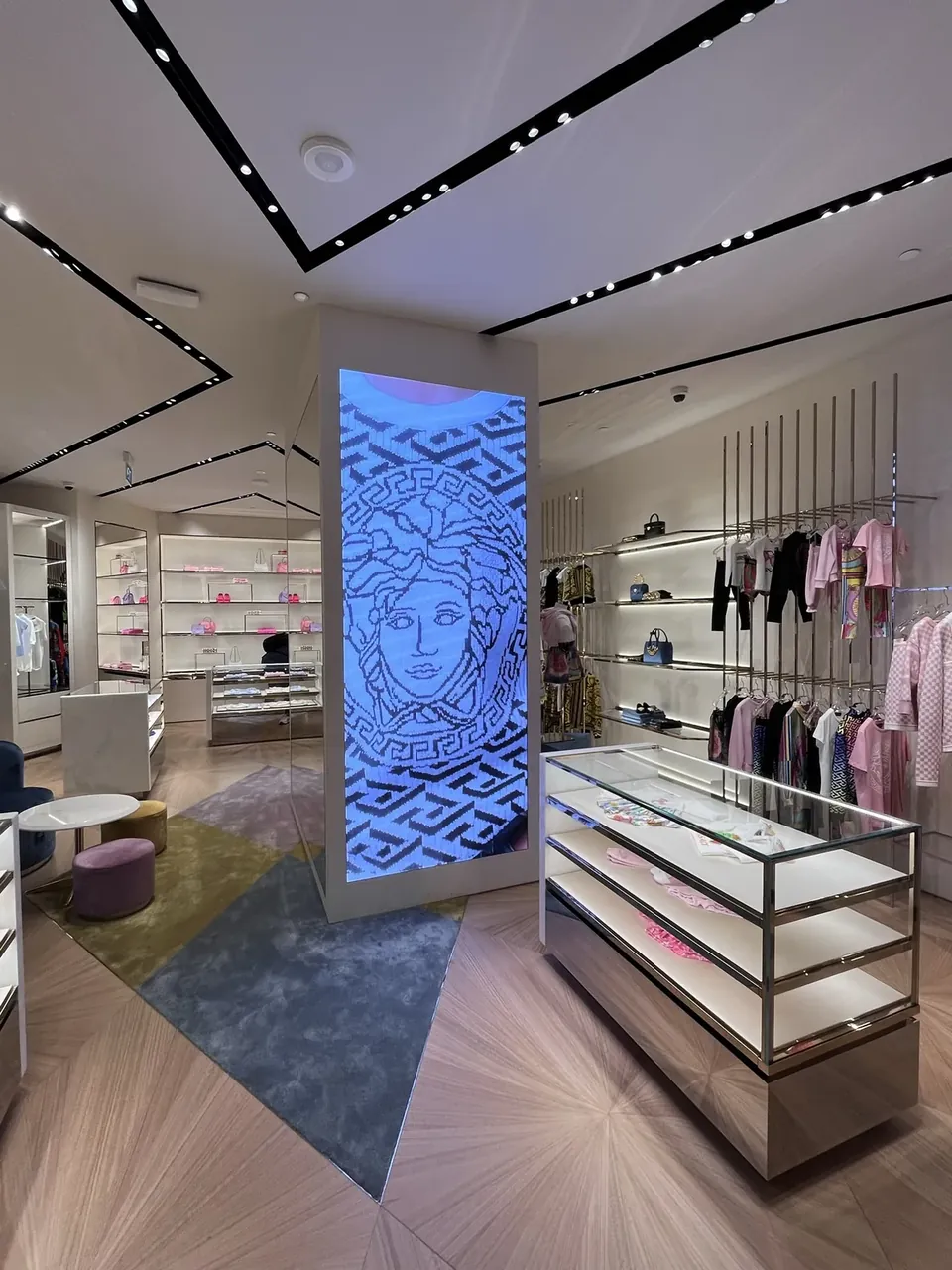
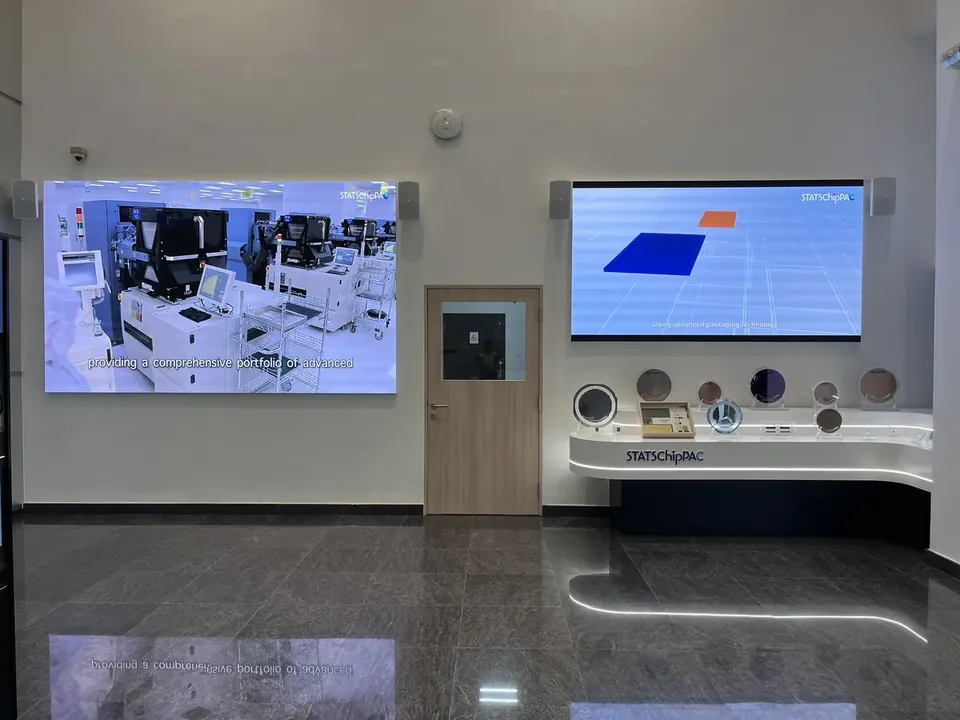
For a close-viewing retail shopfront or a corporate lobby you might need P1.2–P2.5; for an outdoor façade viewed from across a street, P4–P10 is perfectly sharp and far more economical. Specifying a finer pitch than your viewing distance requires is the most common way budgets get inflated. As a rule of thumb at ETA Visual, we match pitch to the closest viewing distance during the site survey — across our range of P0.9~P5 for indoor and coarser pitches outdoors.
2. Indoor vs outdoor changes the whole build
Outdoor LED is not just a brighter indoor screen. It needs high-brightness panels (often up to 5,000 nits to stay readable under direct Singapore sun), IP-rated weatherproof cabinets, stronger structural mounting and proper heat management. All of that adds cost compared with an indoor screen of the same size and pitch.
Indoor screens trade weatherproofing for refinement — colour accuracy, flicker-free operation for camera-friendly spaces, and quiet, low-heat performance. The right choice depends entirely on where the screen lives.
3. Total area, not just the diagonal
LED is generally priced by the square metre, so a larger wall costs more in a fairly linear way — but bigger screens can also push you into heavier structural support, more power provisioning and more data/processing hardware. When you size a wall, design it around the content and viewing distance rather than simply making it as large as the space allows.
4. Installation, processing and content systems
The panels are only part of the project. A complete installation includes structural mounting assessment, power and data cabling, a video processor/controller, and content playback integration — plus on-site calibration and colour-matching so every panel looks seamless. Installation and ancillary hardware typically add a meaningful percentage on top of the panel cost, and a clean, safe, properly commissioned install is exactly what protects your investment.
5. Maintenance and total cost of ownership
An LED wall runs for long hours in a demanding environment. Without upkeep, brightness drifts and modules eventually fail — and a flagship screen going dark during peak trading is expensive in lost impact. Factoring an annual preventive maintenance contract into your budget from day one keeps the display looking its best and spreads cost predictably, rather than facing unplanned repair bills later.
How to get an accurate number for your space
Because every space is different, a credible quotation always starts with a site survey: we measure viewing distances, assess ambient light, power and structure, then specify the right pitch and size for your actual requirements. That's how you get a screen that looks excellent without paying for specifications you don't need.
If you'd like a realistic budget for your project, we're happy to do a free site survey and prepare a clear, itemised quotation.
| Factor | Lower cost | Higher cost |
|---|---|---|
| Pixel pitch | Coarser (e.g. P4–P10) | Fine-pitch (e.g. P0.9–P1.5) |
| Environment | Indoor, controlled light | Outdoor, weatherproof + high-brightness |
| Size | Small format | Large-format video wall |
| Install complexity | Simple flat wall | Curved / structural / high-access |
| Support | Warranty only | Preventive maintenance contract |
Want an accurate budget for your space?
We'll do a free site survey and prepare a clear, itemised quotation — no obligation.
Frequently asked questions
There's no single rate because price is driven mainly by pixel pitch, indoor vs outdoor build, total area, installation complexity and ongoing maintenance. The most reliable way to get an accurate figure is a site survey followed by an itemised quotation.
A finer pixel pitch packs far more LEDs into each square metre, so the cost per square metre rises steeply. You only need a fine pitch when viewers stand close — for distant viewing a coarser, more economical pitch looks just as sharp.
Generally yes, for the same size and pitch. Outdoor screens need high-brightness panels, IP-rated weatherproof cabinets, stronger mounting and heat management, all of which add cost compared with an indoor screen.
Yes. An annual preventive maintenance contract keeps brightness and colour consistent, catches failing modules early and spreads cost predictably — protecting both the hardware and your brand image.
Plan the next step
Compare a practical specification with real Singapore installations before setting your budget.
ETA Visual designs, supplies and installs seamless indoor LED video walls for corporate lobbies, meeting rooms and control rooms across Singapore.
ETA Visual designs, supplies and installs indoor LED video walls (P0.9–P5), transparent LED and flexible curved displays for retail and commercial spaces across Singapore.