LED Display Warranty in Singapore: What Buyers Must Check Before Signing (2026)
Written and reviewed by the ETA Visual Engineering & Project Team. Guidance is updated when project, product or Singapore site-planning practices change.
Most LED display quotations in Singapore end with a single line: warranty, two years. That line is treated as a formality until the first row of modules goes dark above a mall atrium, and then it becomes the most important paragraph in the contract. A commercial indoor LED wall is not one product. It is modules, receiving cards, power supplies, cabinets, a control system and the structure that holds everything in place, and each part can carry different coverage, exclusions and response commitments. Buyers who compare suppliers on warranty length alone often discover, at the worst possible moment, that the term covers replacement parts but not the labour or access equipment needed to fit them. This guide explains how commercial LED display warranties are actually structured, which clauses decide your real downtime, and what to confirm in writing before you sign, so that a covered fault does not turn into an unbudgeted project.
What a Commercial LED Display Warranty Covers, and What It Leaves Out
An LED display warranty is a contract about component failure, not about performance. Most commercial indoor LED products carry a defined period covering manufacturing defects in modules, power supplies and control electronics. What sits outside that period is usually more commercially significant: labour to reach and replace a module, access equipment such as scissor lifts, freight for spare parts, and the cost of the downtime itself.
Singapore installations add complications. A screen mounted three metres up in a mall atrium needs access booked with the building's facilities team, and those bookings can cost more than the parts being replaced. A boardroom wall is simple to service by comparison, which is why two quotations with identical warranty periods can carry very different real-world risk.
The Four Layers of Coverage: Modules, Power, Control and Structure
Indoor LED displays fail in layers, and a well-drafted warranty treats each layer separately.
Modules and pixels. Modules carry the LEDs, driver ICs and masking. Coverage usually addresses dead or stuck pixels, brightness degradation beyond a stated threshold, and module-level faults. Ask whether the policy uses a pixel count, a percentage of modules or a blanket replacement trigger, because that decides whether a handful of dead pixels is a claim or an exclusion.
Power and control. Power supplies are among the most common wear items because they run hot and continuously, so confirm whether they are covered for the full term. Receiving cards, sending cards, processors and the content player each fail differently, and software is usually supported rather than warranted.
Structure and workmanship. Frames, cabinet alignment and cable management are installation outcomes. Workmanship normally sits under a separate defects liability period, often shorter than the equipment warranty, and that gap is worth closing before the project starts.
Why a Five-Year Warranty Tells You Almost Nothing on Its Own
Warranty length is the easiest number to compare and the least informative. A five-year parts-only warranty with a thirty-day response and no spares on site is weaker than a three-year warranty with a forty-eight hour response and a matched spare kit stored in the building.
Read the term for what it excludes. Common carve-outs include consumables, cosmetic wear, damage from heat or power, and any repair attempted by a third party. Some policies are limited to the original purchaser, which matters when a tenant changes.
Colour consistency deserves its own question. Modules are produced in batches and binned for colour and brightness, so a replacement from a later batch can fit perfectly and still look different. A warranty that guarantees a working module but not a colour-matched one can leave a repaired wall visibly patchy.
Response Time, Spares and Access: The Clauses That Decide Real Downtime
Response time and restoration time are not the same commitment. A response time obliges the supplier to acknowledge a fault; a restoration target obliges them to have the screen working again. Only the second protects a retail frontage on a Saturday afternoon, so ask for both and ask which service hours they apply to.
Service hours are frequently overlooked. A business-hours contract sounds reasonable until a screen fails during a weekend campaign. For venues trading seven days a week, confirm whether weekend cover is included or chargeable.
Spare modules are the cheapest insurance available. Holding two to five percent of modules on site, from the same production batch, lets a technician swap a faulty module the same day instead of waiting for a shipment. The same logic applies to spare power supplies and one receiving card. Confirm too who pays for access, because on a high wall the lift, permits and after-hours work can dwarf the component cost.
Where Standard Warranty Language Struggles: Curved, Flexible and Custom Builds
Curved, flexible and custom-shaped indoor displays break the assumptions behind standard warranty text. A module rated for a gentle bend may be installed at a tighter radius than the product allows, and a failure caused by that geometry can be excluded as an installation issue rather than a product defect.
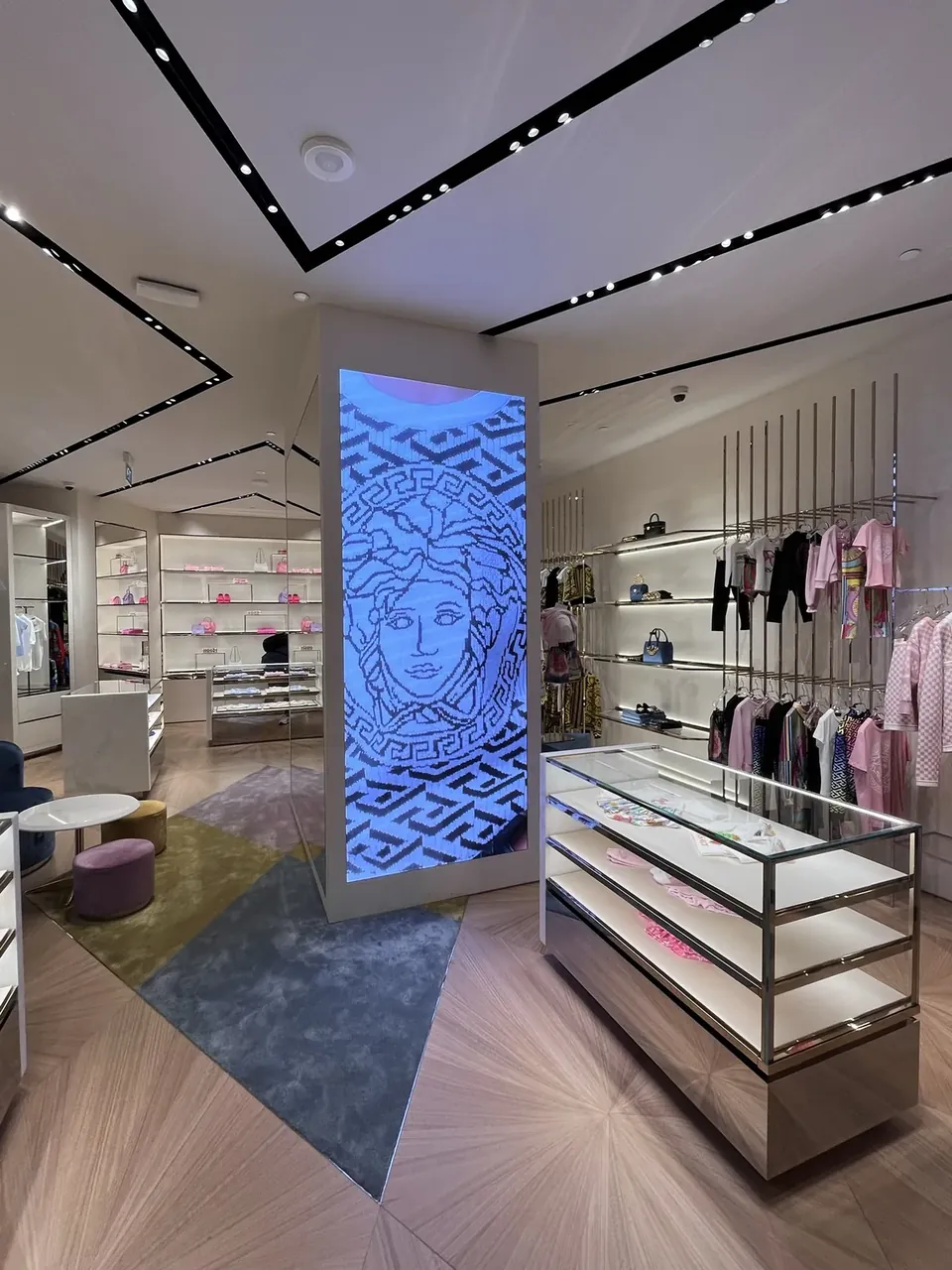
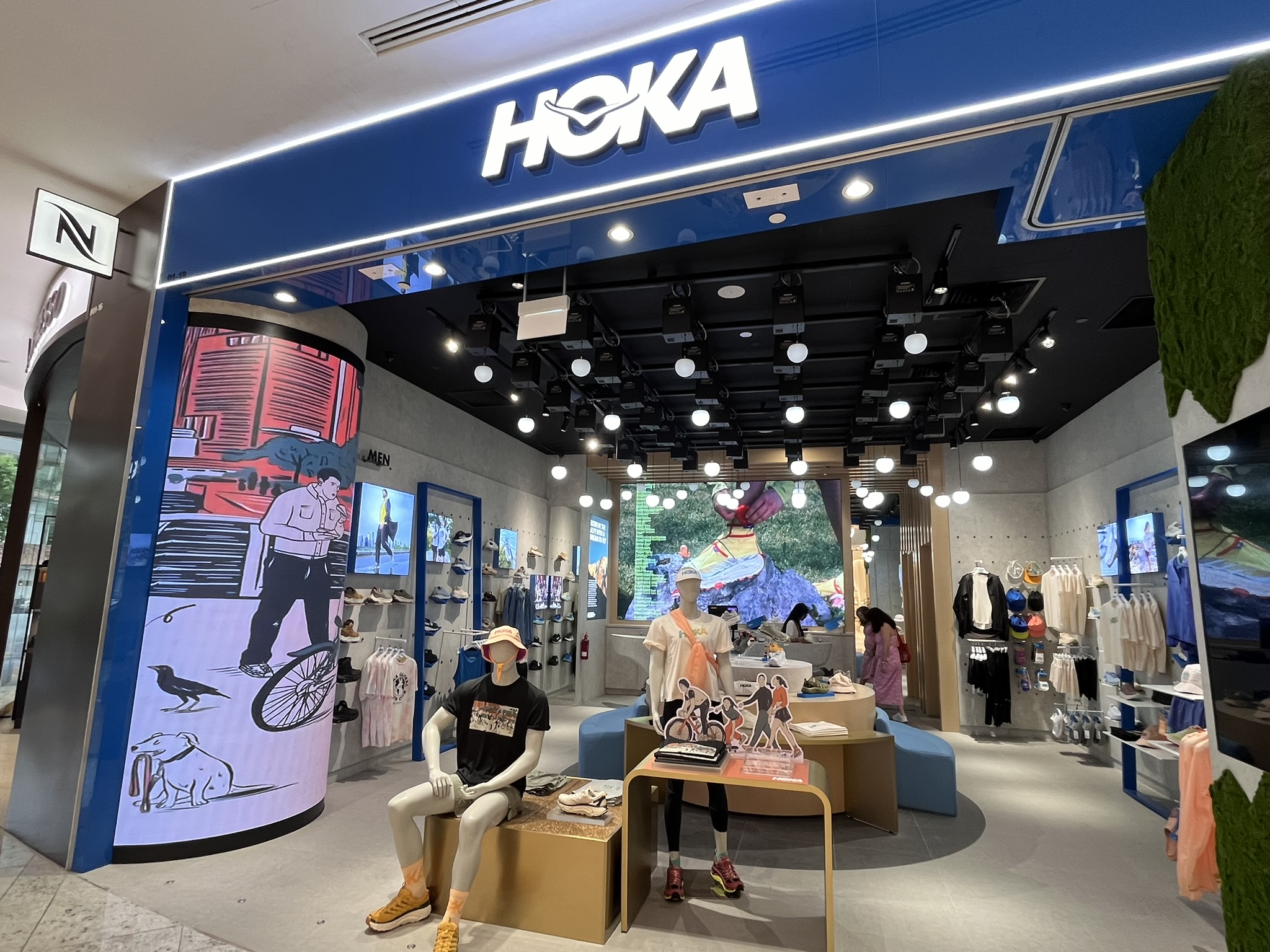
ETA Visual has delivered curved and frontage installations such as the HOKA LED display at Raffles City, along with shopfront screens for brands including VERSACE at Marina Bay Sands and Watsons at Bugis Junction. Projects of that type raise questions a flat-wall warranty never addresses. Who confirms the bend radius is within specification? Is the cabinet structure covered if the wall shifts? If a custom module is discontinued, what replaces it?
For transparent LED film and flexible modules, ask for written confirmation that the installed geometry sits inside the manufacturer's rated limits, and insist that spare modules match the original batch. Without those two documents, a curved installation can be under warranty and still unrepairable.
What Voids an Indoor LED Warranty in Singapore
Heat is the most common cause of rejected claims. Cabinets need airflow, and a wall boxed into a tight joinery recess with no ventilation will run hotter than its design allows. If the installation relies on the building's air-conditioning, confirm that operating schedules and set points are documented, because a screen left running overnight in an unconditioned space is an easy exclusion to invoke.
Power quality matters just as much. Voltage spikes, shared circuits with heavy equipment and the absence of surge protection are standard exclusions, so ask whether the quotation includes surge protection and whether cover depends on it.
Cleaning is the third trap. Liquids that reach the module, abrasive cloths, ammonia-based cleaners and pressure washing can all void coverage, as can unauthorised repair, third-party parts and static high-brightness graphics left on screen for hours. Request the written cleaning procedure and operating settings, and hand both to the facilities team rather than filing them in a project folder.
The Five Things to Confirm Before You Sign
Put five commitments in the contract rather than a covering email: the covered components, named individually; labour and access responsibility, including after-hours work; response and restoration targets with the service hours they apply to; the spare-module provision and colour-batch requirement; and the exclusions, read and understood.
Then check the end of the term. Ask how long parts remain available after expiry, whether an extension can be purchased, and who services the screen once cover ends. A display designed for a ten-year life should not depend on a two-year supply of one module type. None of this needs a legal review. It needs a supplier willing to put specific commitments in writing, and a buyer who compares those commitments instead of the number of years printed at the bottom of the page.
| Warranty element | What to confirm in writing | Why it matters |
|---|---|---|
| Covered components | Modules, power supplies, receiving cards and controller named individually | A general reference to the LED display can exclude the parts that fail most often |
| Labour and access | Who pays for technicians, scissor lifts, scaffolding and after-hours access | Access can cost more than the replacement module in a mall or atrium |
| Response and restoration | Response time, restoration target and the service hours they apply to | A thirty-day parts response does not protect a live retail frontage |
| Spare modules | Quantity held on site and reserved from the same production batch | Mismatched batches leave visible colour patches after a repair |
| Pixel and brightness limits | Dead pixel count or percentage that triggers a claim, plus the brightness drop limit | Vague thresholds turn small faults into disputed exclusions |
| Exclusions and end of term | Heat, surges, cleaning method, unauthorised repair, plus parts availability after expiry | Most rejected claims fall under an exclusion nobody read at signing |
Want an accurate budget for your space?
We'll do a free site survey and prepare a clear, itemised quotation — no obligation.
Frequently asked questions
Commercial indoor LED products are commonly offered with warranty periods in the two to five year range, depending on module grade and the supplier's service model. The term matters less than what it covers, so compare scope, response commitment and spare-module provision alongside the number of years.
Often it does not. Many warranties cover replacement parts only, leaving the buyer to pay for technicians, scissor lifts, scaffolding and after-hours access. Ask for labour and access to be named explicitly, especially for screens mounted high in atriums or above retail frontages.
Usually yes, but only above a stated threshold. Policies may specify a number of dead pixels per module, a percentage of total pixels, or a module replacement trigger. Ask for the exact threshold in writing and confirm whether stuck pixels and brightness degradation are treated the same way.
It can if the wrong method is used. Liquids that enter the module, abrasive cloths, ammonia-based cleaners and pressure washing are common exclusions. Request a written cleaning procedure and confirm whether routine cleaning must be carried out by the supplier's technicians to keep coverage valid.
The warranty may remain valid while the replacement is unavailable, leaving the buyer with a covered but unrepaired screen. Ask the supplier to confirm parts availability for the warranty term plus a defined post-warranty period, and to hold spare modules from the same production batch.
Plan the next step
Continue with a relevant solution and real Singapore project evidence.