LED Display Restaurant Singapore Guide: Plan an Indoor Screen That Sells
Written and reviewed by the ETA Visual Engineering & Project Team. Guidance is updated when project, product or Singapore site-planning practices change.
A well-planned LED display restaurant Singapore installation can do more than add colour to a dining room. It can make a menu easier to scan, turn a queue into a branded moment and give customers a clear reason to look up from the concourse. The right result, however, depends on far more than buying the brightest panel or the largest screen. F&B operators need to account for where guests pause, how close they stand, the ambient light, the ceiling and wall conditions, and who will update content after opening day. This LED display restaurant Singapore guide gives owners, designers and project teams a practical route from first brief to supplier comparison. It focuses on indoor LED displays for restaurants, cafes and food-led retail venues, including menu-led installations, feature walls and shaped digital surfaces. By defining the job of the screen before selecting its specification, you can invest in a display that looks intentional, supports your trading environment and remains simple for the team to use.
LED Display Restaurant Singapore Guide: Start With the Guest Journey
Begin with the moment you want the indoor LED display to influence. At a counter-service concept, the priority may be helping guests understand the menu before they reach the cashier. At a casual-dining venue, a feature screen may establish the atmosphere from the entrance and reinforce the identity of the restaurant while guests wait to be seated. These are different jobs, so they should not receive the same screen size, position or content plan.
Map the path from storefront or mall corridor to order point, seating area and exit. Mark the places where customers slow down and the angles from which they will see the display. This exercise exposes whether a restaurant LED menu board, a wide indoor LED feature wall or a shaped display will deliver the most value. It also prevents a common mistake: placing a visually strong screen where guests only see it for a second.
LED Display Restaurant Singapore Guide: Match Pixel Pitch to Viewing Distance
Pixel pitch should follow the closest practical viewing distance, not a generic preference for finer pixels. Guests studying prices and item names at close range need a sharper image than diners viewing ambient campaign content from across a room. A supplier should show how the recommended pitch supports the actual distance, content type and screen dimensions in your floor plan. That makes the specification easier to defend during design review and fit-out coordination.
Brightness also needs an indoor approach. The display must remain legible against shopfront lighting, mall illumination and reflected surfaces without overpowering nearby tables. Ask for a visual proposal that considers the screen's orientation, surrounding finishes and viewing angles. For F&B digital signage Singapore projects, the best configuration is usually the one that keeps menu information crisp and branded visuals natural rather than simply maximising a technical number.
Choose the Indoor LED Form Factor for the Restaurant Layout
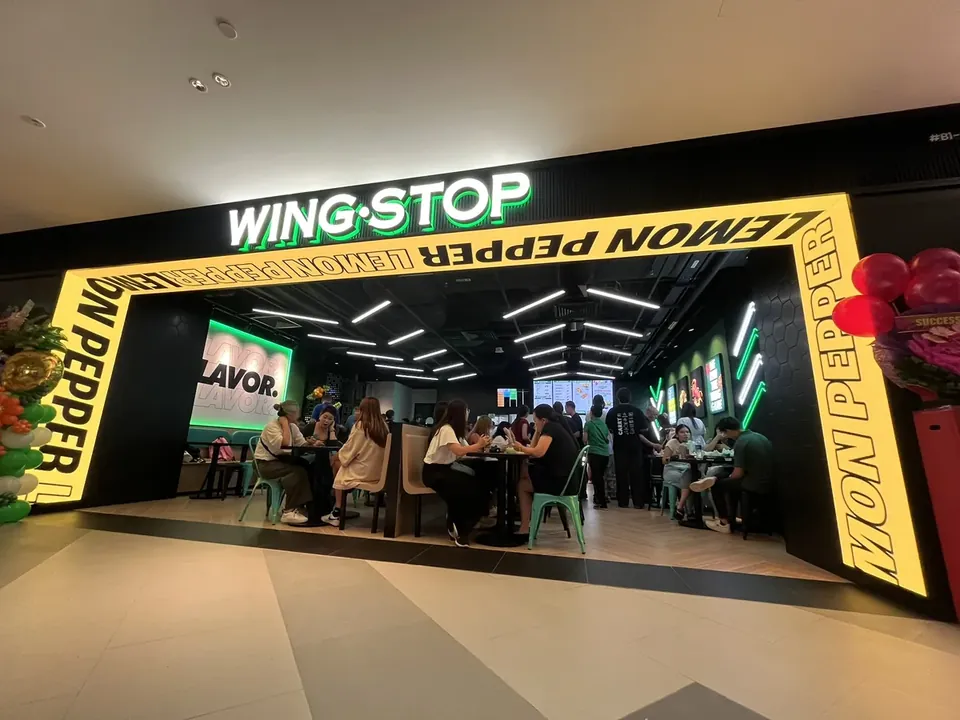
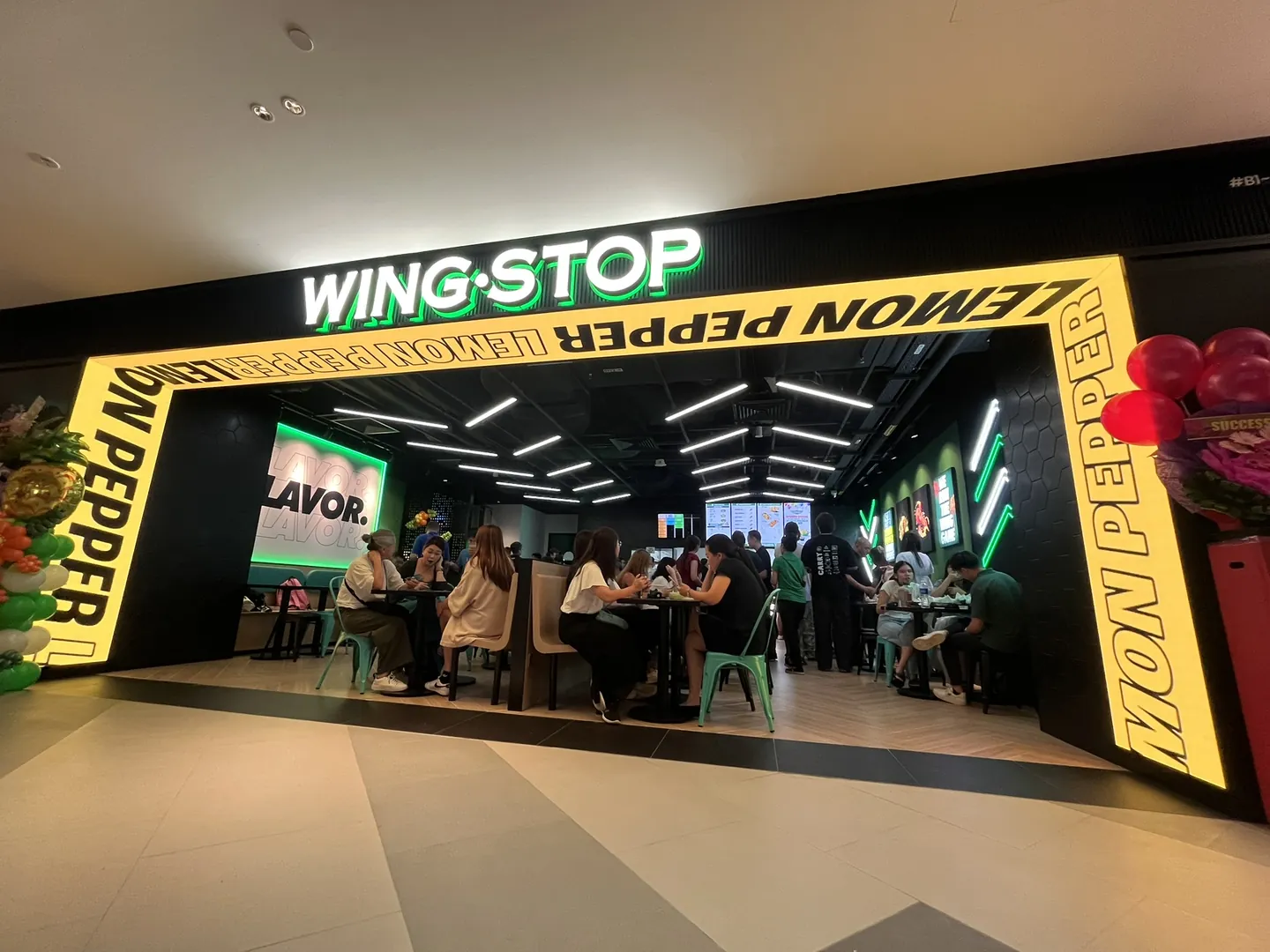
A flat wall is not the only option. When a restaurant has columns, corners or a prominent counter, flexible indoor LED can wrap a curved surface or create a continuous visual line. An N-shaped or multi-sided installation can attract customers from more than one direction in a mall setting, provided the content is designed for each visible face. ETA Visual's Wingstop installation at The Cathay illustrates how a shaped indoor LED display can become part of the frontage rather than an afterthought mounted on it.
The form factor must still respect sightlines, circulation and operational clearances. Keep key menu messages outside zones that are likely to be obscured by queueing guests, fixtures or open doors. Coordinate the display dimensions with the interior designer early so the wall finish, framing and cable routes are resolved as one detail. This creates a cleaner result and avoids shrinking the LED video wall for restaurant Singapore project after the design has already been approved.
Plan Content Before You Approve the Restaurant LED Menu Board
A screen that has no repeatable content plan soon becomes a costly static sign. Before approval, define the core content zones and the update rhythm. A restaurant LED menu board may need fixed product groups, prices, promotional tiles and daypart-specific items. A feature display may need short motion loops, hero dishes, seasonal campaigns and a visual language that works without sound. The display resolution, aspect ratio and layout should make those formats straightforward to build.
Keep messages readable at the expected viewing distance. Large type, strong hierarchy and restrained motion help customers absorb menu and offer information quickly. Ask the supplier to confirm the final pixel canvas, then give that canvas to your content team before opening. This avoids late redesigns caused by an artwork template that does not match the installed display. Clear ownership for updates is equally important, especially for time-sensitive promotions and price changes.
How to Compare an Indoor LED Screen Supplier Singapore Proposal
Do not compare proposals by display area alone. A useful indoor LED screen supplier Singapore proposal explains the use case, recommended pixel pitch, dimensions, mounting concept, control method and the assumptions behind the design. It should also clarify which trades need to coordinate power, data, wall preparation and access before installation. When these details are vague, apparent savings can move into the fit-out budget later.
Request a proposal that shows the display in context with your restaurant plan or elevation, not only a product photo. Evaluate whether the supplier understands F&B constraints such as close viewing, multiple customer approaches, visually busy interiors and menu updates. A technically compatible panel is not enough. The supplier should translate the customer journey and design intent into an indoor LED solution that can be built cleanly and used confidently by the venue team.
Turn the LED Display Brief Into a Buildable Restaurant Project
A concise brief accelerates both pricing and design. Include the venue location, screen purpose, target viewing distances, proposed wall or counter position, available dimensions, desired opening date and examples of the content you expect to run. If the venue is in a mall or mixed-use property, identify the relevant design guidelines and approval steps at the start. This lets the project team assess the screen as part of the full indoor environment.
Then bring the LED supplier, designer and fit-out contractor into the same review before construction is finalised. Confirm the display envelope, mounting interface, ventilation allowances, cable routes and control location as documented details. With these decisions made early, the final installation can support the visual concept without compromising circulation or creating an improvised finish. That is the difference between an indoor screen that merely occupies a wall and one that actively supports the restaurant's commercial experience.
Want an accurate budget for your space?
We'll do a free site survey and prepare a clear, itemised quotation — no obligation.
Frequently asked questions
The best LED display restaurant Singapore solution starts with its role in the guest journey. A menu-led counter, a mall-facing shopfront and a dining-room feature wall require different dimensions, pixel pitch and content layouts. A site-specific proposal is more useful than selecting a panel from a generic price list.
Choose pixel pitch based on the closest distance at which guests need to read the menu. When customers stand close to the screen, a finer pitch usually supports cleaner text and product imagery. The supplier should validate the choice against the final screen size, menu layout and counter position.
Yes. Flexible indoor LED can be designed around a curved wall, column or shaped frontage when the layout and structure are planned early. Curved and multi-sided displays need content that works from each customer approach, not simply a flat artwork stretched across the surface.
Ask for the screen dimensions, pixel pitch, viewing-distance rationale, mounting concept, control workflow and the coordination requirements for your fit-out. A capable indoor LED screen supplier Singapore should also place the proposed display in your restaurant plan or elevation so you can assess the design in context.
Set the final pixel canvas before artwork is produced and create templates for menu, promotion and brand content. Assign one team or agency to own updates, including price changes and campaigns. This makes F&B digital signage Singapore content faster to publish and more consistent across the venue.
Plan the next step
Review real F&B environments to translate viewing distance and content needs into a practical LED brief.