Singapore Commercial AV: Choosing the Right Integrator
Written and reviewed by the ETA Visual Engineering & Project Team. Guidance is updated when project, product or Singapore site-planning practices change.
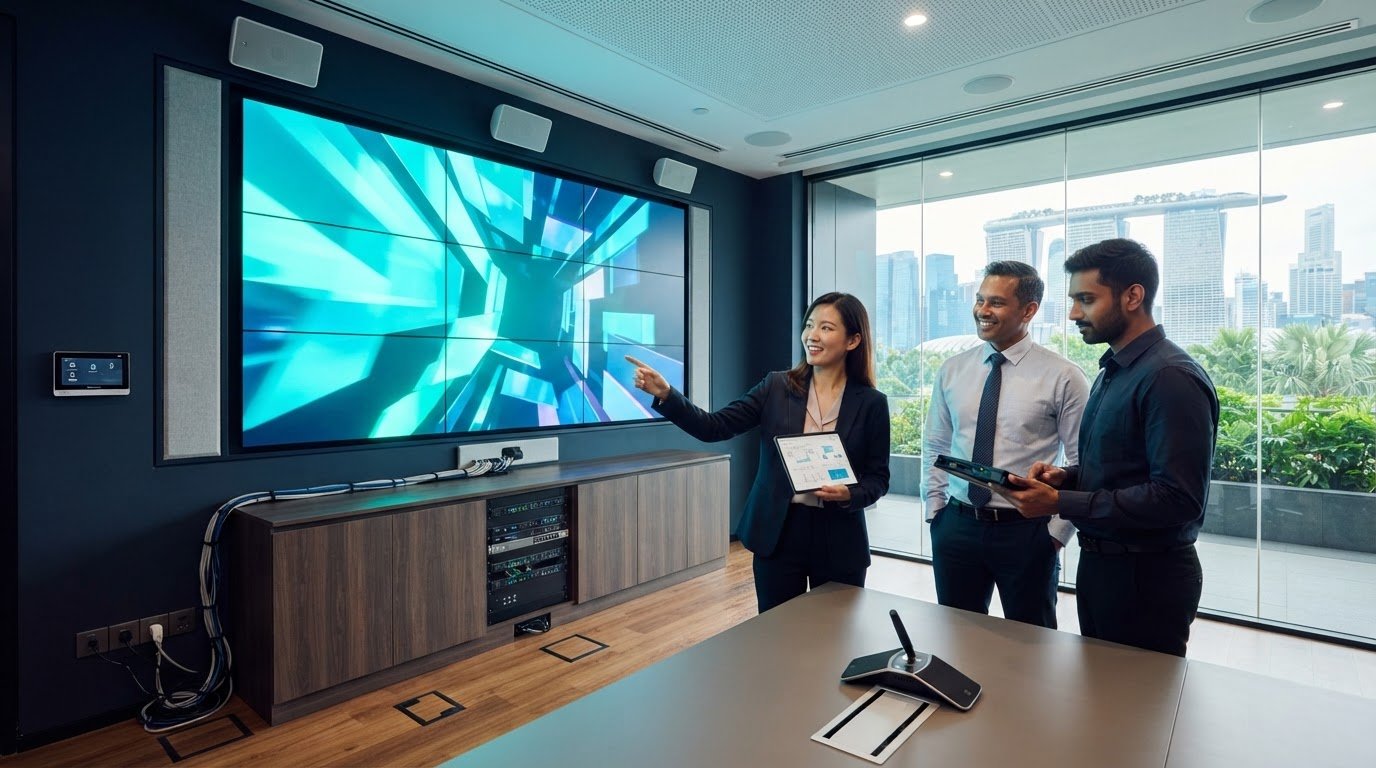
The longest equipment list doesn’t make the strongest AV proposal. For businesses comparing commercial AV solutions Singapore, the real test is whether displays, audio, control and connectivity work together reliably in the space, and whether someone will take responsibility after installation. It’s reasonable to find supplier quotes difficult to compare when each describes a different scope. A conference room, retail display and hotel public area also have distinct operating needs, so matching equipment and system design to the application matters more than choosing the most features. Clear proposals should explain what’s included, how components connect and what support is available after handover. This guide explains how to define the Audio-Visual system your business needs, assess integration and project delivery, and compare ongoing support before selecting an integrator in Singapore. It also covers practical considerations such as building coordination, installation access, commissioning and maintenance in a warm, humid climate. The aim is to help you evaluate proposals using consistent technical and service criteria, then choose a partner who can support the system beyond handover.
Key Takeaways
- Start with the business outcome each space needs to support, then define the AV scope around it.
- Trace how content moves from source through processing and distribution to displays, audio and user controls.
- Compare commercial AV solutions Singapore proposals against the same criteria, including exclusions, interfaces, commissioning and ongoing support.
- Plan site survey, building coordination and installation access early, with equipment placement and maintenance needs suited to local heat and humidity.
- Shortlist integrators who can explain system fit, project responsibilities and the support arrangements your site will need.
Table of Contents
What Should Commercial AV Solutions in Singapore Achieve?
Start with the work the system needs to do, not a catalogue of equipment. Commercial AV solutions Singapore businesses use are coordinated audio, video, content and, where required, control systems designed around specific operational goals. These might include communicating promotions, supporting meetings, helping visitors find information or shaping the customer experience in a retail or hospitality space.
The term covers more than screens and speakers. Audiovisual (AV) is electronic media used to present or communicate information, but a commercial installation must also account for how content is sourced, distributed, operated and maintained. Depending on the site, the system may combine LED displays, digital signage, commercial audio and user controls. For example, a retailer may need scheduled visual content alongside background music, while a meeting room may need a straightforward way to share presentations and hear participants clearly.
That distinction matters: an equipment list names devices, while an engineered system explains how they connect and serve users. Proposals should make the signal path clear, identify interfaces and dependencies, and define how the system will be commissioned and supported. A display that cannot receive the intended content, or controls that staff find difficult to use, may not meet the original business need.
Which business spaces commonly need integrated AV?
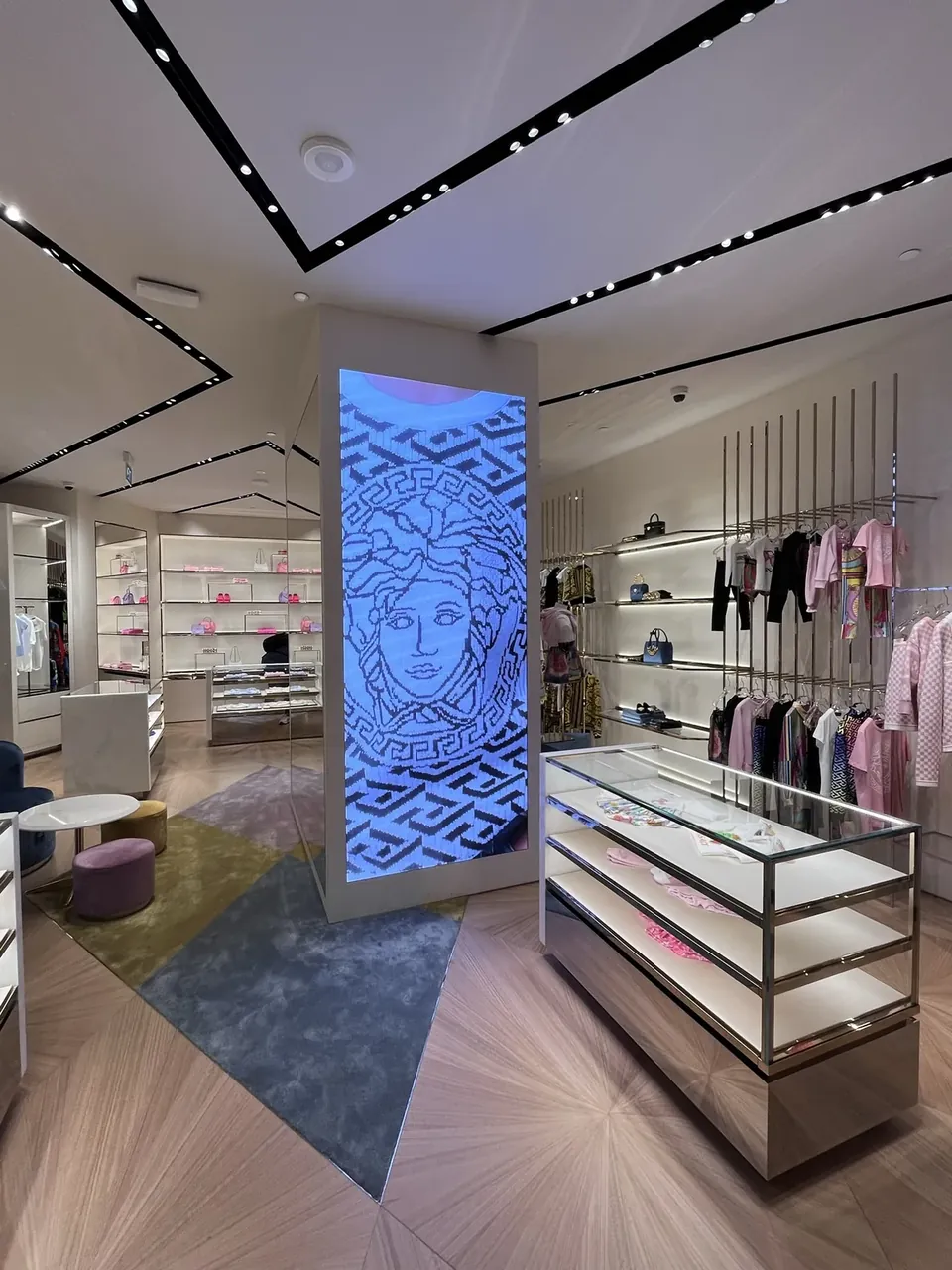
Retail and hospitality spaces may use displays, digital signage and audio to present information and support a consistent customer experience. Offices may need conference-room AV that makes meetings easy to start and use. These are starting points, not standard packages: room layout, ambient conditions, content needs, user skills and maintenance access all affect the design. ETA Visual’s LED display solutions in Singapore are one relevant category to consider when a display is part of the brief.
What does an AV integrator contribute beyond supplying equipment?
An integrator helps define requirements, surveys the site, designs the system and coordinates installation. Integration means checking that devices, signal paths, control functions and user workflows work as a complete arrangement, rather than assuming separately selected components will work together. Commissioning then verifies the installed system against its intended use, while the support scope clarifies who to contact if maintenance or repair is needed.
An equipment supplier provides devices; an AV integrator coordinates the system lifecycle, from requirements and design through installation, commissioning and agreed after-sales support. That accountability helps buyers assess not only what is being supplied, but how the proposed solution is intended to work in their specific Singapore site.
How Commercial AV Systems Work Together Across a Singapore Site
A useful way to assess a system is to trace the signal path from start to finish. Content may begin on a laptop, playback device or media server, pass through processing and distribution, then reach a display, LED screen or audio system. Control interfaces let authorised users select sources or manage routine functions, depending on the design. Each connection and hand-off should be clear in the proposal.
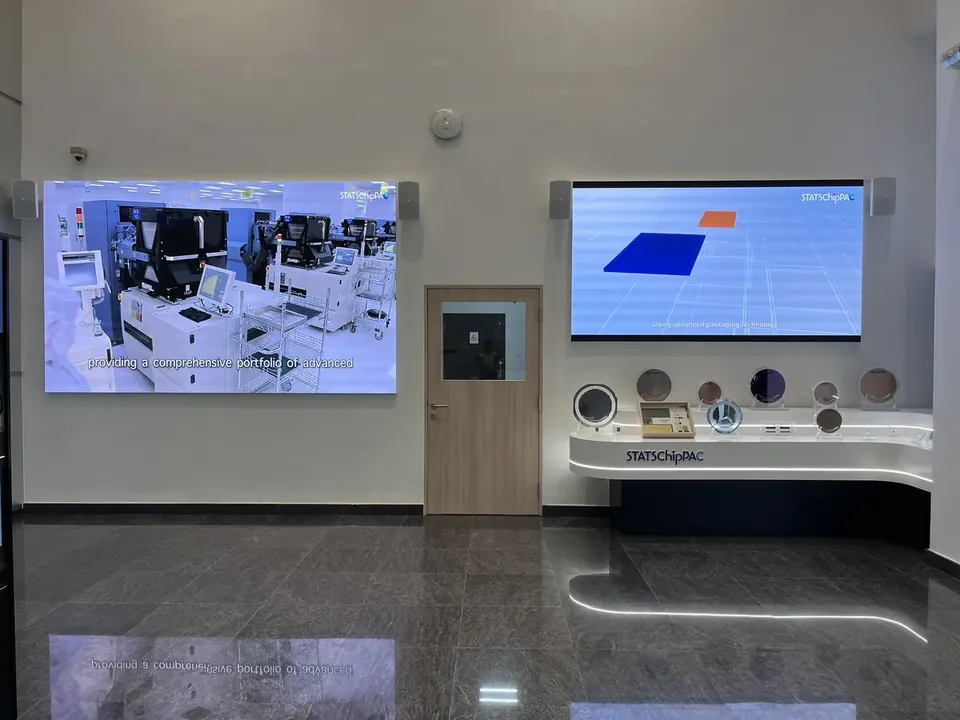
At a retail site, for example, digital signage and an LED display may present scheduled visual content while commercial audio provides background music. They can share an operating plan without necessarily sharing the same content source or control method. A media server, signal distribution equipment or central control system may be appropriate for some projects, but these are design choices, not standard requirements. For a broader view of the audio scope, explore commercial audio system solutions.
Responsibility matters as much as connectivity. If separate parties supply the display, audio and control components, confirm who will check interfaces, coordinate configuration and resolve faults that cross system boundaries. For projects that involve building info-communication facilities, consult IMDA’s Code of Practice for Info-communication Facilities in Buildings (COPIF) and clarify relevant site coordination with the building team.
How do displays, audio and control fit into one system?
Begin with the content source and identify every step to the intended endpoint: processing, distribution, display or audio output, then user control. This makes dependencies visible, such as which device provides content and how staff select it. Control interfaces can simplify routine operation, but their functions should reflect the actual workflow. Map the signal path before comparing equipment lists.
Why do commissioning and handover matter?
Commissioning should include functional checks, configuration and a demonstration of the agreed user workflows before handover. Commissioning is the verification that an installed system performs its agreed functions. Ask for documentation identifying system components, operating procedures and support contacts. This gives staff a practical reference and helps clarify who owns troubleshooting when an issue involves more than one device.
Before approving a proposal, ask the integrator to explain how the system will be tested and what records you will receive at handover. If commercial audio is part of your scope, you can discuss commercial audio requirements alongside the display and control plan.
How to Compare Commercial AV Solutions and Integrators
Compare proposals against the same brief, not by counting devices or comparing headline figures alone. For commercial AV solutions Singapore businesses are assessing, the longest equipment list may simply reflect a broader scope, not a better-integrated system. Ask each supplier to state what is included, what is excluded, which interfaces are assumed and which project dependencies could affect delivery.
Use a consistent scorecard to make differences visible:
| Criterion | What to compare | Question to ask |
|---|---|---|
| Requirements fit | How the proposed system supports your documented business needs and users | Which requirement does each component address? |
| Design scope | Site assessment, system design and signal-flow information included | Can you provide a system diagram and explain key assumptions? |
| Integration responsibility | Who coordinates devices, interfaces and dependencies between suppliers | Who resolves an issue that spans multiple components? |
| Commissioning | Functional checks, configuration and user handover | How will the agreed workflows be tested before handover? |
| After-sales support | Maintenance arrangements, escalation route and repair support | How are support requests handled, and what is included? |
What questions should a commercial AV proposal answer?
A strong proposal connects equipment choices to your requirements. Request clear scope boundaries, a system diagram and responsibility allocation, including any work that depends on your building team or other contractors. Check that testing, staff handover and post-installation support are described rather than left as assumptions. Relevant experience should match the application and technical scope; brand lists or broad capability claims alone don’t demonstrate that a supplier has addressed your site’s needs.
How can buyers compare cost without relying on headline figures?
Compare like-for-like scope and stated assumptions, not an isolated total. Ask suppliers to separate optional items from included equipment and identify exclusions, interfaces or dependencies that could change the project scope. Consider lifecycle support and future serviceability alongside initial expenditure. For example, clarify how equipment can be accessed for maintenance and whether a proposed support arrangement covers the system components you’re buying. ETA Visual lists AV maintenance services; check any provider’s specific terms and coverage rather than assuming support is included.
The goal isn’t to select the most comprehensive proposal by default. It’s to choose a supplier whose design fits the application, whose responsibilities are clear, and whose commissioning and support arrangements are defined before work begins.
Singapore Site Conditions to Plan Before AV Installation
Installation planning starts with the site, not the delivery schedule. In Singapore, building access, operating hours and environmental conditions can affect where equipment is placed, how it is installed and how it can be maintained. Heat and humidity are also worth assessing, particularly when choosing equipment locations and planning ventilation and service access. Requirements vary by site, so confirm them with the relevant building and project teams rather than assuming one process applies everywhere.
Use this sequence to prepare:
- Survey the site. Record room use, viewing positions, ambient conditions, proposed equipment locations and maintenance access.
- Coordinate with building management. Confirm site procedures, loading access, permitted work hours, delivery arrangements and approved installation routes.
- Confirm the design. Check equipment locations, power and cabling provisions, signal routes and any dependencies with other project works.
- Plan access. Make sure people, equipment and tools can reach the installation area, and that the system can be accessed for future maintenance.
- Schedule installation and testing. Agree the work sequence and coordinate functional checks around business operations where site conditions allow.
Electrical, structural and regulatory requirements depend on the installation. Have relevant considerations assessed by appropriately qualified project professionals, and verify any applicable requirements with the responsible parties before work begins.
What should a Singapore site survey assess?
A useful survey connects the intended use to the physical space. Note where staff and visitors will view or operate the system, the locations available for equipment, and whether heat, humidity or other ambient conditions need to inform placement. Identify potential power and cabling points, signal routes and maintenance access. Structural considerations should be flagged for assessment by the relevant qualified professionals. Share findings with the building manager and project stakeholders so design assumptions can be checked early.
How can businesses reduce disruption during installation?
Confirm work windows, access procedures and delivery arrangements before setting an installation date. In a mall or operating business, the route from loading area to worksite, site rules and coordination with other contractors may affect sequencing. Plan installation and testing around customer, staff or tenant operations where feasible, and agree in advance how the work area will be managed. If display works are in scope, review LED display installation and solutions in Singapore as part of the planning process.
Selecting an AV Partner for Delivery and Long-Term Support
A suitable partner should be able to explain how its design fits your application, who is responsible for each part of delivery, how the system will be commissioned and what support is available after handover. For commercial AV solutions Singapore businesses depend on, these details matter as much as the equipment specification. A clear support arrangement helps your team know where to turn when a system needs attention.
Before shortlisting, confirm that each provider can describe:
- How the proposed equipment and system design meet your requirements.
- Who coordinates installation, interfaces and commissioning.
- What operating information and support contacts you’ll receive at handover.
- Which maintenance or repair services are available, and what their terms cover.
Preventive maintenance and emergency repair needs depend on system use, site operations and the consequences of equipment faults. Ask providers to explain their support process, escalation route, scope and any applicable service conditions rather than assuming response times or outcomes. ETA Visual lists AV maintenance and support services for ongoing-care information.
What should happen after the system is installed?
Handover should give the people responsible for the system practical operating guidance, relevant system information and clear support contacts. Ask what documentation will be provided and how staff can report a fault. Planned maintenance can help teams review system condition and identify service needs, but its scope and schedule should be agreed for the particular installation. Confirm what is included instead of assuming all equipment or repair work is covered.
When is ETA Visual worth considering?
ETA Visual may be relevant if your project needs LED displays, commercial audio or coordinated AV integration, with delivery spanning design, supply, installation, commissioning and after-sales support. Assess this scope against your requirements, the proposed system and the support arrangements you need. A useful next step is to share the application, site constraints and expected user workflows, then discuss what should be included in a site survey or proposal.
Choose an AV Partner for the Full Project Lifecycle
The right commercial AV solutions Singapore businesses choose should fit the way each space operates, connect reliably as a system and come with clear commissioning and support arrangements. Compare proposals by requirements, responsibilities and ongoing care, not by equipment lists alone. Plan site access and environmental conditions early so installation and future maintenance are considered from the start.
ETA Visual provides end-to-end services including site surveys, system design, installation and ongoing support. Its capabilities include LED displays, commercial audio and AV systems for commercial spaces. If you’re defining a project, a discussion about your requirements can help clarify the scope and next steps.
With a clear brief and an accountable integration partner, you can move forward with greater confidence in the system your business needs.
What are commercial AV solutions?
Commercial AV solutions are coordinated audio, video, content and control systems designed to support business activities. A system might combine LED displays, digital signage and commercial audio, or provide conference-room AV for meetings. The right scope depends on the space and its users. Commercial AV solutions Singapore businesses consider should be assessed as complete systems, with compatible signal paths and user workflows, rather than as a list of separate devices.
How do I choose a commercial AV integrator in Singapore?
Choose an integrator whose proposed system fits your application and whose project responsibilities are clear. Compare suppliers using the same brief, then check design scope, installation coordination, commissioning and support after handover. Ask for a system diagram and written clarification of inclusions, exclusions, interfaces and dependencies. Relevant experience should relate to your type of space and requirements, rather than relying on brand lists or broad capability claims alone.
What is usually included in a commercial AV project?
The scope varies, but may cover a site survey, system design, equipment supply, installation, configuration and commissioning. A project could include displays, audio equipment, content sources, signal distribution and control, depending on the intended use. Confirm whether cabling, building coordination, staff handover and ongoing support are included or handled separately. The proposal should identify exclusions and dependencies so you can understand which tasks remain with your team or other contractors.
Can a commercial AV system combine LED displays and audio?
Yes. A commercial AV system can coordinate LED displays and audio where both serve the space’s operational goals. For example, a retail environment may use an LED display to present visual content while a background music system provides audio. The components may use separate content sources or controls, so ask the integrator to explain signal flow, operating procedures and how each part will be tested. Confirm whether synchronised content is required rather than assuming it is included.
How much do commercial AV solutions cost in Singapore?
There is no single price that applies to every project. The quotation depends on the equipment and system scope, integration requirements, site conditions, installation coordination and the agreed commissioning and support arrangements. Request an itemised proposal in Singapore dollars (S$), with optional items, exclusions and assumptions stated clearly. To compare suppliers fairly, check that each quotation covers the same requirements and clarify any ongoing maintenance or repair charges separately.
What should a site survey cover before commercial AV installation?
A site survey should record how the space is used, viewing positions, equipment locations and available maintenance access. It should also identify potential power and cabling points, signal routes, ambient conditions and installation access. In Singapore, heat and humidity may be relevant to equipment placement and servicing. Discuss loading access, permitted work hours and site procedures with building management, and refer structural or electrical questions to appropriately qualified project professionals.
Do commercial AV systems need ongoing maintenance?
Maintenance needs depend on the system, how often it is used and the site’s operating requirements. Planned checks can help a team review equipment condition and identify service needs, while a clear repair process helps staff know whom to contact if a fault occurs. Ask what components and tasks are covered, how support requests are handled and what is excluded. ETA Visual lists preventive maintenance contracts and emergency on-site repair; confirm the applicable scope and terms for your project.
Visual planning reference
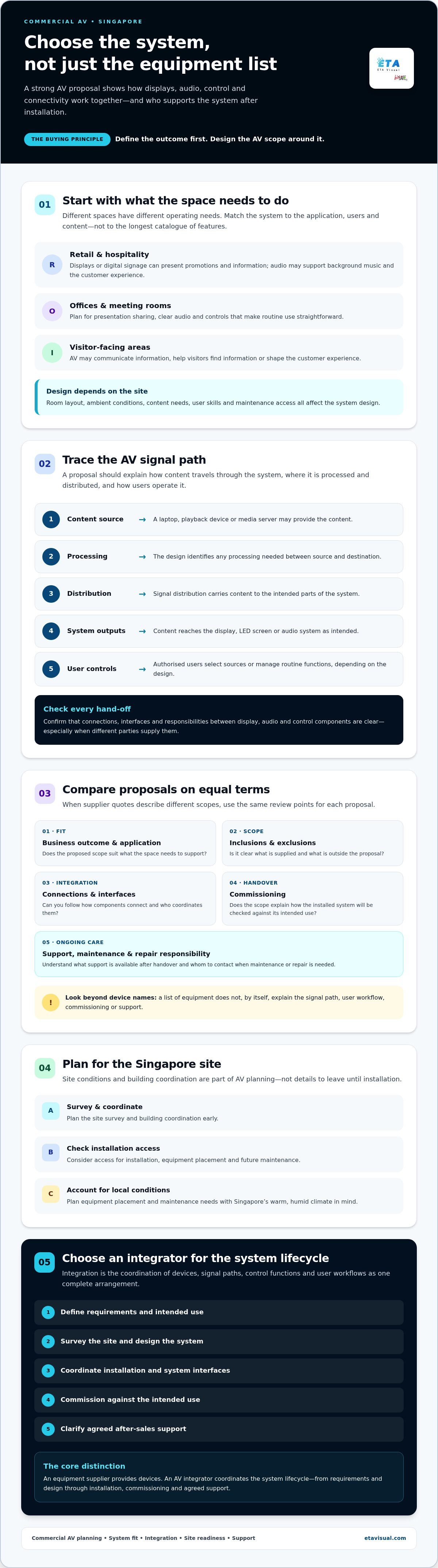
| Criterion | What to compare | Question to ask |
|---|---|---|
| Requirements fit | How the proposed system supports your documented business needs and users | Which requirement does each component address? |
| Design scope | Site assessment, system design and signal-flow information included | Can you provide a system diagram and explain key assumptions? |
| Integration responsibility | Who coordinates devices, interfaces and dependencies between suppliers | Who resolves an issue that spans multiple components? |
| Commissioning | Functional checks, configuration and user handover | How will the agreed workflows be tested before handover? |
| After-sales support | Maintenance arrangements, escalation route and repair support | How are support requests handled, and what is included? |
Want an accurate budget for your space?
We'll do a free site survey and prepare a clear, itemised quotation — no obligation.
Frequently asked questions
Retail and hospitality spaces may use displays, digital signage and audio to present information and support a consistent customer experience. Offices may need conference-room AV that makes meetings easy to start and use. These are starting points, not standard packages: room layout, ambient conditions, content needs, user skills and maintenance access all affect the design. ETA Visual’s LED display solutions in Singapore are one relevant category to consider when a display is part of the brief.
An integrator helps define requirements, surveys the site, designs the system and coordinates installation. Integration means checking that devices, signal paths, control functions and user workflows work as a complete arrangement, rather than assuming separately selected components will work together. Commissioning then verifies the installed system against its intended use, while the support scope clarifies who to contact if maintenance or repair is needed. An equipment supplier provides devices; an AV integrator coordinates the system lifecycle, from requirements and design through installation, commissioning and agreed after-sales support. That accountability helps buyers assess not only what is being supplied, but how the proposed solution is intended to work in their specific Singapore site. A useful way to assess a system is to trace the signal path from start to finish. Content may begin on a laptop, playback device or media server, pass through processing and distribution, then reach a display, LED screen or audio system. Control interfaces let authorised users select sources or manage routine functions, depending on the design. Each connection and hand-off should be clear in the proposal. At a retail site, for example, digital signage and an LED display may present scheduled visual content while commercial audio provides background music. They can share an operating plan without necessarily sharing the same content source or control method. A media server, signal distribution equipment or central control system may be appropriate for some projects, but these are design choices, not standard requirements. For a broader view of the audio scope, explore commercial audio system solutions. Responsibility matters as much as connectivity. If separate parties supply the display, audio and control components, confirm who will check interfaces, coordinate configuration and resolve faults that cross system boundaries. For projects that involve building info-communication facilities, consult IMDA’s Code of Practice for Info-communication Facilities in Buildings (COPIF) and clarify relevant site coordination with the building team.
Begin with the content source and identify every step to the intended endpoint: processing, distribution, display or audio output, then user control. This makes dependencies visible, such as which device provides content and how staff select it. Control interfaces can simplify routine operation, but their functions should reflect the actual workflow. Map the signal path before comparing equipment lists.
Commissioning should include functional checks, configuration and a demonstration of the agreed user workflows before handover. Commissioning is the verification that an installed system performs its agreed functions. Ask for documentation identifying system components, operating procedures and support contacts. This gives staff a practical reference and helps clarify who owns troubleshooting when an issue involves more than one device. Before approving a proposal, ask the integrator to explain how the system will be tested and what records you will receive at handover. If commercial audio is part of your scope, you can discuss commercial audio requirements alongside the display and control plan. Compare proposals against the same brief, not by counting devices or comparing headline figures alone. For commercial AV solutions Singapore businesses are assessing, the longest equipment list may simply reflect a broader scope, not a better-integrated system. Ask each supplier to state what is included, what is excluded, which interfaces are assumed and which project dependencies could affect delivery. Use a consistent scorecard to make differences visible:
A strong proposal connects equipment choices to your requirements. Request clear scope boundaries, a system diagram and responsibility allocation, including any work that depends on your building team or other contractors. Check that testing, staff handover and post-installation support are described rather than left as assumptions. Relevant experience should match the application and technical scope; brand lists or broad capability claims alone don’t demonstrate that a supplier has addressed your site’s needs.
Compare like-for-like scope and stated assumptions, not an isolated total. Ask suppliers to separate optional items from included equipment and identify exclusions, interfaces or dependencies that could change the project scope. Consider lifecycle support and future serviceability alongside initial expenditure. For example, clarify how equipment can be accessed for maintenance and whether a proposed support arrangement covers the system components you’re buying. ETA Visual lists AV maintenance services; check any provider’s specific terms and coverage rather than assuming support is included. The goal isn’t to select the most comprehensive proposal by default. It’s to choose a supplier whose design fits the application, whose responsibilities are clear, and whose commissioning and support arrangements are defined before work begins. Installation planning starts with the site, not the delivery schedule. In Singapore, building access, operating hours and environmental conditions can affect where equipment is placed, how it is installed and how it can be maintained. Heat and humidity are also worth assessing, particularly when choosing equipment locations and planning ventilation and service access. Requirements vary by site, so confirm them with the relevant building and project teams rather than assuming one process applies everywhere. Use this sequence to prepare: Electrical, structural and regulatory requirements depend on the installation. Have relevant considerations assessed by appropriately qualified project professionals, and verify any applicable requirements with the responsible parties before work begins.
Plan the next step
Continue with a relevant solution and real Singapore project evidence.