Retail LED Display Singapore: How to Choose the Right Screen for Your Store
Written and reviewed by the ETA Visual Engineering & Project Team. Guidance is updated when project, product or Singapore site-planning practices change.
Singapore's retail landscape is fiercely competitive — and the right LED display can be the difference between a shopper walking past or walking in. Whether you're fitting out a new shopfront, upgrading a dated lightbox, or adding an in-store video wall, this guide covers everything you need to know about retail LED displays in Singapore: pixel pitch, brightness, cabinet options, and real-world installation examples from ETA Visual's portfolio.
Why Retailers in Singapore Are Switching to LED
Traditional backlit signage and LCD panels simply can't match the visual impact of modern LED displays. LED screens offer higher brightness (3,000–6,000 nits for shopfronts vs. 500 nits for most LCDs), seamless tiling for large-format video walls, and far longer operational lifespans — typically 80,000–100,000 hours. For Singapore retailers operating in high-ambient-light environments like ION Orchard, Jewel Changi, or Bugis Junction, brightness and contrast are non-negotiable.
Beyond raw performance, LED displays are increasingly affordable. Entry-level P2.5 indoor panels now cost a fraction of what they did five years ago, making LED a viable option for mid-sized retailers, not just flagship luxury brands.
Pixel Pitch: The Most Important Spec for Retail
Pixel pitch (the distance between LED clusters, measured in millimetres) determines how close viewers can stand before the image looks pixelated. For retail, the rule of thumb is: the closer the typical viewing distance, the smaller the pixel pitch you need.
| Pixel Pitch | Minimum Viewing Distance | Best For |
|---|---|---|
| P1.2 – P1.5 | 1–2 m | Jewellery counters, luxury showcases |
| P1.86 – P2.5 | 2–4 m | In-store video walls, fitting room displays |
| P2.5 – P3.91 | 3–6 m | Shopfront displays, mall atriums |
| P4 – P6 | 5–10 m | Large-format lobby screens, wayfinding |
For most Singapore retail shopfronts — where passers-by are 3–5 m away — P2.5 to P3.91 delivers excellent image quality at a reasonable cost. For in-store displays where customers stand closer, P1.86 or finer is worth the premium.
Cabinet Types: Standard, Flexible, and Transparent
Not all LED cabinets are the same. Retail applications often call for specialised form factors:
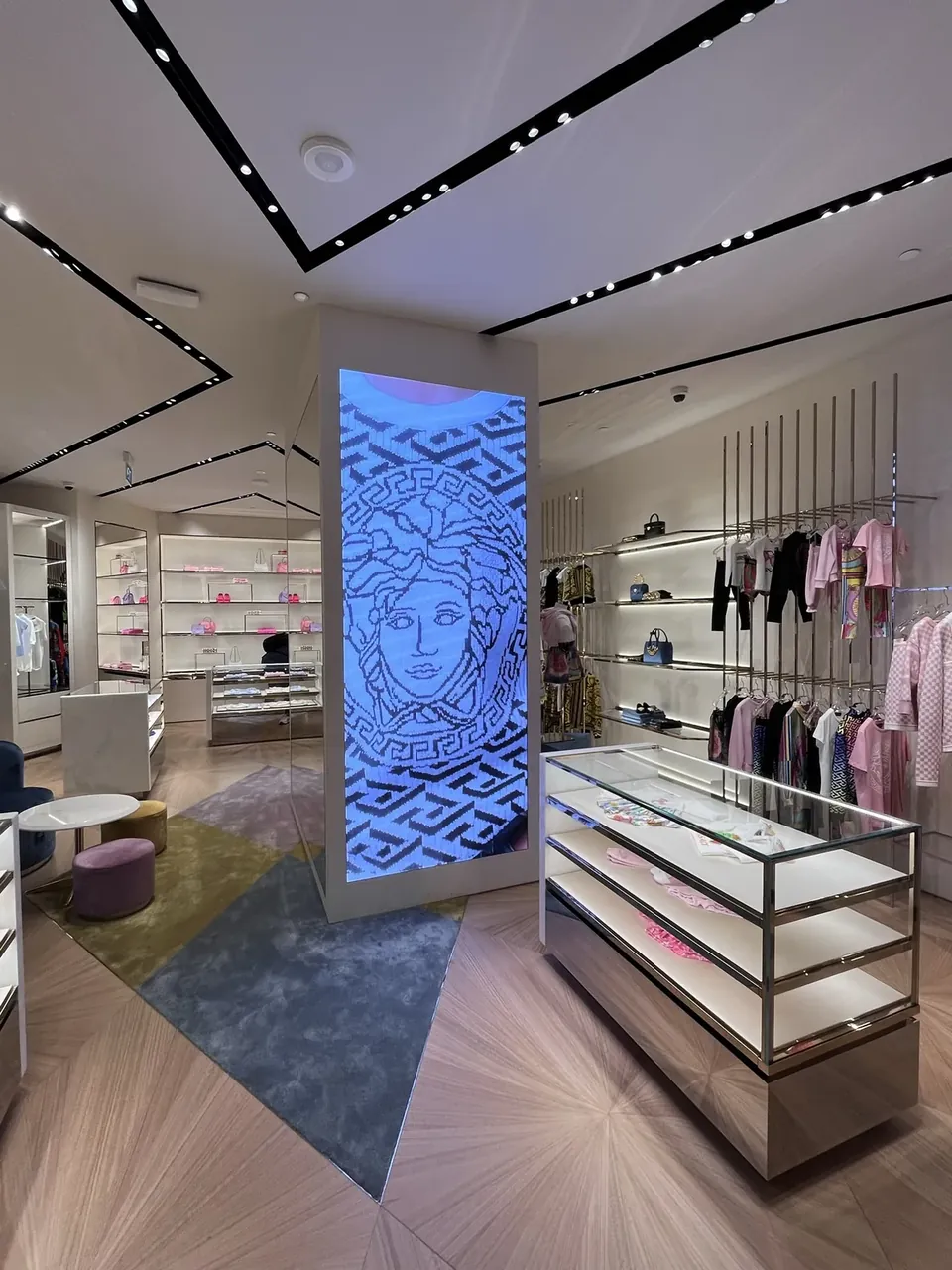
Standard flat panels are the most cost-effective and widely used. They tile seamlessly to create any size video wall. ETA Visual has installed P2.5 flat panels for brands including ZARA at ION Orchard and Armani Exchange at ION Mall.
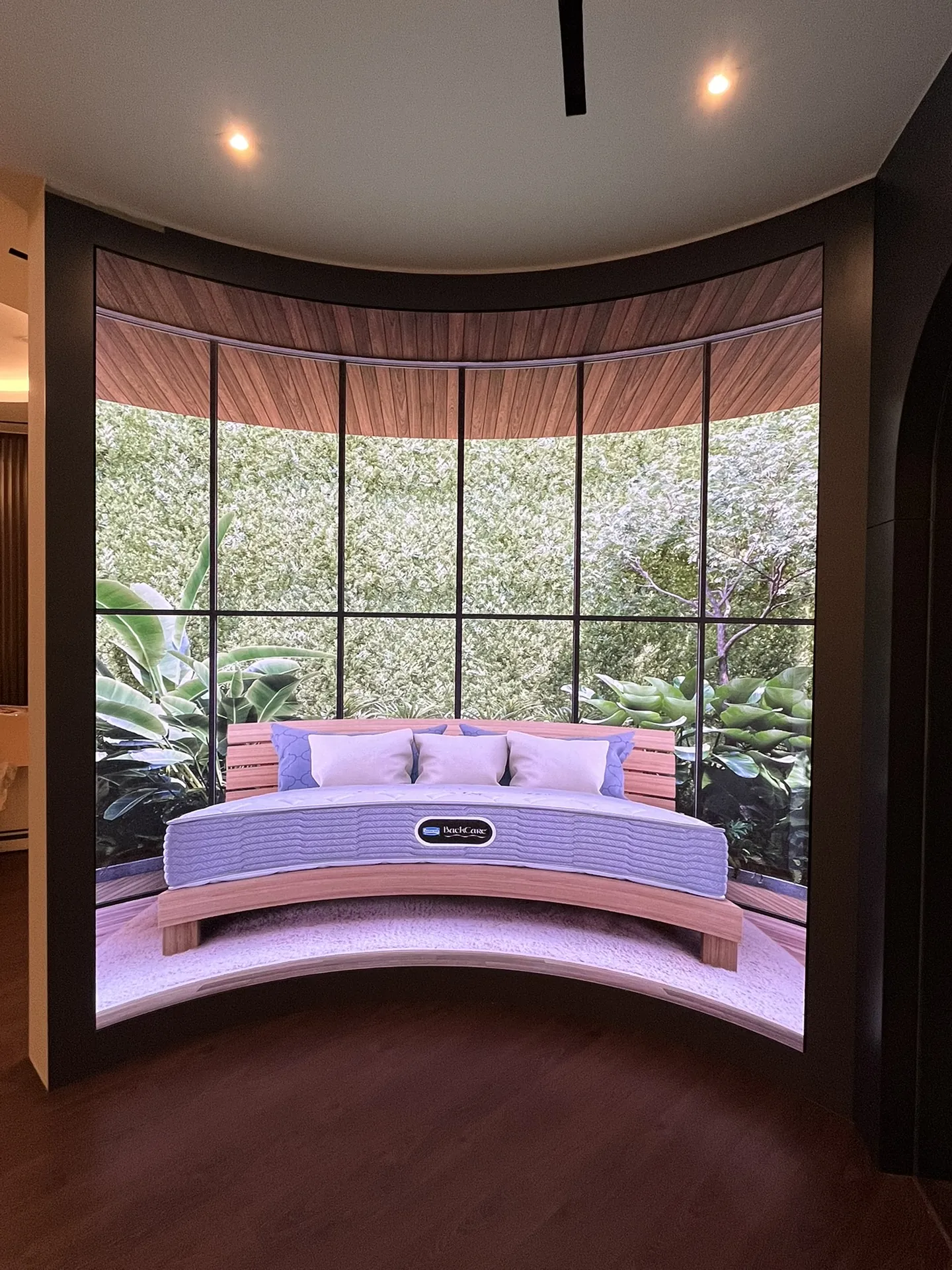
Flexible/curved LED panels can be bent to follow curved walls, columns, or custom architectural shapes. Simmons Mattress at United Square used P1.86 flexible panels to wrap a curved display around their store entrance — creating a distinctive visual that's impossible with flat screens.
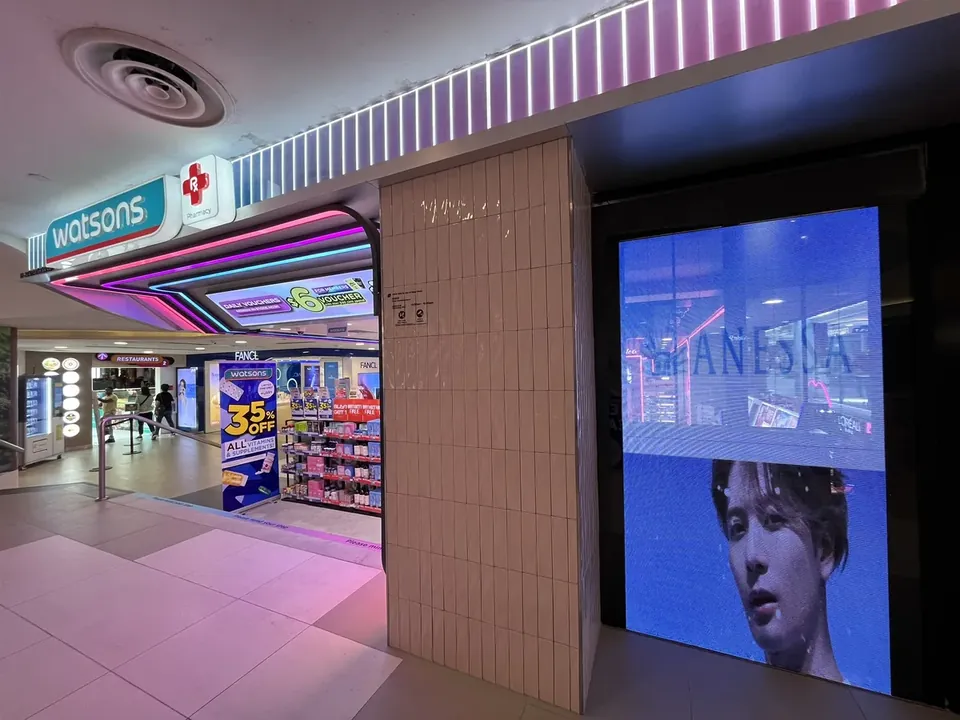
Transparent LED panels allow light to pass through, making them ideal for shopfront glass walls where you want to display content without blocking natural light or the view inside. ETA Visual has installed transparent LED for Watsons at Bugis Junction and Snoopy at RWS, achieving 40–70% transparency while maintaining vivid visuals.
Brightness and Ambient Light: Getting It Right for Singapore
Singapore's retail environments range from naturally lit atriums (Jewel Changi, VivoCity) to artificially lit basement malls (Bugis Junction B1, Orchard Central). Brightness requirements differ significantly:
- Naturally lit or near-window locations: 4,000–6,000 nits minimum to remain visible in daylight
- Standard mall interior: 1,500–3,000 nits is sufficient
- Dim, mood-lit luxury boutiques: 800–1,500 nits to avoid washing out the ambient atmosphere
All ETA Visual installations include brightness calibration as standard. Automatic brightness sensors can be added to adjust output based on ambient light levels — useful for stores with variable lighting throughout the day.
Installation Considerations for Singapore Retail
Singapore's Building and Construction Authority (BCA) and individual mall management offices have specific requirements for signage and display installations. Key considerations include:
Structural load: Large LED video walls can weigh 15–30 kg/m². Wall or ceiling anchoring must be engineered to BCA standards, especially in older mall buildings.
Electrical supply: A 10 m² P2.5 LED wall typically draws 3–5 kW at peak brightness. Dedicated circuit breakers and proper cable management are required.
Ventilation: Indoor LED cabinets generate heat. Adequate ventilation or active cooling must be planned, particularly in enclosed shopfront installations.
Mall approval: Most Singapore malls require written approval for any signage changes. ETA Visual handles the submission process as part of our turnkey service, including coordination with mall management and BCA where required.
| Scenario | Recommended Pixel Pitch | Typical Brightness | Notes |
|---|---|---|---|
| Luxury shopfront (ION, MBS) | P1.86–P2.5 | 3,000–5,000 nits | Fine pitch for close viewing |
| Mid-market shopfront | P2.5–P3.91 | 2,500–4,000 nits | Best price-performance |
| In-store video wall | P1.5–P2.5 | 1,500–2,500 nits | Viewing distance 2–4 m |
| Curved/feature display | P1.86–P2.5 flexible | 1,500–3,000 nits | Requires flexible cabinet |
| Transparent shopfront glass | Transparent P3.91–P7.8 | 3,000–5,000 nits | 40–70% transparency |
Want an accurate budget for your space?
We'll do a free site survey and prepare a clear, itemised quotation — no obligation.
Frequently asked questions
Entry-level P2.5 indoor LED panels start from around SGD 800–1,200 per square metre for supply and installation. Fine-pitch P1.86 panels range from SGD 1,500–2,500/m², and transparent LED from SGD 2,000–4,000/m². Final cost depends on screen size, pixel pitch, cabinet type, structural requirements, and content management system. ETA Visual provides free site surveys and detailed quotations.
A standard shopfront LED installation typically takes 1–3 days for screens up to 10 m². Larger video walls or complex structural work may require 3–7 days. ETA Visual coordinates with mall management for access and schedules installations to minimise disruption to store operations.
For most in-store LED displays, BCA approval is not required. However, structural modifications (wall penetrations, ceiling mounts) may require a Qualified Person (QP) endorsement. Shopfront signage changes typically require mall management approval. ETA Visual handles all necessary submissions as part of our turnkey service.
ETA Visual supplies LED displays compatible with industry-standard CMS platforms including Novastar, Linsn, and third-party cloud-based systems. For multi-location retailers, we recommend a centralised cloud CMS that allows content scheduling and remote updates across all screens from a single dashboard.
Plan the next step
See how premium retail and transparent shopfront screens work in real Singapore spaces.