P2 vs P3 LED Display Singapore: A 2026 Buyer’s Guide
Written and reviewed by the ETA Visual Engineering & Project Team. Guidance is updated when project, product or Singapore site-planning practices change.
_823afe8f_0654cc38.webp)
Choosing between a P2 and P3 LED display in Singapore is not a matter of selecting the smaller number by default. Pixel pitch is the centre-to-centre distance between LED pixels, and it directly affects how near people can stand before they notice the pixel structure. It also influences screen resolution for a fixed wall size, the content workflow, and the budget needed for the display system around it. For an indoor LED video wall in a reception, boardroom, retail store or control room, the right answer starts with how the audience uses the screen. This 2026 buyer’s guide explains where P2 and P3 make sense, what information to prepare, and how to compare proposals without turning the decision into a specification-only exercise.
Start with the nearest viewer, not the product label
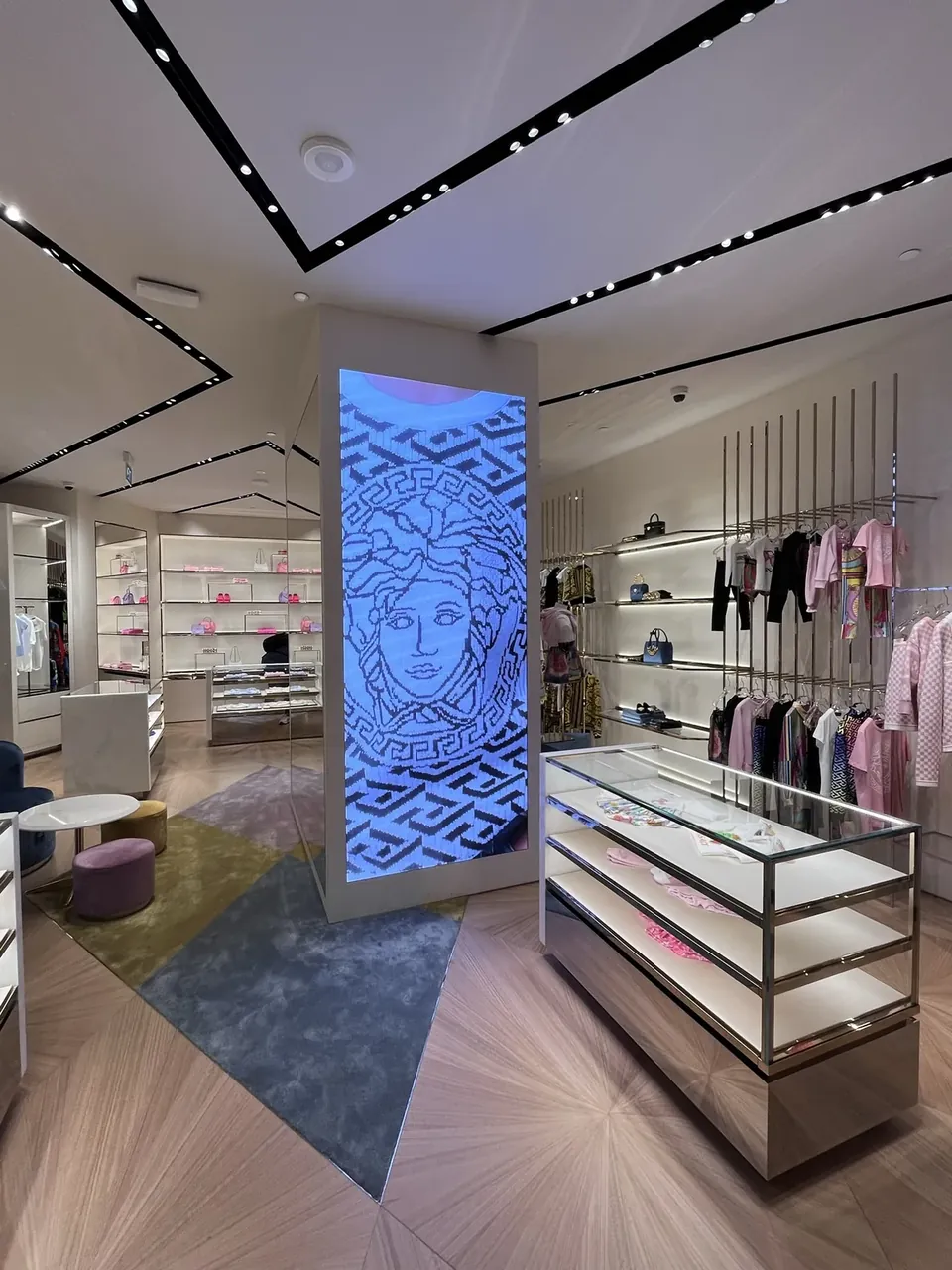
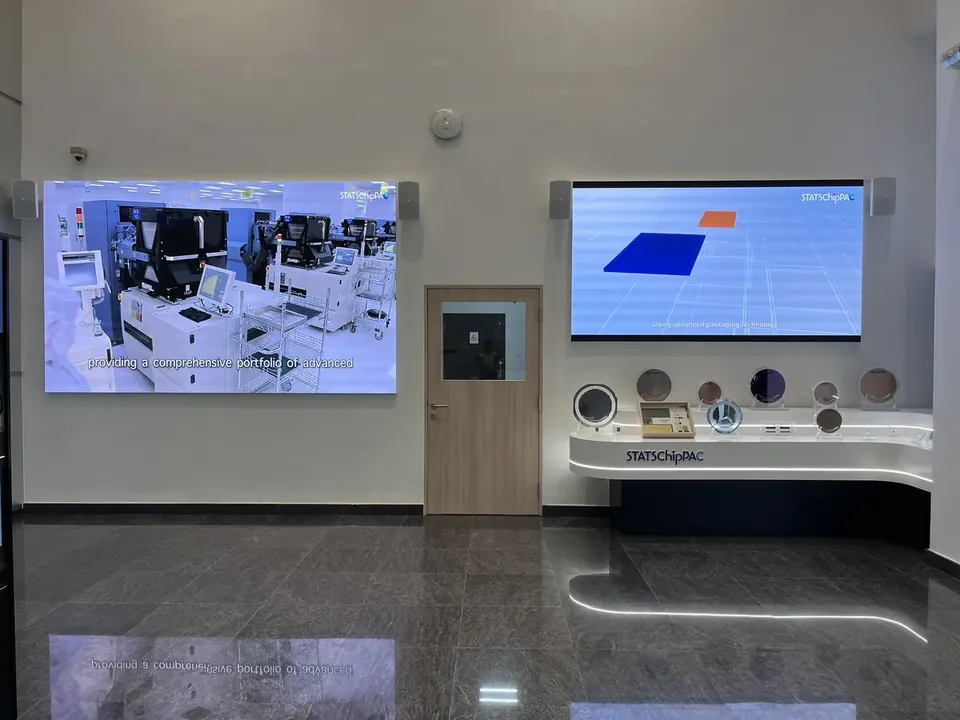
The useful first question is where the closest regular viewer will stand. A P2 LED display is normally considered where viewers may work or read content from close range, such as a corporate lobby approach, a meeting room table, a retail counter or an operations position. A P3 display remains effective when the audience is normally farther back, for example in larger reception spaces, training rooms or presentation zones where the wall is viewed from several metres away.
Viewing distance is only a starting point. The same wall can be experienced differently when it shows fine spreadsheet text, security camera grids, slow-moving brand visuals or presenter slides. Ask the integrator to assess the intended content at the intended distance. This prevents a design from being selected only from a datasheet number.
What P2 changes for close-range indoor content
With more pixels packed into a given physical area, P2 gives more available resolution on the same sized LED wall. That can be valuable when visitors approach the display, when staff need to read dashboards, or when the screen will show detailed product graphics. A compact wall with close viewing can benefit from P2 because the image remains more comfortable at shorter distances.
P2 does not remove the need for a content plan. Small labels, dense grids and documents should still be designed for the installed display resolution. A good proposal explains the receiving controller, input canvas and content layout assumptions rather than implying that pixel pitch alone guarantees readable information.
Where P3 is the commercially sensible choice
P3 is often a well-balanced indoor choice when the display is primarily a focal point rather than a close-reading surface. It can suit a hotel lobby feature wall, a meeting presentation backdrop, a retail promotion screen or a corporate reception where most people stand at a moderate distance. The screen can still be visually strong while allowing budget to be allocated to structural work, signal distribution, commissioning and content preparation.
A smaller pitch is not automatically a better project. If normal viewing positions are farther away, selecting P2 may not create a meaningful user benefit. The better approach is to compare the intended wall size, content, sightlines and operating hours before asking for a P2 or P3 recommendation.
Compare the whole LED system, not only the module
A reliable indoor LED display requires more than the LED modules. The solution should account for the mounting method, service access, power distribution, data cabling, processor or controller, source connections and the commissioning process. These components affect maintainability and day-to-day operation even though they may be less visible in an initial quotation.
For boardrooms and multi-purpose spaces, also discuss how laptops, meeting systems and presentation sources will reach the wall. For control-oriented environments, specify the number of simultaneous sources, layout presets and the operator workflow. A complete system brief makes it easier to compare proposals on an equal basis.
Use a simple P2 versus P3 comparison brief
Request matched concepts rather than unrelated quotations. Give every supplier the same wall dimensions, mounting constraints, nearest viewing distance, expected content, input sources and handover expectations. Then ask what changes between P2 and P3 in practical terms: available resolution, recommended content use, cable and processing approach, service access and overall project budget.
Where possible, ask to view comparable indoor installations or representative image samples at the anticipated viewing distance. This turns the discussion away from generic claims and towards a decision based on how the wall will actually be used in the space.
Prepare these details before requesting a Singapore proposal
Provide the intended screen location, approximate wall size, photos or drawings of the mounting surface, ceiling and access constraints, electrical availability, network and source requirements, and the date by which the system is needed. State whether the audience will see the display mainly from close range, seated positions or across an open area.
If the project is still at concept stage, a site survey can establish the practical constraints before a final pitch is selected. ETA Visual can review the visual objective, the room layout and the signal path together so the LED display, content sources and installation plan support the same operating outcome.
| Decision factor | P2 LED display | P3 LED display |
|---|---|---|
| Typical viewing context | Close-range viewing and detailed visual content | Moderate-distance viewing and larger shared spaces |
| Resolution on the same wall size | More available pixels | Fewer available pixels |
| Useful content discussion | Dashboards, fine graphics, close visitor approach | Presentations, branding and viewing from farther back |
| Selection method | Validate close viewing and content detail | Validate actual audience distance and wall scale |
Want an accurate budget for your space?
We'll do a free site survey and prepare a clear, itemised quotation — no obligation.
Frequently asked questions
No. P2 can be useful for closer viewing and denser content, while P3 can be the more practical option when viewers are normally farther from the wall. The site layout and content use should decide.
Provide the closest regular viewing position as well as the main audience area. An integrator should assess the entire room rather than applying one generic distance rule.
Pixel pitch is one component. The installed budget also depends on wall size, mounting, service access, signal processing, source integration, electrical work and commissioning.
Yes, subject to the selected processor and source workflow. Define how many sources must appear at once and whether operators need saved layouts before the system is specified.
Share site photographs or drawings, intended wall size, viewing positions, content types, source devices, installation constraints and target handover date so proposals can be compared fairly.
Plan the next step
Continue with a relevant solution and real Singapore project evidence.