LED Screen Display: The Ultimate 2026 Commercial Integration Guide
Written and reviewed by the ETA Visual Engineering & Project Team. Guidance is updated when project, product or Singapore site-planning practices change.
Most commercial LED screens fail not because of the hardware, but because of poor integration and a lack of local engineering oversight. It's common to feel overwhelmed by technical jargon like pixel pitch, nits, and refresh rates, especially when you're also managing the risks of high maintenance costs and system downtime. You likely want a solution that enhances your brand prestige without the headache of constant technical failures in Singapore's challenging, high-humidity environment. Choosing the right LED screen display requires more than just picking a panel; it demands a disciplined, end-to-end strategy. This guide helps you master the technical and strategic essentials of modern visual technology, ensuring you can transform your space with an installation that actually performs. We'll demystify the latest 2026 trends, from Micro-LED advancements to the growth of all-in-one displays. You'll gain a clear understanding of the ROI for indoor versus outdoor screens, alongside the critical BCA and URA regulatory requirements. We'll also provide a structured look at how an engineering-led approach to site surveys and preventive maintenance ensures your investment remains a reliable asset rather than a recurring liability.
Key Takeaways
- Understand why a successful LED screen display project depends on engineering-led integration rather than just purchasing hardware panels.
- Learn how to select appropriate IP ratings and thermal management systems to protect your investment against Singapore's high humidity and tropical heat.
- Identify the essential BCA and URA regulatory requirements for outdoor installations to ensure your project remains compliant and avoids legal delays.
- Discover how preventive maintenance contracts and high-quality components reduce the total cost of ownership by preventing module burnout and system downtime.
- Master the technical specifications that actually impact visual performance, such as refresh rates for digital marketing and pixel pitch for viewing distances.
Table of Contents
- Beyond the Specs: Why LED Screen Displays are the New Commercial Standard
- The Technical Blueprint: Anatomy of a High-Performance LED Display
- Indoor vs. Outdoor LED Screens: Strategic Selection Framework
- The Integration Roadmap: From Site Survey to Final Calibration
- Maximizing ROI: Maintenance and Long-Term Performance
Beyond the Specs: Why LED Screen Displays are the New Commercial Standard
Static signage is losing its ability to capture attention in Singapore's competitive commercial districts. Traditional print can't compete with the brightness and movement of a modern LED screen display. By transitioning to dynamic environments, businesses aren't just showing ads; they're creating experiences that naturally increase customer dwell time. High-resolution screens, particularly fine-pitch models, elevate brand prestige by providing a seamless visual surface that feels like part of the architecture rather than an afterthought.
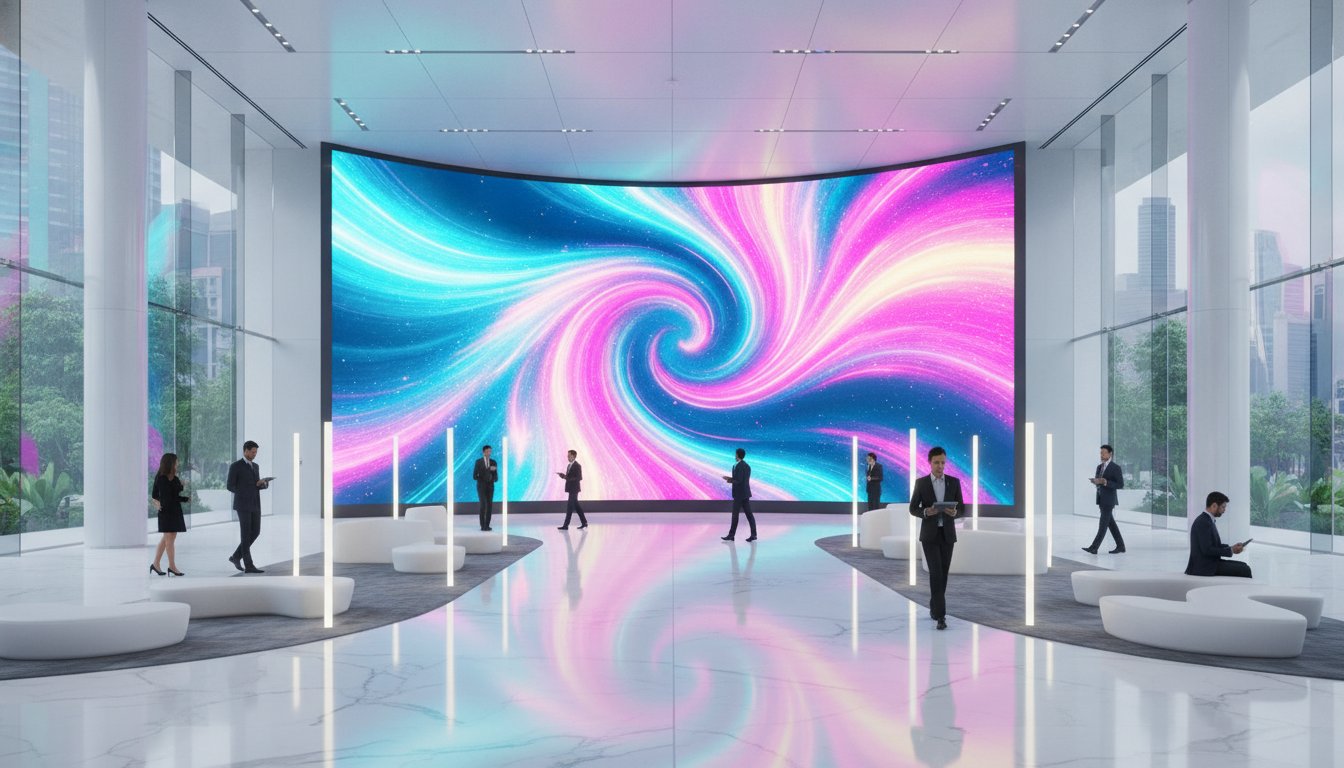
In high-ambient light environments such as glass-canopied atriums within prominent commercial or retail hubs, traditional LCD video walls often struggle with glare and bezel lines. LED display technology offers a superior alternative because it doesn't rely on backlighting, allowing for much higher brightness levels and a truly bezel-less finish. This ensures your content remains vivid even when competing with direct tropical sunlight. Key advantages include:
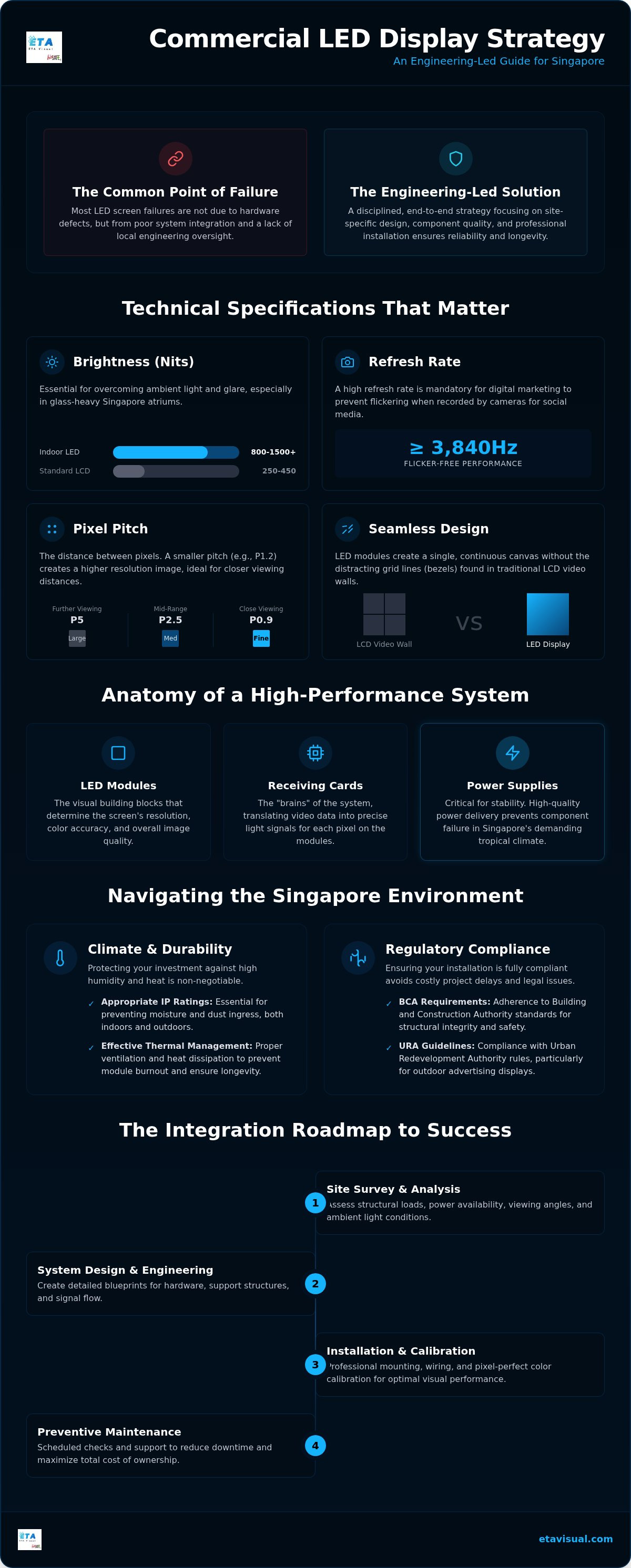
- Brightness: LEDs typically produce 800 to 1,500 nits for indoor use, far exceeding standard LCDs.
- Seamlessness: Modular panels eliminate the distracting grid lines found in video walls.
- Longevity: Commercial-grade LEDs are engineered for 24/7 operation with minimal degradation.
Retail Transformation and Storefront Appeal
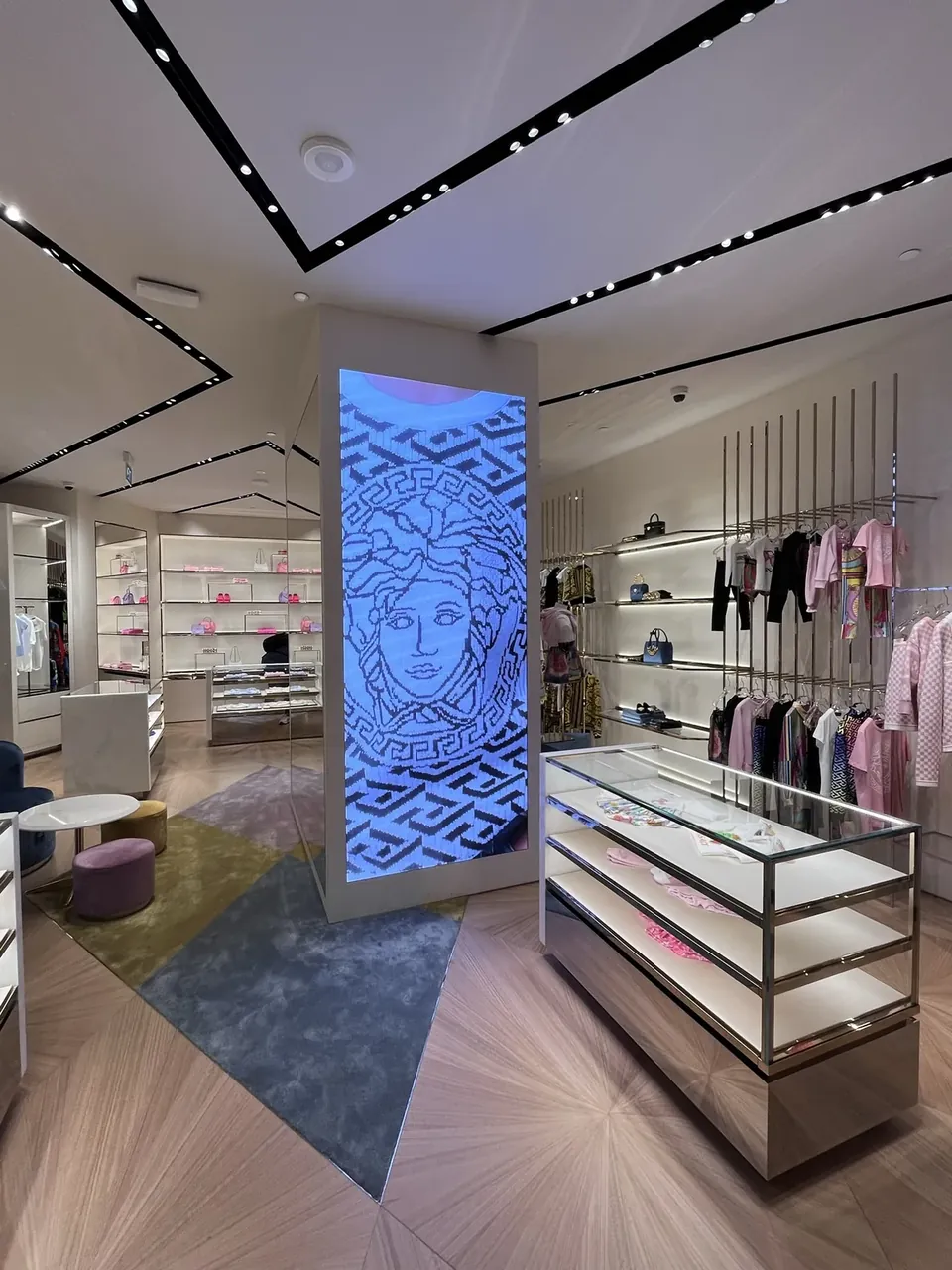
Storefronts in Singapore face the constant challenge of glass reflections. High-brightness LED modules are specifically engineered to cut through these reflections, ensuring your messaging is visible to passersby from across the street. Luxury brands now use these displays to create immersive entryways that drive footfall through sheer visual impact. A prime example is the Zara Store integration, where seamless screens are used to define the store’s aesthetic and draw customers into a curated brand world.
Corporate and Hospitality Communication Hubs
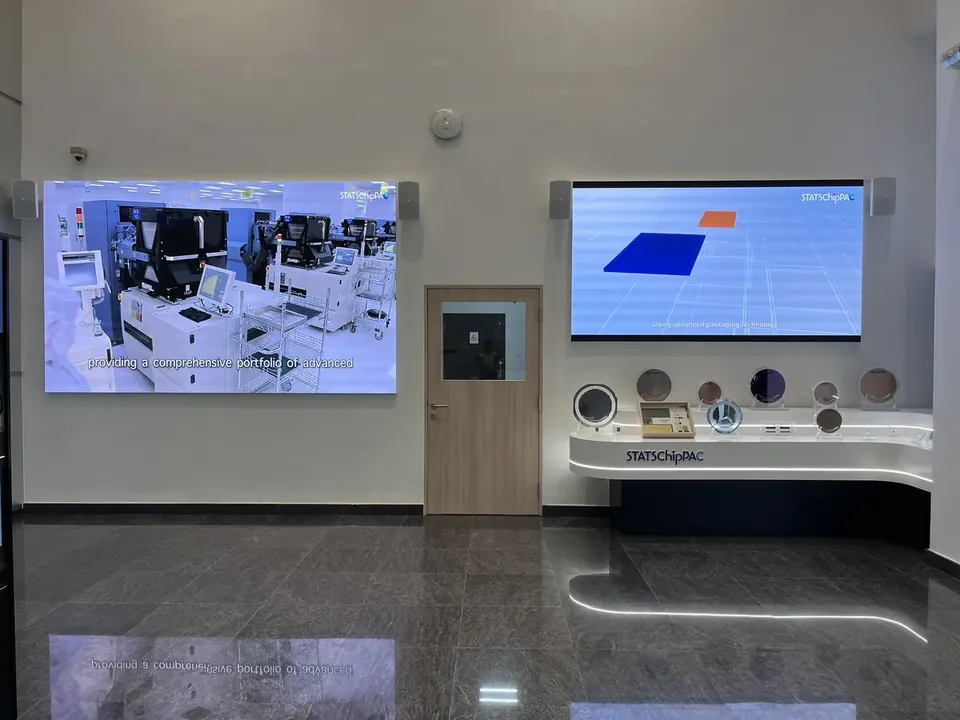
Modern corporate headquarters within leading business districts are moving away from static reception areas toward interactive communication hubs. An integrated LED system acts as a central information node, displaying real-time data or welcoming guests with high-impact brand stories. In the hospitality sector, large-format video walls in hotel lobbies provide that essential "wow" moment that defines a guest's first impression. The Porsche Showroom project demonstrates how this technology supports high-end automotive retail, using precision visuals to mirror the engineering excellence of the vehicles on display.
The Technical Blueprint: Anatomy of a High-Performance LED Display
A reliable LED screen display is more than just a collection of light-emitting diodes. It's an engineered system consisting of three core pillars: LED modules, receiving cards, and power supplies. The modules determine the visual resolution, while the receiving cards act as the "brain" that translates data into light. In Singapore's tropical climate, the quality of the power supply is critical. Stable power delivery prevents premature component failure and ensures the screen remains operational during peak business hours. High-quality integration focuses on matching these components to the specific environmental load of the site.
Visual performance goes beyond simple resolution. High refresh rates, typically 3,840Hz or higher, are mandatory for modern commercial spaces. This prevents flickering during camera capture, ensuring that when customers take photos or videos of your storefront for social media, the screen appears crisp and stable. Contrast ratios also play a significant role. By using high-quality black-body LEDs, a display can achieve deep blacks and vivid hues, creating a more realistic image. Brightness, measured in nits, must be carefully balanced. While higher nits improve visibility in bright lobbies, over-driving the LEDs leads to excessive heat and shortened lifespans. If you're planning a complex installation, you might want to speak with an LED/AV specialist to find the right balance of performance and longevity for your LED screen display.
Pixel Pitch Explained: From P0.9 to P5
Pixel pitch is the distance between the centre of two adjacent pixels, usually measured in millimetres. For close-proximity environments like corporate boardrooms or high-end retail, fine-pitch displays ranging from P0.9 to P1.5 are the gold standard. These provide high pixel density, making individual diodes invisible even from a few feet away. A practical way to select the right pitch is the Viewing Distance Rule: the ideal viewing distance in metres is roughly equal to the pixel pitch in millimetres. For instance, a P2.5 screen is best viewed from approximately 2.5 metres away to maintain image clarity without seeing the underlying pixel structure.
Image Processing and Control Systems
The video processor is the unsung hero of any high-performance display. It scales content from various sources to the exact pixel map of your screen, preventing distortion or awkward cropping. For most commercial applications, you'll choose between synchronous and asynchronous control. Synchronous systems mirror a computer feed in real-time, ideal for live events. Asynchronous systems use an internal media player to run scheduled content loops, which is more reliable for 24/7 retail displays. Advanced systems also include smart monitoring, allowing integrators to detect module failures or power drops remotely before they become visible to the public.
Indoor vs. Outdoor LED Screens: Strategic Selection Framework
Selecting an LED screen display requires a clear understanding of the site's environmental stressors. In Singapore, the primary challenge for any external installation is the tropical climate. Humidity and frequent heavy rain demand high Ingress Protection (IP) ratings, typically IP65 or higher for the front and IP54 for the rear. Thermal management is equally critical; outdoor screens under direct sunlight generate significant heat and require forced ventilation or integrated cooling systems to prevent the "oven effect" that degrades LED lifespan. Without an engineering-led approach to heat dissipation, even high-end panels will suffer from rapid colour shifting and module failure.
Regulatory compliance is the next hurdle for commercial operators. For outdoor advertising, the Building and Construction Authority (BCA) requires an Outdoor Advertising Licence managed through their Advertisement Licensing System. If your display exceeds 10 square metres or is mounted higher than 4 metres from the ground, you'll need a Permit to Use (PTU). This involves mandatory endorsements from a Professional Engineer (PE) for structural integrity and a Licensed Electrical Worker (LEW) for safety. Navigating these requirements early prevents costly project delays or forced removals by authorities like the Urban Redevelopment Authority (URA), which enforces strict zoning in areas like Orchard Road and the CBD.
Indoor LED: Precision and Aesthetics
Internal environments prioritising silent operation and high-resolution aesthetics usually favour fanless designs. These systems rely on die-cast aluminium cabinets for passive cooling, ensuring that the display doesn't distract from the acoustic quality of a boardroom or luxury retail space. It's vital to manage heat dissipation carefully in enclosed retail environments to protect expensive interior finishes and millwork. For those requiring ultra-high density visuals for close-range viewing, our Fine Pitch Indoor Led solutions provide the necessary technical precision and seamless finish.
Outdoor LED: Power and Resilience
Outdoor displays must overcome the intensity of direct tropical sunlight to remain effective. This requires a high-nit output, typically between 5,000 and 8,000 nits, ensuring content remains visible during peak daylight hours. Beyond brightness, structural integrity is paramount. Rooftop or wall-mounted installations must be engineered to withstand extreme weather and wind loads. While resolution is important, the viewing distance for large-scale billboards means that a pitch of P4 to P10 is often sufficient. This allows for a balance between visual impact and power efficiency, as larger pixel pitches generally consume less energy per square metre while still appearing sharp from the roadside.
The Integration Roadmap: From Site Survey to Final Calibration
A successful LED screen display project begins long before the hardware arrives at the site. It starts with a meticulous site survey that assesses structural, electrical, and logistical constraints. In Singapore, this often involves coordinating with building management for loading bay access and adhering to strict mall fit-out guidelines. We evaluate the existing substrate to determine if it can support the weight of a large-format display or if additional reinforcement is required. This phase also identifies the nearest power sources and data points, ensuring that the necessary infrastructure is ready for the integration team.
System engineering follows the survey, where we design custom mounting frames and heat ventilation pathways. Proper ventilation is vital for preventing heat buildup behind the modules, which can lead to premature component degradation. During procurement, we source genuine components with matching batch numbers to ensure colour consistency across the entire surface. Once on-site, the installation team performs pixel-to-pixel calibration. This software-driven process adjusts the brightness and colour of every individual diode, which ensures the LED screen display delivers a uniform image without the "patchy" appearance common in poorly integrated systems.
Structural and Power Requirements
Calculating weight-bearing capacity is a non-negotiable step for large walls mounted on existing facades. Large LED systems can weigh hundreds of kilogrammes, requiring a frame engineered for both stability and serviceability. Power distribution must also be carefully managed. High-brightness screens draw significant current at peak levels; we design the circuit layout to avoid overloads and incorporate sequential power-on sequences to prevent surge issues. For data, we utilise high-bandwidth cabling or fibre optics to ensure low-latency signal transmission, which is critical for keeping visuals fluid across massive pixel maps.
Audio-Visual Fusion
To create a truly immersive environment, we often recommend integrating visuals with Commercial Audio systems. This fusion ensures that the high-impact imagery is supported by clear, professional-grade sound, which is essential for retail branding and corporate hospitality. Centralised control systems allow staff to manage both audio and video from a single, user-friendly interface, such as a tablet or wall-mounted panel. This level of automation allows for the effortless synchronisation of content across multi-zone environments, ensuring a consistent brand experience throughout your facility.
Maximizing ROI: Maintenance and Long-Term Performance
The real value of a commercial LED screen display isn't found in the initial invoice, but in its operational uptime over several years. High-impact visuals lose their prestige the moment a module fails or a power supply flickers. "Cheap" screens often rely on lower-grade diodes and cooling systems that struggle with Singapore’s constant heat, leading to frequent repairs that quickly erase any upfront savings. To protect your ROI, you must view your display as a long-term asset that requires active oversight rather than a one-off hardware purchase. This involves a disciplined approach to both physical care and software management.
Preventive maintenance is the most effective way to prevent catastrophic system failure. Scheduled inspections allow technicians to identify module burnout or power supply fluctuations before they become visible to your customers. Additionally, keeping the system’s firmware and software updated is essential. As content formats and media player technologies evolve, your display’s internal processing must remain compatible to avoid playback glitches or security vulnerabilities. In mission-critical retail environments, a rapid-response support structure ensures that any technical issues are resolved within hours, not days, protecting your brand's visual presence.
The Value of Maintenance Contracts
A professional maintenance agreement moves your AV strategy from reactive to proactive. These contracts often include remote monitoring and early warning systems that alert our team to faults the moment they occur. By identifying a failing receiving card or a heat spike early, we can perform repairs during off-peak hours, ensuring guaranteed uptime for high-traffic commercial displays. For more information on how we manage these systems, you can review our AV Maintenance programmes tailored for Singapore's commercial sector. This level of oversight is what separates a reliable communication tool from a technical liability.
Choosing an Accountable Integration Partner
End-to-end accountability is the only way to eliminate the risks associated with complex LED projects. When you work with a fragmented group of vendors, it's difficult to pin down responsibility when a system fails. An accountable integration partner takes full ownership of the project lifecycle, from the initial structural assessment to the final pixel calibration and years of after-sales support. You should evaluate an integrator’s track record in high-stakes environments where downtime isn't an option. We invite you to view our commercial work and portfolio to see our engineering-led approach in action across diverse Singaporean industries.
Future-Proofing Your Commercial Visual Strategy
Investing in a high-performance LED screen display is a strategic decision that extends far beyond technical specifications. Success in Singapore’s commercial landscape requires a disciplined approach to structural engineering, BCA compliance, and tropical thermal management. By prioritising an integrated roadmap over a mere hardware purchase, you ensure that your visual infrastructure remains a reliable asset for years. A focus on precision during the site survey and calibration stages prevents the common pitfalls of system downtime and module failure.
Our team brings more than 8 years of specialised commercial AV expertise to every project. We provide full end-to-end management, handling everything from the initial structural assessment to the final pixel-to-pixel calibration. This comprehensive oversight ensures that your display operates at peak efficiency from day one. Additionally, our national maintenance and support coverage provides the security of knowing that your investment is protected against technical disruptions in high-stakes retail or corporate environments.
Choosing an accountable partner eliminates the technical risks of complex installations and guarantees a seamless brand experience for your customers. We look forward to helping you transform your space with precision-engineered visual technology and reliable long-term support that drives real business value.
What is the difference between an LED screen and an LCD video wall?
An LED screen display is a modular system without bezels, offering a truly seamless visual surface that LCD video walls cannot match. While LCDs rely on a backlight, LEDs emit light directly from individual diodes, resulting in much higher brightness levels and superior contrast. This makes LED technology the preferred choice for high-ambient light environments, such as shopping centre atriums, where glare and visible grid lines would otherwise distract the viewer.
How long does a commercial LED screen display typically last?
Most commercial-grade LED displays are rated for a lifespan of approximately 100,000 hours. This equates to over ten years of continuous 24/7 operation under optimal conditions. However, the actual longevity depends heavily on component quality and consistent preventive maintenance. In Singapore’s humid climate, failing to manage heat dissipation or ignoring scheduled inspections can significantly shorten the lifespan of the power supplies and receiving cards before the diodes themselves fail.
Can I install an indoor LED screen behind a window for outdoor viewing?
You can install an indoor system behind a window, but it must be a high-brightness model to combat external glare. Standard indoor screens typically offer 600 to 1,200 nits, which is insufficient for visibility against direct tropical sunlight. You generally require at least 3,000 nits for window-facing applications. Additionally, the glass creates a greenhouse effect, so your integration plan must include a dedicated cooling strategy to prevent the display from overheating.
What is the ideal pixel pitch for a retail storefront LED wall?
The ideal pixel pitch depends on your customers' viewing distance. For most retail storefronts where people walk within two to four metres of the glass, a pitch of P2.5 is commonly recommended. Luxury boutiques with very close viewing distances often opt for P1.2 to P1.8 to ensure a "retina" quality image. Selecting a pitch that is too fine for the distance increases costs unnecessarily, while a pitch that is too coarse results in visible pixels.
How much power does a large-scale LED video wall consume?
Power consumption varies based on screen brightness and content. A typical indoor LED screen display might consume between 300W and 600W per square metre at peak brightness, though average consumption is usually 30% to 40% of that figure. High-brightness outdoor billboards consume more, sometimes reaching 800W per square metre. We calculate these requirements during the site survey to ensure your electrical board can handle the load without frequent circuit trips during peak operation.
Do I need a special permit for outdoor LED billboard installation?
Yes, outdoor installations in Singapore are strictly regulated by the Building and Construction Authority (BCA). You'll need an Outdoor Advertising Licence for promotional content. If the screen is larger than 10 square metres or mounted 4 metres or higher from the ground, a Permit to Use (PTU) is also mandatory. This process requires endorsements from a Professional Engineer (PE) and a Licensed Electrical Worker (LEW) to verify structural and electrical safety.
What happens if a single LED module fails in my video wall?
LED displays are modular, meaning you don't need to replace the entire screen if a single module fails. Individual modules are designed for front or rear serviceability and can be hot-swappable. We provide spare modules from the same production batch during installation to ensure colour and brightness consistency. Once the faulty module is replaced, the system remains seamless, and the failed part can often be repaired at a component level.
How do I manage and update content on my LED display system?
Content is managed through a video processor connected to a media player or a dedicated PC. For retail environments, we typically use asynchronous control systems that allow you to schedule content loops and updates via a central Management System (CMS). This enables you to push new visuals to multiple screens across different locations remotely. Synchronous control is used for live events where the screen must mirror a computer feed in real-time with zero latency.
Visual planning reference
| Planning factor | What to define | Why it matters |
|---|---|---|
| Viewing positions | Nearest viewing distance and audience locations | Supports an appropriate pixel-pitch and screen-size decision. |
| Content workflow | Input sources, resolutions and control workflow | Helps ensure information remains readable and simple to operate. |
| Installation conditions | Structure, access, power, ventilation and maintenance access | Aligns the display scope with the physical site before procurement. |
Want an accurate budget for your space?
We'll do a free site survey and prepare a clear, itemised quotation — no obligation.
Frequently asked questions
An LED screen display is a modular system without bezels, offering a truly seamless visual surface that LCD video walls cannot match. While LCDs rely on a backlight, LEDs emit light directly from individual diodes, resulting in much higher brightness levels and superior contrast. This makes LED technology the preferred choice for high-ambient light environments, such as shopping centre atriums, where glare and visible grid lines would otherwise distract the viewer.
Most commercial-grade LED displays are rated for a lifespan of approximately 100,000 hours. This equates to over ten years of continuous 24/7 operation under optimal conditions. However, the actual longevity depends heavily on component quality and consistent preventive maintenance. In Singapore’s humid climate, failing to manage heat dissipation or ignoring scheduled inspections can significantly shorten the lifespan of the power supplies and receiving cards before the diodes themselves fail.
You can install an indoor system behind a window, but it must be a high-brightness model to combat external glare. Standard indoor screens typically offer 600 to 1,200 nits, which is insufficient for visibility against direct tropical sunlight. You generally require at least 3,000 nits for window-facing applications. Additionally, the glass creates a greenhouse effect, so your integration plan must include a dedicated cooling strategy to prevent the display from overheating.
The ideal pixel pitch depends on your customers' viewing distance. For most retail storefronts where people walk within two to four metres of the glass, a pitch of P2.5 is commonly recommended. Luxury boutiques with very close viewing distances often opt for P1.2 to P1.8 to ensure a "retina" quality image. Selecting a pitch that is too fine for the distance increases costs unnecessarily, while a pitch that is too coarse results in visible pixels.
Power consumption varies based on screen brightness and content. A typical indoor LED screen display might consume between 300W and 600W per square metre at peak brightness, though average consumption is usually 30% to 40% of that figure. High-brightness outdoor billboards consume more, sometimes reaching 800W per square metre. We calculate these requirements during the site survey to ensure your electrical board can handle the load without frequent circuit trips during peak operation.
Yes, outdoor installations in Singapore are strictly regulated by the Building and Construction Authority (BCA). You'll need an Outdoor Advertising Licence for promotional content. If the screen is larger than 10 square metres or mounted 4 metres or higher from the ground, a Permit to Use (PTU) is also mandatory. This process requires endorsements from a Professional Engineer (PE) and a Licensed Electrical Worker (LEW) to verify structural and electrical safety.
Plan the next step
Continue with a relevant solution and real Singapore project evidence.