Flexible LED Screen Integration Guide: Singapore
Written and reviewed by the ETA Visual Engineering & Project Team. Guidance is updated when project, product or Singapore site-planning practices change.
What if your digital display wasn't limited by the straight lines of a traditional cabinet, but could instead flow around the structural curves of your retail storefront or wrap seamlessly around a central pillar? In a city like Singapore, where architectural innovation often clashes with rigid hardware, identifying the right Flexible LED Screen Applications is essential for a high-impact commercial fit-out. Most project managers have faced the frustration of trying to force standard LED panels into organic spaces, only to be met with unsightly gaps or bulky enclosures that compromise the design. You're likely also weighing the technical hurdles of heat dissipation in our humid climate and the complexities of securing mall management approval for custom structures. We've developed this guide to bridge the gap between creative vision and technical reality. You'll discover how flexible technology transforms commercial environments through strategic pixel pitch selection and professional integration techniques. We'll provide a clear roadmap for navigating local structural requirements and BCA considerations, ensuring your installation is as reliable as it is visually striking. From initial design to long-term maintenance, this overview gives you the confidence to execute complex, curved displays without
Key Takeaways
- Learn how soft PCB and rubber substrates allow for complex curves like column wraps and wave ceilings that are impossible with traditional rigid cabinets.
- Discover high-impact Flexible LED Screen Applications for retail and hospitality sectors that turn structural pillars and ceilings into branding assets.
- Understand the technical relationship between pixel pitch and viewing distance to ensure smooth, seamless visuals on non-linear surfaces.
- Identify critical Singapore-specific factors for a compliant installation, including humidity management and navigating mall management fire safety requirements.
- Gain a clear roadmap for the integration process, from initial structural feasibility assessments to custom content mapping for non-standard aspect ratios.
Table of Contents
- Beyond the Flat Panel: Understanding Flexible LED Technology
- High-Impact Commercial Applications in Retail and Hospitality
- Technical Performance: Pixel Pitch and Viewing Distances for Curved Surfaces
- Implementation in Singapore: Structural and Environmental Factors
- Designing Your Solution: The ETA Visual Integration Process
Beyond the Flat Panel: Understanding Flexible LED Technology
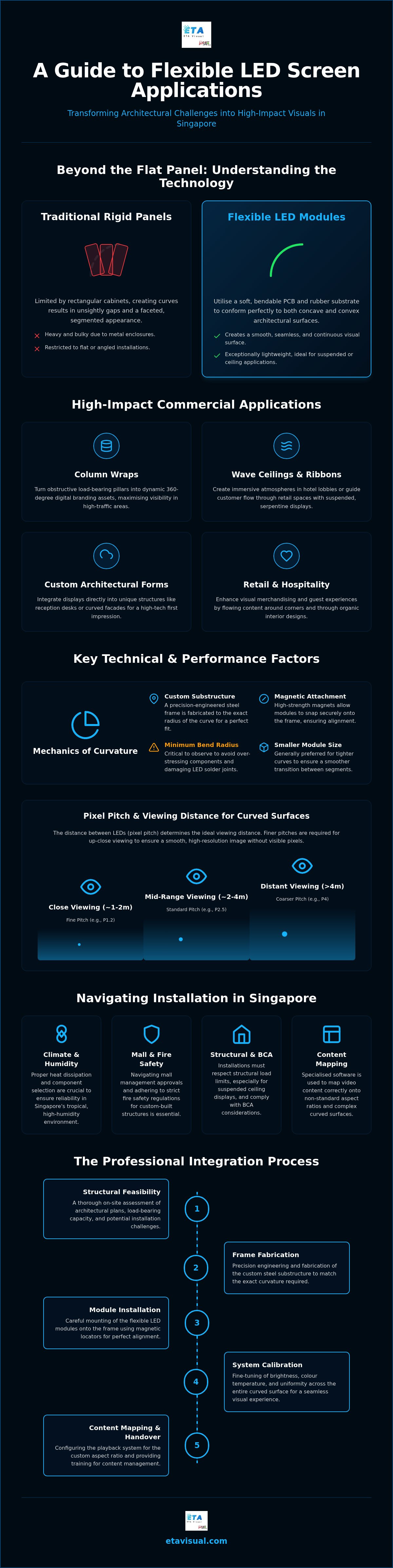
Traditional LED displays are inherently rigid, limited by the rectangular aluminium cabinets that house them. In contrast, flexible displays use a soft, bendable PCB and rubber substrate that allows the module to deform without breaking the internal connections. Understanding Flexible LED Technology is the first step toward moving beyond flat walls. These modules support a variety of Flexible LED Screen Applications, such as wrapping around circular pillars or creating serpentine shapes that guide foot traffic through a commercial space.
The versatility of these screens comes from their ability to form both concave (inward-curving) and convex (outward-curving) shapes. While rigid cabinets can sometimes be angled to create a curve, the result is often a series of visible vertical seams. Flexible modules eliminate this, providing a smooth, continuous surface. For most indoor projects, we specify a pixel pitch between P1.2 and P4, ensuring that the resolution remains sharp even when the viewer is standing just a few metres away.
The Mechanics of Curvature
Achieving a perfect curve requires more than just a bendable screen; it needs a precision-engineered substructure. We typically use high-strength magnetic attachment systems that allow the modules to snap onto a custom-built steel frame. This frame must be fabricated to the exact radius of the architectural feature. It's critical to calculate the minimum bend radius for each module type to avoid over-stressing the components. If you push the substrate too far, you risk damaging the solder joints of the LED lamps. Smaller module sizes are generally preferred for tight curves, as they provide a smoother transition between segments and reduce the risk of a faceted appearance.
Soft Modules vs. Flex-Face Systems
It's easy to confuse these displays with traditional flex-face or tensioned fabric systems, but the technology is fundamentally different. Flex-face systems are essentially static backlit posters, whereas flexible LED modules are active, high-resolution video displays. Because they don't require heavy metal cabinets, these screens are exceptionally lightweight. This makes them a preferred choice for ceiling-mounted or suspended curved displays in Singapore malls, where structural load limits are often a concern. We utilise Surface Mounted Device (SMD) technology to ensure the lamps are durable enough for curved applications. For high-end retail environments, we often integrate fine-pitch indoor LED modules to maintain a premium look that standard rigid panels simply can't match.
High-Impact Commercial Applications in Retail and Hospitality
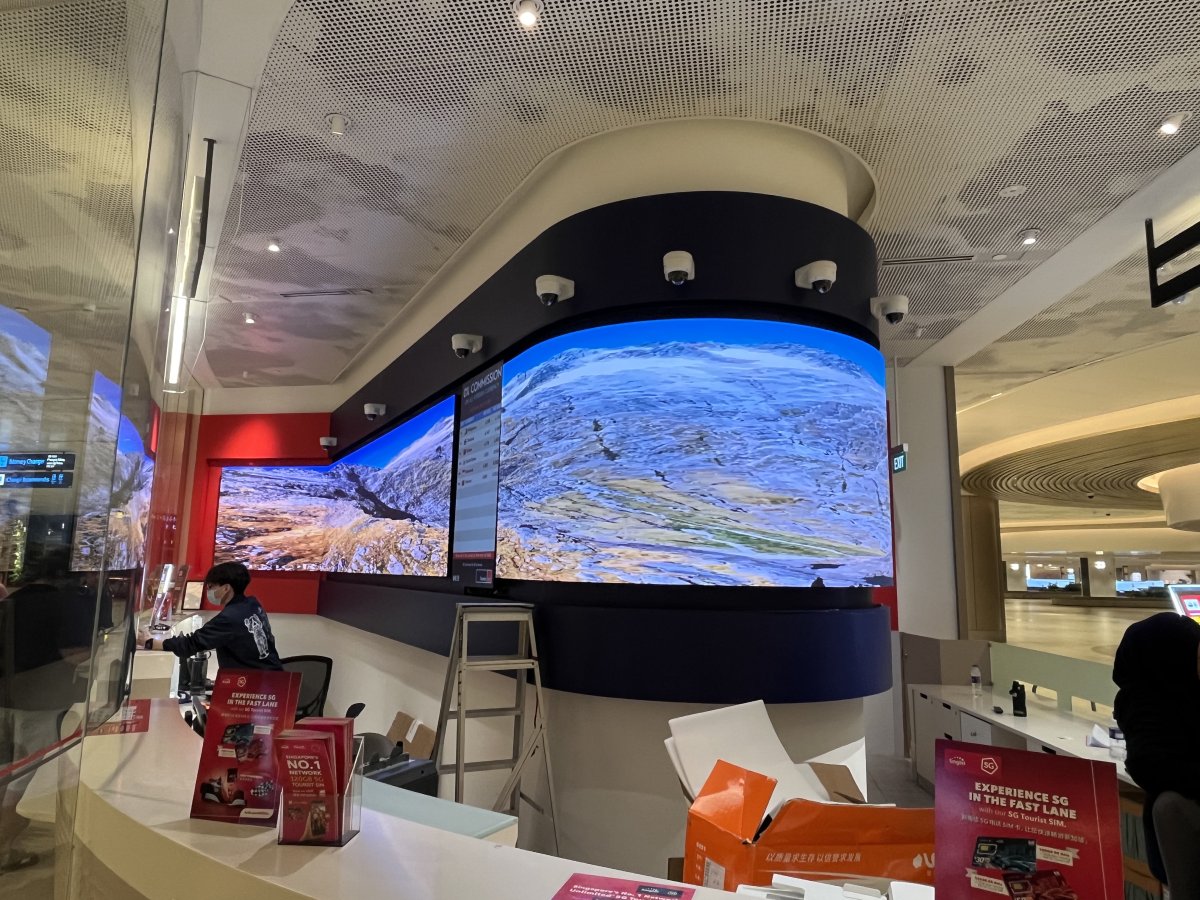
Flexible LED Screen Applications are no longer just about aesthetics; they are functional tools for solving architectural challenges in dense urban environments like Singapore. Many commercial spaces are plagued by load-bearing pillars that disrupt sightlines. Column wraps turn these obstacles into high-value digital real estate, allowing brands to broadcast content 360 degrees around a structural element. In large-format retail, curved ribbons of LED modules can be suspended from the ceiling to guide customer flow toward specific zones or promotional areas. For corporate environments, integrating flexible modules into custom-shaped reception desks creates an immediate, high-tech brand impression that rigid screens cannot replicate.
Luxury hotels often use wave-like ceilings to create an immersive atmosphere in lobbies or lounges. These installations require a deep understanding of the Technical Performance of Curved Surfaces to ensure that colour consistency and brightness remain uniform across the entire organic shape. When the display follows a complex curve, the viewing angles change constantly, making precise calibration essential for a seamless visual experience.
Retail Storefronts and Visual Merchandising
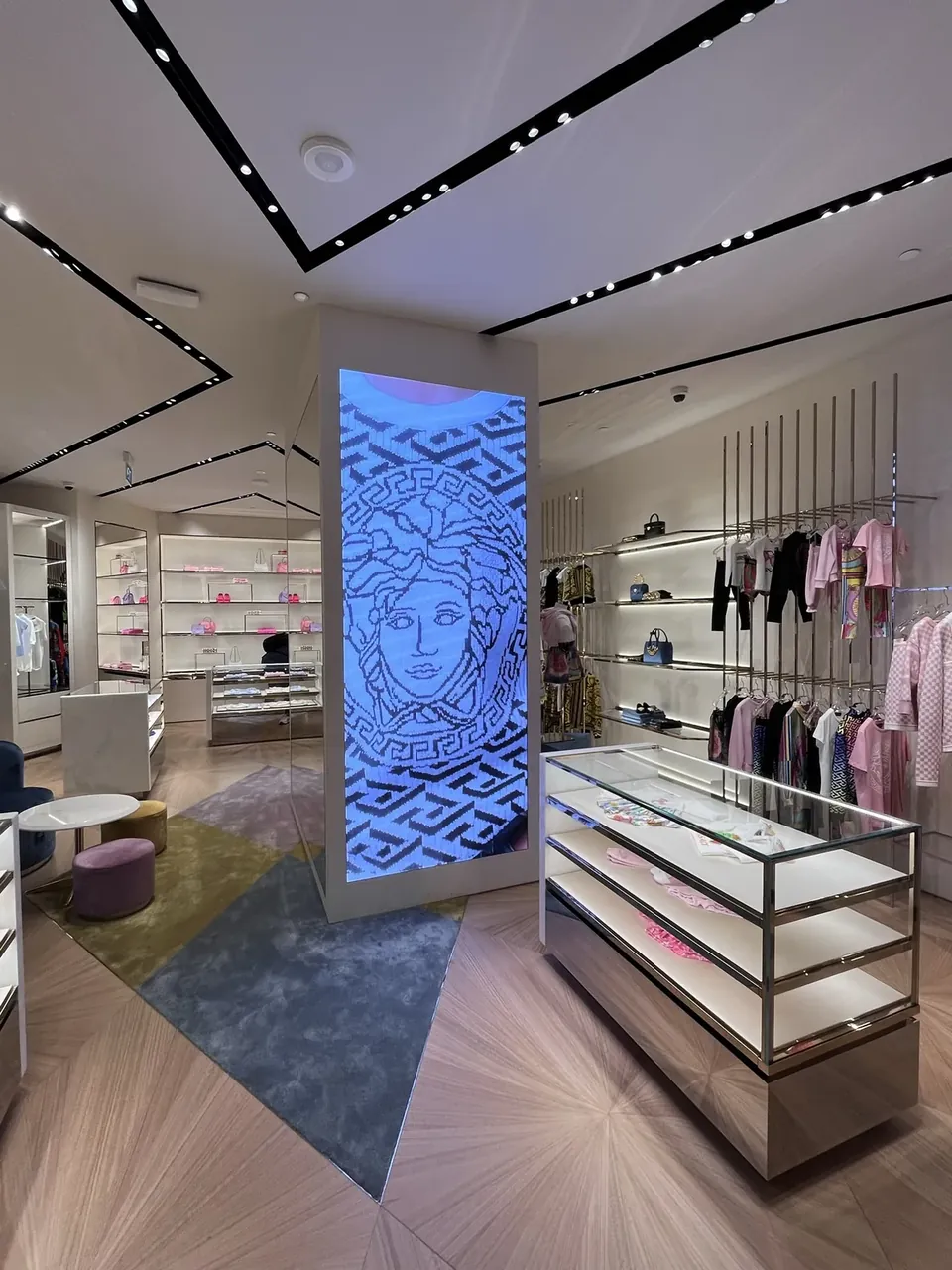
Designing for Singapore's premier malls requires a nuanced approach to visual hierarchy. Many luxury facades, particularly those along Orchard Road, feature curved glass or rounded corners that reject traditional flat panels. Flexible screens allow brands to maintain their visual identity without compromising the building's architecture. In Led Display Retail Singapore, we focus on balancing dynamic digital content with physical product displays to prevent visual clutter. If you are planning a store renovation, you can discuss your project with us to see how these modules fit your specific layout.
Hospitality and Experiential Spaces
In the hospitality sector, guest engagement is the primary metric for success. Digital 'chandeliers' or circular focal points in grand ballrooms provide a versatile backdrop for diverse events, from weddings to corporate conferences. Seamless integration into curved bar fronts or lounge areas creates a sophisticated environment where lighting and video content blend into the interior design. This high-touch integration moves away from the cold feel of standard monitors and toward a truly architectural lighting solution. By using flexible modules, designers can create circular focal points that draw the eye and encourage social media sharing, which is a key driver for modern hospitality marketing.
Technical Performance: Pixel Pitch and Viewing Distances for Curved Surfaces
Selecting the correct pixel pitch for curved surfaces is a balancing act between budget and visual smoothness. While a P2.5 module might suffice for a large, sweeping wall, a tighter column wrap often necessitates a P1.5 pitch to prevent a faceted appearance where individual modules become visible. The physical radius of the curve determines the module size; a smaller radius requires shorter modules to maintain a seamless arc. This relationship is a cornerstone in any comprehensive analysis of flexible screen technology, as the mechanical stress on the PCB increases with the curvature. For Flexible LED Screen Applications in high-traffic areas like mall atriums, brightness is another non-negotiable factor. These spaces often have high ambient light from glass skylights, requiring screens to output at least 800 to 1,200 nits to remain legible and vibrant.
Maintaining colour uniformity across a 360-degree viewing angle is particularly challenging with curved displays. As viewers move around a pillar, the angle at which they see the LED lamps changes constantly. We specify high-quality lamps with wide viewing angles to ensure that the brand colours don't shift or wash out when viewed from the side. This technical precision ensures that the visual impact remains consistent regardless of the viewer's position in the room.
Optimising Visual Clarity
Curvature affects how the human eye perceives resolution. On a convex screen, pixels are physically spread further apart at the edges of the curve, which can lead to a perceived drop in density if the pitch is too coarse. We recommend high refresh rates, typically 3,840Hz or higher, to ensure the display remains flicker-free during mobile photography. This is vital for retail environments where social media engagement is a key goal. Flicker is a project killer. A high contrast ratio is equally important for luxury brands, as it ensures deep blacks and vibrant colours that stand out against the bright interior lighting of a Singapore showroom.
Power and Signal Distribution
Integrating electronics into a non-linear structure presents unique engineering challenges. Traditional daisy-chaining of signal cables can be difficult to manage within a tight, curved frame. We prioritise redundant signal paths to ensure that a single cable failure doesn't dark out an entire section of a 360-degree pillar wrap. Heat dissipation is a significant concern in Singapore's tropical climate, especially when screens are mounted in enclosed curved structures. Without adequate airflow, the heat trapped behind the modules can degrade the LED lamps prematurely. Our solution design includes calculated ventilation gaps or active cooling systems to maintain long-term stability and uptime.
Implementation in Singapore: Structural and Environmental Factors
Implementing Flexible LED Screen Applications in Singapore requires more than just technical skill; it demands a deep understanding of the local regulatory and environmental landscape. While the creative possibilities are vast, the practical execution is often dictated by the constraints of the tropical climate and the stringent requirements of building management. A successful installation must balance the visual design with structural integrity and long term stability in a high humidity environment. We don't just supply hardware; we manage the entire integration process to ensure your display remains operational and compliant with local standards.
Climatic Protection and Airflow
Singapore's relative humidity, which often exceeds 80%, is the silent killer of indoor LED modules. Flexible PCBs are particularly vulnerable because they lack the heavy aluminium heat-sinking found in traditional rigid cabinets. Without proper airflow, heat builds up behind the curved substrate, leading to pixel failure or colour degradation. We design custom mounting frames that prioritise either passive or active cooling, depending on the enclosure's volume. For added protection, we often recommend Glue-on-Board (GOB) technology. This protective coating provides a moisture barrier and increases the physical durability of the SMD lamps without compromising the module's flexibility.
Regulatory Compliance and Safety
Navigating mall management requirements is a critical step for any retail or hospitality project. Most commercial buildings in Singapore require a Professional Engineer (PE) to endorse the structural mounting frame, especially for large-scale or suspended displays. This ensures the structure can safely support the weight and wind load if applicable. Additionally, fire safety is a non-negotiable priority. All materials used in the installation, including the mounting substructures and cabling, must meet local fire-rated standards. We also work closely with a Licensed Electrical Worker (LEW) to ensure the power tapping and distribution meet the Energy Market Authority (EMA) regulations.
Logistics also play a major role in project success. Accessing loading bays in busy districts like Orchard Road or the CBD requires meticulous planning. Most mall managements only permit installation work after-hours, typically between 10:00 PM and 8:00 AM. Our team is experienced in managing these tight windows, ensuring that the site is cleared and operational before the mall opens for business the next morning. This end-to-end oversight is what differentiates a professional integration from a simple hardware purchase.
Designing Your Solution: The ETA Visual Integration Process
Successful Flexible LED Screen Applications begin long before the first module is mounted. Unlike standard flat panels, curved displays are not off-the-shelf products; they are engineered systems that must be tailored to the specific geometry of your space. Our process starts with a comprehensive site survey and structural assessment. We evaluate the mounting surface for load-bearing capacity and determine the precise curvature feasibility. This initial stage is critical for identifying potential hurdles, such as hidden conduits or uneven pillar surfaces, that could compromise the final alignment of the modules.
From Concept to Engineering
We use 3D modelling to help clients visualise how a curved screen sits within their specific architectural environment. This isn't just a visual aid; it's a functional engineering step that dictates the exact radius of the custom steel frame. During this phase, we coordinate closely with interior designers and architects to ensure the screen integrates seamlessly with other elements like lighting and cabinetry. Selecting the appropriate hardware, ranging from P0.9 to P5, depends on the balance between your budget and the intended viewing distance. A P1.2 fine-pitch module might be necessary for a high-end luxury storefront, while a P3.125 could be more appropriate for a large-scale wave ceiling in a hotel lobby. Once the hardware is selected, our engineers handle the complex content mapping required for non-standard aspect ratios, ensuring your visuals are never stretched or distorted by the curve.
Long-Term Reliability and Support
Flexible screens require a specialised maintenance approach due to their unique construction. The magnetic attachment systems that allow for organic shapes need periodic inspection to ensure that modules remain perfectly flush and aligned. Minor shifts in the substructure can lead to visible seams if not addressed. Our AV maintenance Singapore contracts are designed to provide this level of precision oversight. We focus on preventive care, including firmware updates and remote monitoring, to extend the lifespan of the SMD lamps and the flexible PCB substrate.
For high-traffic retail environments, downtime isn't just a technical glitch; it's a loss of branding opportunity. We provide rapid-response emergency repairs to address hardware failures or signal issues immediately. By maintaining a local team of experienced technicians, we ensure that your installation remains a reliable asset for years to come. This end-to-end commitment moves the project from a simple hardware purchase to a managed architectural solution that delivers consistent performance in the challenging Singapore climate.
Transforming Commercial Spaces with Curved LED Integration
Integrating curved digital surfaces represents a strategic move from standard signage toward architectural design. We have explored how identifying the right Flexible LED Screen Applications allows you to transform structural obstacles, such as load-bearing pillars, into high-impact brand touchpoints. Achieving a seamless finish depends on more than just hardware. It requires a disciplined approach to technical performance, from precise pixel pitch selection to managing heat dissipation in Singapore's humid climate.
Our team at ETA Visual brings over eight years of specialized experience in high-resolution indoor LED walls ranging from P0.9 to P5. We take full ownership of the project lifecycle, providing structural design, local regulatory compliance, and rapid-response maintenance support. By choosing a partner who understands the specific nuances of Singapore's commercial landscape, you eliminate the technical risks often associated with custom AV integration.
We're ready to help you bridge the gap between creative vision and technical reality for your next retail or hospitality fit-out.
What is the minimum curve radius for a flexible LED screen?
The minimum curve radius typically ranges from 250mm to 500mm, depending on the specific module dimensions and pixel pitch. While the rubber substrate is bendable, pushing beyond the manufacturer's specified limit can overstress the internal copper traces and solder joints of the LED lamps. Smaller modules generally allow for tighter arcs. We assess each architectural curve during the site survey to ensure the selected hardware maintains its structural integrity without pixel damage.
Are flexible LED screens as bright as traditional rigid LED walls?
Flexible LED screens typically offer brightness levels between 800 and 1,200 nits, which is comparable to standard indoor rigid panels. This output is sufficient for most Flexible LED Screen Applications in well-lit environments like mall atriums or hotel lobbies. However, because flexible PCBs have different heat dissipation characteristics, we carefully manage the brightness settings and airflow to prevent thermal throttling, ensuring the display remains vibrant without degrading the components prematurely.
How do you clean and maintain a curved LED display?
Cleaning a curved display requires a soft, non-static brush or a dry microfiber cloth to remove dust from the module surface. You should never use harsh chemicals or excessive moisture, as these can penetrate the soft substrate. Professional maintenance is essential for checking the alignment of the magnetic attachment system. We recommend recurring maintenance contracts to ensure the modules remain flush against the frame, as minor shifts in the substructure can create visible seams over time.
Do I need a special media player for non-standard curved screen shapes?
Most curved installations require a specialized LED controller and a media player capable of custom pixel mapping. Since these screens often have non-standard aspect ratios that aren't 16:9, the content must be rendered to match the specific pixel coordinates of the curve. We handle the system engineering to ensure the video signal is distributed correctly across the modules, preventing any stretching or distortion of your brand visuals as they wrap around pillars or ceilings.
Can flexible LED modules be used for outdoor applications in Singapore?
Flexible LED modules are primarily designed for indoor use because the soft rubber substrate is challenging to seal against Singapore's heavy rainfall and high humidity. While some specialized outdoor flexible products exist, they are less common than their indoor counterparts. For external curved requirements, we typically recommend faceted rigid cabinets with high IP ratings or transparent LED solutions that are better equipped to handle the tropical environment while still providing a curved visual effect.
What is the typical lifespan of a flexible LED module?
The operational lifespan of a flexible LED module is typically rated at 100,000 hours, which is the industry standard for high-quality SMD lamps. However, in Singapore's climate, the actual lifespan depends heavily on heat management and humidity protection. Regular preventive maintenance and firmware updates help extend this duration. If a module does fail, our rapid-response support team can perform an on-site repair by swapping the individual magnetic module, ensuring your display remains operational with minimal downtime.
How much more expensive are flexible LEDs compared to rigid panels?
Flexible LED modules are commonly 20% to 40% more expensive than standard rigid panels due to the specialized materials required, such as bendable PCBs and rubber substrates. There are also additional costs associated with the custom steel mounting frames and the precision labour needed for installation. We view this as a design investment that allows for creative applications impossible with traditional cabinets, turning structural constraints into high-value digital assets that drive engagement in commercial spaces.
Is a Professional Engineer (PE) endorsement required for all curved installations?
A Professional Engineer (PE) endorsement is typically required by Singapore building management for any custom LED structure that is suspended from a ceiling or mounted on a public-facing pillar. This ensures the mounting frame and the building's load-bearing points can safely support the weight of the display. We coordinate with qualified engineers to secure the necessary endorsements and ensure your installation meets all local structural safety codes and fire regulations before the project commences.
Visual planning reference
| Planning factor | What to define | Why it matters |
|---|---|---|
| Viewing positions | Nearest viewing distance and audience locations | Supports an appropriate pixel-pitch and screen-size decision. |
| Content workflow | Input sources, resolutions and control workflow | Helps ensure information remains readable and simple to operate. |
| Installation conditions | Structure, access, power, ventilation and maintenance access | Aligns the display scope with the physical site before procurement. |
Want an accurate budget for your space?
We'll do a free site survey and prepare a clear, itemised quotation — no obligation.
Frequently asked questions
The minimum curve radius typically ranges from 250mm to 500mm, depending on the specific module dimensions and pixel pitch. While the rubber substrate is bendable, pushing beyond the manufacturer's specified limit can overstress the internal copper traces and solder joints of the LED lamps. Smaller modules generally allow for tighter arcs. We assess each architectural curve during the site survey to ensure the selected hardware maintains its structural integrity without pixel damage.
Flexible LED screens typically offer brightness levels between 800 and 1,200 nits, which is comparable to standard indoor rigid panels. This output is sufficient for most Flexible LED Screen Applications in well-lit environments like mall atriums or hotel lobbies. However, because flexible PCBs have different heat dissipation characteristics, we carefully manage the brightness settings and airflow to prevent thermal throttling, ensuring the display remains vibrant without degrading the components prematurely.
Cleaning a curved display requires a soft, non-static brush or a dry microfiber cloth to remove dust from the module surface. You should never use harsh chemicals or excessive moisture, as these can penetrate the soft substrate. Professional maintenance is essential for checking the alignment of the magnetic attachment system. We recommend recurring maintenance contracts to ensure the modules remain flush against the frame, as minor shifts in the substructure can create visible seams over time.
Most curved installations require a specialized LED controller and a media player capable of custom pixel mapping. Since these screens often have non-standard aspect ratios that aren't 16:9, the content must be rendered to match the specific pixel coordinates of the curve. We handle the system engineering to ensure the video signal is distributed correctly across the modules, preventing any stretching or distortion of your brand visuals as they wrap around pillars or ceilings.
Flexible LED modules are primarily designed for indoor use because the soft rubber substrate is challenging to seal against Singapore's heavy rainfall and high humidity. While some specialized outdoor flexible products exist, they are less common than their indoor counterparts. For external curved requirements, we typically recommend faceted rigid cabinets with high IP ratings or transparent LED solutions that are better equipped to handle the tropical environment while still providing a curved visual effect.
The operational lifespan of a flexible LED module is typically rated at 100,000 hours, which is the industry standard for high-quality SMD lamps. However, in Singapore's climate, the actual lifespan depends heavily on heat management and humidity protection. Regular preventive maintenance and firmware updates help extend this duration. If a module does fail, our rapid-response support team can perform an on-site repair by swapping the individual magnetic module, ensuring your display remains operational with minimal downtime.
Plan the next step
Continue with a relevant solution and real Singapore project evidence.