Fine Pitch LED Display Singapore: The Professional Integrator’s Guide
Written and reviewed by the ETA Visual Engineering & Project Team. Guidance is updated when project, product or Singapore site-planning practices change.
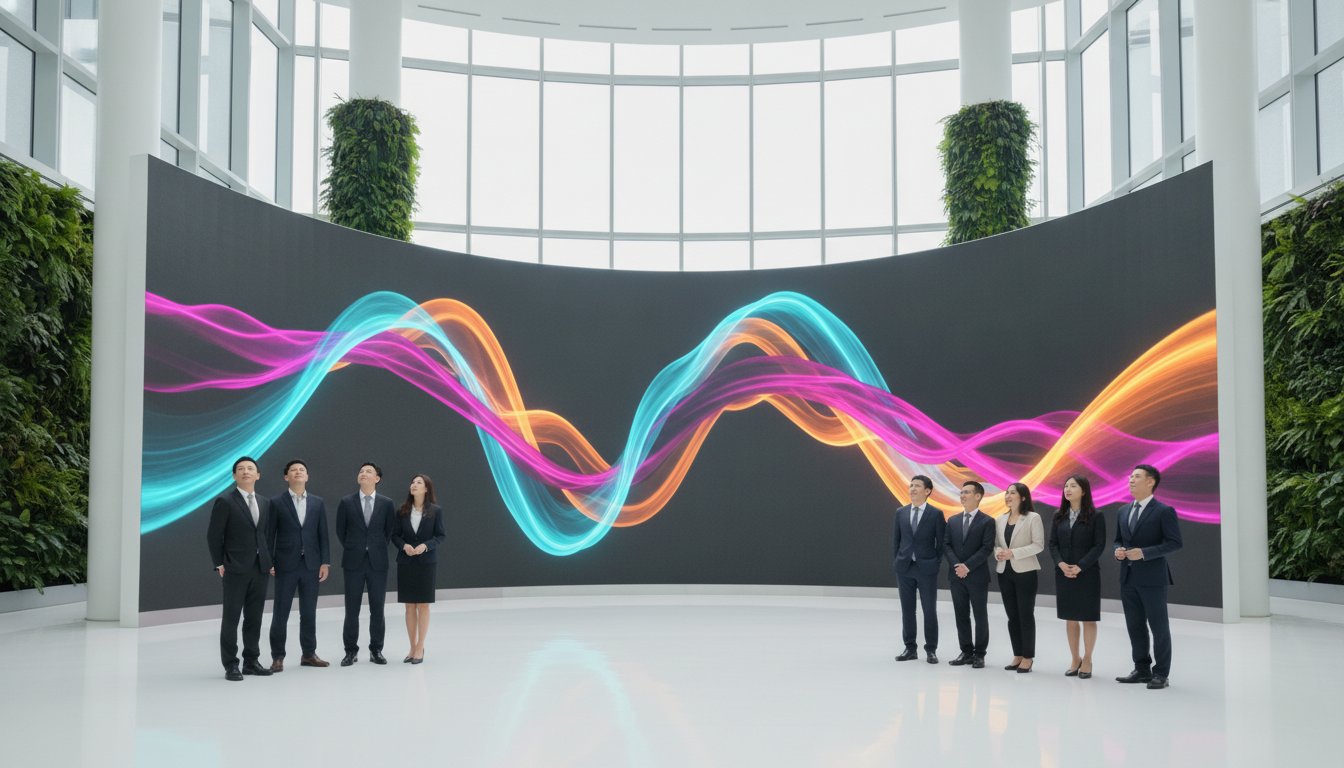
Choosing a fine pitch LED display Singapore isn't just about picking the smallest number on a spec sheet; it's a long-term engineering commitment to your physical space. You've likely felt the frustration of comparing P1.2 and P1.5 modules while worrying if the humidity in a Suntec or Orchard Road storefront will degrade the diodes within a year. It's natural to feel concerned about navigating Building and Construction Authority (BCA) structural permits or Infocomm Media Development Authority (IMDA) brightness limits that impact your display's operation after 7:00 PM. We understand that a video wall is a significant investment that must deliver flawless clarity without becoming a maintenance liability. This guide provides the technical clarity you need to master high-resolution LED walls in Singapore’s demanding commercial landscape. We'll examine the specific hardware engineering required for our tropical climate, explain how to satisfy strict mall management rules, and outline the steps for achieving a seamless installation that remains compliant and reliable for years to come. By the end of this guide, you'll have a clear roadmap for your next high-resolution project.
Key Takeaways
- Understand the technical relationship between pixel pitch and viewing distance to select the right resolution for your specific retail or corporate environment.
- Identify how to manage heat dissipation and humidity risks to prevent PCB oxidation and ensure the long-term health of your LED diodes in Singapore’s climate.
- Learn to navigate local compliance requirements, including BCA structural permits and mall-specific regulations regarding loading bays and fire safety paths.
- Discover why a professional fine pitch LED display Singapore installation requires a comprehensive site survey to identify structural and power constraints early.
- Recognize the importance of preventive maintenance contracts in maintaining high refresh rates and consistent brightness for professional-grade video walls.
Table of Contents
- Understanding Fine Pitch LED Technology in the Singapore Context
- Technical Specifications: Pixel Pitch, Resolution, and Visual Impact
- Comparing Fine Pitch LED Solutions for Singapore Businesses
- Navigating the Installation Process: Local Regulations and Site Requirements
- Long-term Reliability: Maintenance and Support for High-Resolution Displays
Understanding Fine Pitch LED Technology in the Singapore Context
Fine pitch LED refers to displays with a pixel pitch typically below 2.5mm. For most fine pitch LED display Singapore installations, we focus on pitches ranging from P0.9 to P1.8 to ensure image integrity at close viewing distances. Technically, a fine pitch LED display is defined by its sub-2mm pixel density, which is specifically engineered for high-resolution clarity in indoor environments.
This technology differs significantly from traditional outdoor billboards. While outdoor screens use larger pitches like P5 or P10 to be seen from hundreds of metres away, fine pitch modules are designed for viewers who might be standing only two metres from the screen. This precision is largely enabled by MicroLED technology, which allows for smaller diodes and tighter packing on the circuit board.
The Shift from LCD Video Walls to Fine Pitch LED
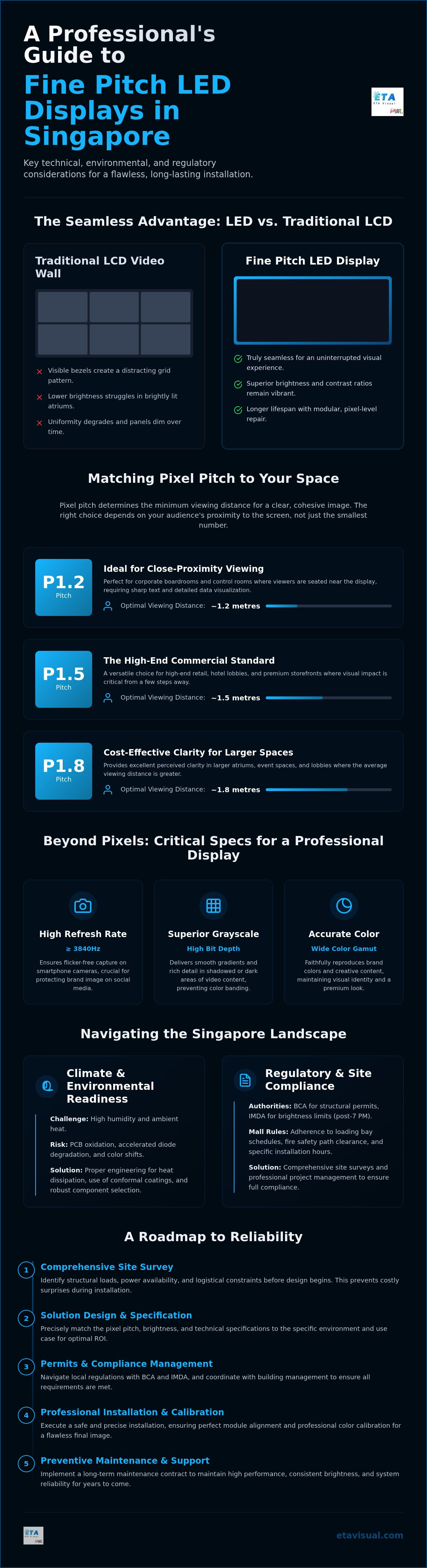
Many Singapore businesses are moving away from traditional LCD video walls because of the "bezel problem." Even the thinnest LCD bezels create a grid-like pattern that breaks the visual flow of high-end content. LED technology provides a truly seamless experience with no visible gaps between modules. In the bright, naturally lit atriums common in Singapore malls, LED's higher brightness and contrast ratios ensure content remains vibrant. It's also a matter of longevity; while LCDs may dim over time, LED modules offer better lifespan advantages and can be repaired at the individual diode level.
Typical Applications in Singapore Commercial Spaces
We see the highest demand for these displays in three key sectors where visual impact is a priority:
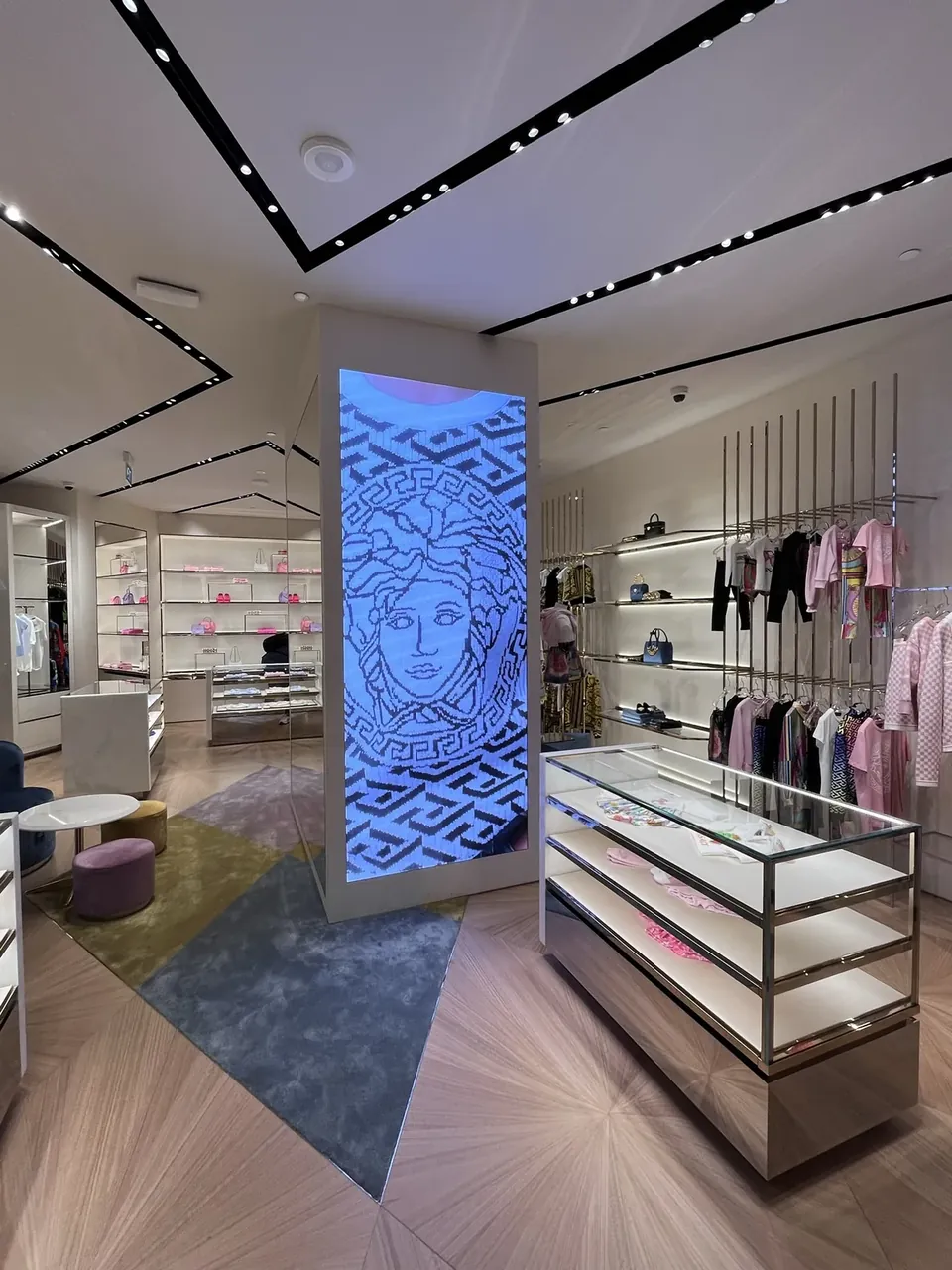
- High-end Retail: Storefronts in Orchard Road and Marina Bay Sands use fine pitch screens to replace static posters with dynamic, high-resolution brand storytelling.
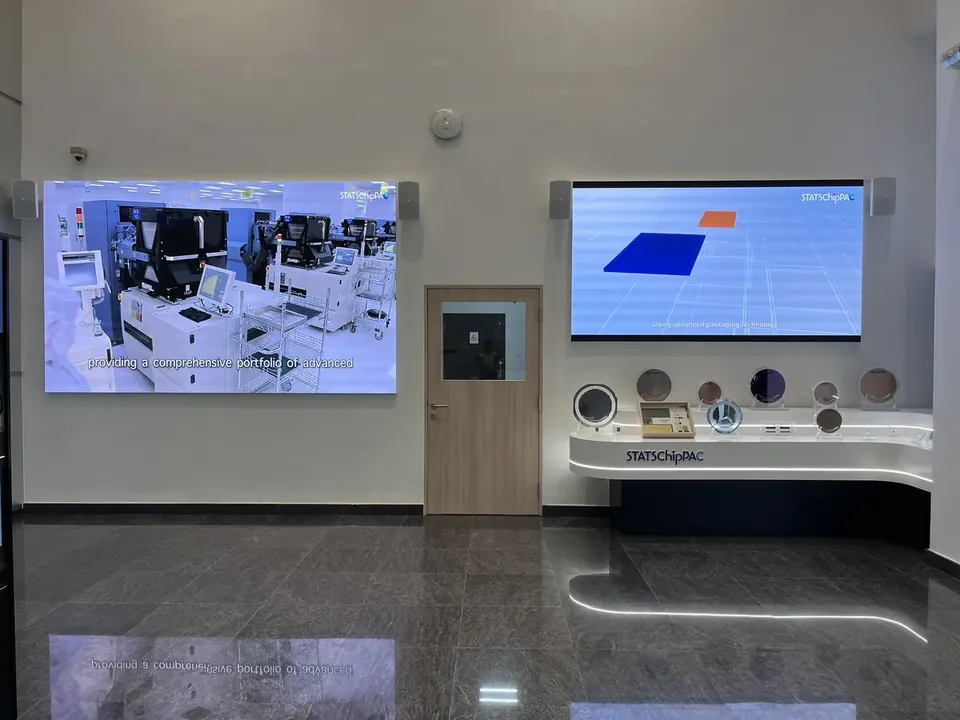
- Corporate Environments: Boardrooms and lobbies in the CBD require sharp text and clear data visualization for presentations and video conferencing.
- Hospitality: Luxury hotels utilize large-scale fine pitch walls to create a premium first impression for guests during check-in.
The choice of pitch depends entirely on the specific environment. A P1.2 screen is often the standard for a boardroom where viewers sit close to the wall, while a P1.5 or P1.8 might be sufficient for a retail lobby where the average viewing distance is greater.
Technical Specifications: Pixel Pitch, Resolution, and Visual Impact
The success of a fine pitch LED display Singapore project depends on the mathematical relationship between pixel pitch and viewing distance. Pixel pitch, the distance from the centre of one pixel to the next, determines the minimum distance a viewer can stand before they see individual dots instead of a cohesive image. For a P1.2 screen, the optimal viewing experience starts at roughly 1.2 metres. If your audience is further away, such as in a large lobby, moving to a P1.5 or P1.8 often provides the same perceived clarity while being more cost-effective. Our core range of Indoor P0.9~P5 LED Screens allows us to match the hardware precisely to your floor plan.
Refresh rates are equally critical, especially in retail environments where customers frequently photograph the storefront. We specify a refresh rate of 3840Hz or higher to ensure that the screen appears flicker-free on smartphone cameras. Low-quality displays with lower refresh rates often show black scan lines in photos, which can negatively impact a brand's social media presence. For luxury brands, we also prioritise grayscale performance and colour reproduction. High grayscale levels ensure that even in dark or shadowed areas of a video, the gradients remain smooth and the brand's signature colours are accurately preserved.
Choosing Between SMD and COB Technology
Surface Mount Device (SMD) technology remains the reliable industry standard for most commercial installations. It's well-understood, cost-effective, and easy to repair at the individual pixel level if damage occurs. However, as the Pixel Pitch LED Market analysis suggests, Chip on Board (COB) technology is gaining traction for ultra-fine pitches. COB encapsulates the LED chips directly on the board, offering a smoother surface and better durability against physical impact. While COB is harder to repair on-site, it's often the preferred choice for high-traffic areas where people might accidentally touch the screen. You can view our past fine pitch projects to see how these technologies look in real-world settings.
Calculating Resolution for Your Space
Achieving Full HD (1920 x 1080) or 4K (3840 x 2160) resolution requires balancing the screen's physical size with the chosen pixel pitch. A common mistake is "over-speccing" the pitch, which can lead to budget inflation without a noticeable gain in visual quality. If the wall is large enough, a P1.5 pitch can easily reach 4K resolution. We also carefully consider the aspect ratio; most professional content is produced in 16:9, so designing the video wall to match this standard prevents awkward cropping or stretching of your media assets.
Comparing Fine Pitch LED Solutions for Singapore Businesses
Selecting a fine pitch LED display Singapore requires a strategic look at how your audience interacts with the space. While P1.2 offers the highest density for close-up viewing, a P1.5 or P1.8 might be the more practical choice for a large atrium where the nearest viewer is three metres away. It's also vital to account for heat dissipation. In many Singapore malls, screens are installed in enclosed shopfronts with limited ventilation. Because fine pitch diodes are packed so tightly, they generate concentrated heat that must be managed through efficient PCB design or integrated cooling to prevent diode degradation and colour shifting.
Maintenance access is another local constraint. Given the high cost of floor space in Singapore, many offices don't have the luxury of a rear service corridor. Front-access modules allow the screen to be mounted flush against a wall, saving valuable square footage. It's also important to note that Fine Pitch Indoor LED projects require different structural support than standard screens. Because the pixels are so small, the mounting frame must be perfectly level; even a tiny deviation in the sub-structure will cause visible seams that ruin the high-resolution effect.
Retail vs Corporate Requirements
Retail installations prioritise "stopping power" and high brightness to compete with intense mall lighting. For these environments, the focus is on vibrant colour reproduction that makes products look enticing. In contrast, corporate Conference Room AV Systems prioritise text legibility and grayscale accuracy for data-heavy presentations. Hospitality projects often sit in the middle, requiring ultra-thin profiles that blend into the interior design while maintaining 24/7 reliability for guest information displays.
Budget Considerations and Total Cost of Ownership
When budgeting, remember that hardware is only one part of the equation. Installation, precision structural engineering, and content management systems often account for a significant portion of the total investment. Energy consumption is also a factor; a large 4K wall can draw substantial power, so choosing energy-efficient driver ICs is a wise long-term move. Finally, securing a local contract for AV Maintenance in Singapore is the best way to protect your investment. Having a technician who can arrive on-site within hours to replace a single module prevents minor pixel failures from becoming a major brand embarrassment.
Navigating the Installation Process: Local Regulations and Site Requirements
Executing a successful fine pitch LED display Singapore project requires more than technical hardware knowledge; it demands a deep understanding of local building infrastructure. A meticulous site survey is the first step in identifying structural and power constraints that could derail an installation. We don't just measure the wall dimensions. We assess whether the existing electrical distribution board can handle the peak power draw of a high-resolution wall and verify the structural integrity of the mounting surface. In Singapore's tropical climate, humidity levels often exceed 80%, which makes the initial burn-in and testing phase critical. We gradually increase the brightness of the diodes over several days to drive out any moisture trapped in the PCB, preventing premature component failure.
Coordination with Building Management or the MCST is a non-negotiable part of the process. This involves securing work permits for after-hours installation, which is typically required in major malls from 10:00 PM to 7:00 AM. We also manage the specific logistics of power tapping and ensuring the installation doesn't obstruct designated fire safety paths. Failing to align with these local building rules can lead to immediate work stoppages or fines.
Structural Engineering and Safety
Fine pitch LED cabinets are surprisingly heavy, often requiring significant wall reinforcement. For retail storefronts with drywall partitions, we coordinate the installation of internal plywood backing or steel brackets to distribute the load safely. Our team ensures that every mount complies with local safety standards for public-facing displays, especially in high-traffic areas like Orchard Road. Using a qualified integrator for complex or high-altitude mounts is essential to mitigate the risk of structural failure over time.
Logistics and Project Management
Singapore’s urban density presents unique logistical challenges. Loading bay heights in older CBD buildings or shopping centres can be as low as 2.2 metres, which dictates the size of the delivery vehicles we use. We manage the entire timeline, typically ranging from 8 to 12 weeks, by coordinating closely with interior designers and main contractors. This ensures that the wall recess is prepared to millimetre-perfect specifications before the LED modules arrive for final commissioning.
A seamless installation depends on early stakeholder alignment. By involving an AV specialist during the design phase, you avoid the costly "re-work" that happens when structural or power requirements are overlooked until the final stages of a fit-out.
Long-term Reliability: Maintenance and Support for High-Resolution Displays
A fine pitch LED display Singapore installation is a long-term asset that requires a disciplined approach to maintenance. Many businesses make the mistake of relying on reactive repairs, only calling for help once a module has visibly failed. We recommend shifting to Preventive Maintenance Contracts to identify potential issues before they impact your brand's image. In our tropical climate, humidity is a persistent cause of PCB oxidation and diode failure. Regular inspections allow our team to monitor for moisture ingress and ensure that heat dissipation systems are functioning correctly; this oversight significantly extends the lifespan of the hardware.
Relying on a manufacturer's warranty often isn't enough when your screen is in a high-traffic retail location. Factory support typically involves shipping parts from overseas, which can lead to weeks of downtime. We maintain a local inventory of spare parts in Singapore for the specific batches of LED modules we install. This ensures that if a power supply fails or a single pixel is damaged, we can perform a repair without waiting for international logistics. This end-to-end accountability is what differentiates a professional integrator from a simple hardware reseller.
The Importance of Rapid-Response Support
For premier retail storefronts, even a few hours of downtime is unacceptable. In the Singapore market, a 4-hour or same-day response is the benchmark for high-traffic environments. Our local support team is structured to meet these demands, addressing critical issues like signal loss or power failures promptly. Our technicians are also trained in module calibration, ensuring that a replaced module matches the colour and brightness of the surrounding wall perfectly. We also implement remote monitoring capabilities where possible. This allows us to identify a power supply failure or a data loop error before it becomes visible to the public.
Calibration and Image Quality Over Time
All LEDs undergo natural brightness and colour decay as they age. Without periodic calibration, your video wall may develop "patchiness" after several years of operation. We use professional-grade calibration cameras and software to re-align the brightness and chromaticity of every individual pixel. Additionally, we handle the necessary software and firmware updates to ensure your display remains compatible with the latest media players and content management systems. To ensure your display remains a high-performing asset, discuss your project with an ETA Visual specialist today.
Securing Your High-Resolution Investment
Planning a fine pitch LED display Singapore project involves balancing technical specifications with the practical realities of local building management. It's a strategic engineering decision that requires matching pixel pitch to viewing distance while navigating BCA structural requirements and the humidity challenges of our tropical climate. Protecting this asset over its lifecycle involves a commitment to preventive maintenance and rapid-response local support that understands the pace of Singapore business.
With over 8 years of local experience and a portfolio including global luxury brands like Coach and Zara, we provide the end-to-end oversight needed for complex digital infrastructure. Our dedicated on-site team is physically present to ensure your installation remains a reliable, high-performing centrepiece for your commercial space.
We look forward to helping you transform your retail or corporate environment with a seamless, high-resolution visual solution.
What is the ideal pixel pitch for a retail storefront in a Singapore mall?
A P1.2 to P1.5 pitch is typically the ideal range for a retail storefront in a Singapore mall. The specific choice depends on your closest viewing distance; if customers stand only 1.2 metres away, a P1.2 ensures a sharp image without visible pixels. This selection is a critical part of your fine pitch LED display Singapore strategy, as it balances visual impact with your available budget and content resolution.
Do I need a special permit from BCA for indoor LED screen installation?
While many indoor installations don't require a formal BCA permit if they aren't structural, you must still comply with safety standards. For large-scale walls or those mounted at high elevations, a Professional Engineer (PE) may need to certify the structural support. Mall management (MCST) often requires these certifications before work begins to ensure public safety within the commercial space and adherence to building fire codes.
How does Singapore’s humidity affect the lifespan of a fine pitch LED display?
High humidity can cause PCB oxidation and "dead pixels" due to moisture ingress in the diodes. In Singapore, where humidity often exceeds 80%, this can shorten a display's lifespan if not managed properly. We mitigate this through a gradual "burn-in" process during commissioning and recommending preventive maintenance. Regular inspections help identify moisture-related issues before they lead to permanent hardware failure or costly signal loop errors.
What is the difference between a hardware reseller and an AV system integrator in Singapore?
A hardware reseller simply sells the panels, leaving the installation and troubleshooting to the buyer. An AV system integrator like ETA Visual provides end-to-end management, including site surveys, structural engineering, and after-sales support. We take full ownership of the project lifecycle, ensuring the display integrates with your existing systems and remains operational through dedicated local maintenance teams rather than relying on distant factory support.
Can fine pitch LED screens be installed on curved walls?
Yes, fine pitch LED screens can be installed on curved walls using flexible LED modules or faceted cabinets. Flexible modules allow for smooth concave or convex curves, making them ideal for creative retail displays or rounded corporate pillars. Faceted cabinets use standard panels angled at the joints to create a curve, though this requires precise structural engineering to maintain a seamless visual effect across the high-resolution surface.
How much power does a typical P1.5 LED video wall consume?
A typical P1.5 LED video wall consumes roughly 200W to 300W per square metre on average, though peak consumption can be higher. This varies based on brightness levels and the type of content displayed. Darker images draw less power, while bright, white-heavy content increases consumption. We provide exact electrical load calculations during the site survey to ensure your distribution board can handle the peak requirements safely.
What is the typical lead time for a fine pitch LED project in Singapore?
The typical lead time is 8 to 12 weeks from the initial design sign-off to final commissioning. This includes procurement, factory testing, shipping, and on-site installation. Large-scale or custom projects in the Singapore CBD may require additional time for mall work permits and logistical coordination. We manage this entire timeline to ensure the installation aligns with your interior fit-out schedule and building management rules.
How do I clean a fine pitch LED screen without damaging the diodes?
Use a soft, lint-free microfibre cloth to gently wipe the surface of the diodes. Never use liquid cleaners, alcohol, or abrasive materials, as these can damage the delicate LED encapsulation. For stubborn dust, a low-pressure air blower is often sufficient. If your screen has a GOB or COB coating, it's more resilient, but you should still avoid applying direct pressure to the pixels to prevent diode displacement.
Visual planning reference
| Planning factor | What to define | Why it matters |
|---|---|---|
| Viewing positions | Nearest viewing distance and audience locations | Supports an appropriate pixel-pitch and screen-size decision. |
| Content workflow | Input sources, resolutions and control workflow | Helps ensure information remains readable and simple to operate. |
| Installation conditions | Structure, access, power, ventilation and maintenance access | Aligns the display scope with the physical site before procurement. |
Want an accurate budget for your space?
We'll do a free site survey and prepare a clear, itemised quotation — no obligation.
Frequently asked questions
A P1.2 to P1.5 pitch is typically the ideal range for a retail storefront in a Singapore mall. The specific choice depends on your closest viewing distance; if customers stand only 1.2 metres away, a P1.2 ensures a sharp image without visible pixels. This selection is a critical part of your fine pitch LED display Singapore strategy, as it balances visual impact with your available budget and content resolution.
While many indoor installations don't require a formal BCA permit if they aren't structural, you must still comply with safety standards. For large-scale walls or those mounted at high elevations, a Professional Engineer (PE) may need to certify the structural support. Mall management (MCST) often requires these certifications before work begins to ensure public safety within the commercial space and adherence to building fire codes.
High humidity can cause PCB oxidation and "dead pixels" due to moisture ingress in the diodes. In Singapore, where humidity often exceeds 80%, this can shorten a display's lifespan if not managed properly. We mitigate this through a gradual "burn-in" process during commissioning and recommending preventive maintenance. Regular inspections help identify moisture-related issues before they lead to permanent hardware failure or costly signal loop errors.
A hardware reseller simply sells the panels, leaving the installation and troubleshooting to the buyer. An AV system integrator like ETA Visual provides end-to-end management, including site surveys, structural engineering, and after-sales support. We take full ownership of the project lifecycle, ensuring the display integrates with your existing systems and remains operational through dedicated local maintenance teams rather than relying on distant factory support.
Yes, fine pitch LED screens can be installed on curved walls using flexible LED modules or faceted cabinets. Flexible modules allow for smooth concave or convex curves, making them ideal for creative retail displays or rounded corporate pillars. Faceted cabinets use standard panels angled at the joints to create a curve, though this requires precise structural engineering to maintain a seamless visual effect across the high-resolution surface.
A typical P1.5 LED video wall consumes roughly 200W to 300W per square metre on average, though peak consumption can be higher. This varies based on brightness levels and the type of content displayed. Darker images draw less power, while bright, white-heavy content increases consumption. We provide exact electrical load calculations during the site survey to ensure your distribution board can handle the peak requirements safely.
Plan the next step
Continue with a relevant solution and real Singapore project evidence.