Commercial Audio Systems in Singapore: A Professional Integration Guide
Written and reviewed by the ETA Visual Engineering & Project Team. Guidance is updated when project, product or Singapore site-planning practices change.
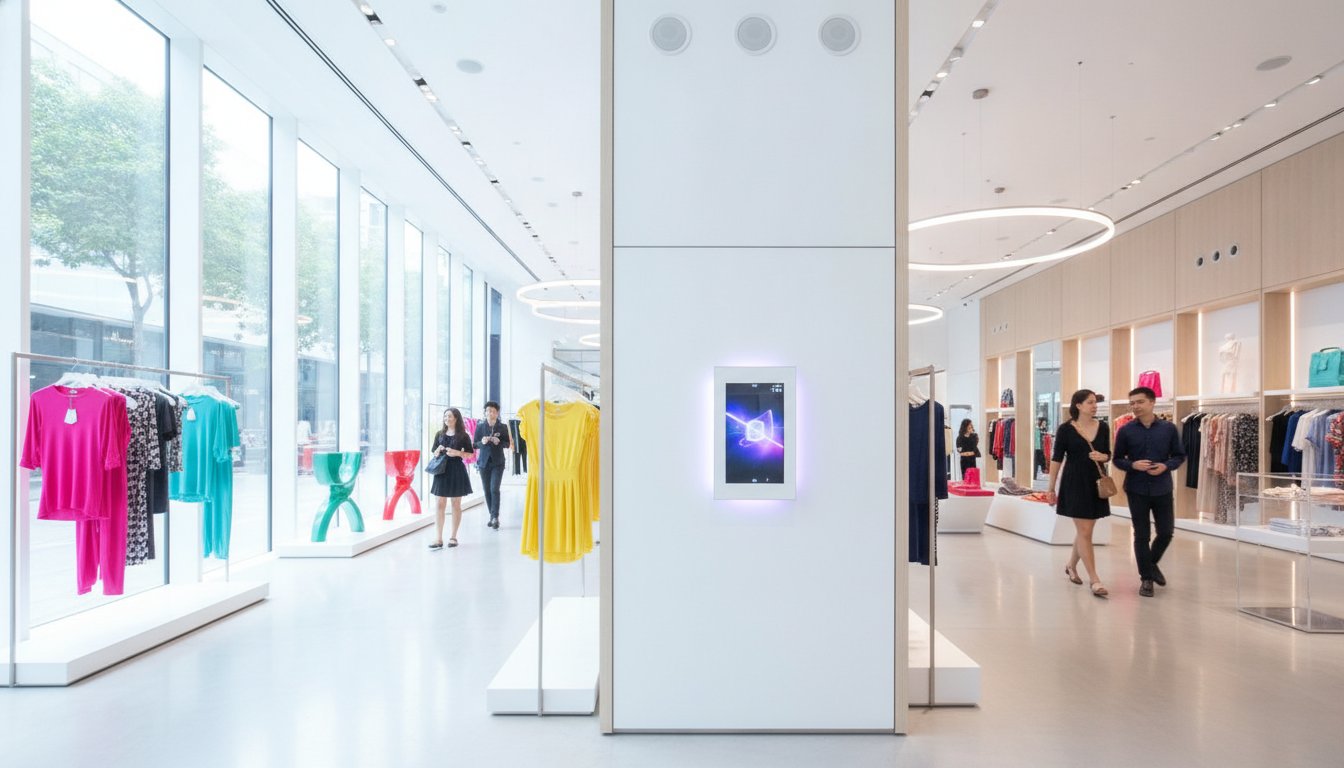
What if your background music system is actually driving customers away instead of keeping them in your store? Most business owners realize too late that Commercial Audio Systems are far more than just a set of speakers and an amplifier. In the high-stakes environments of Singaporean retail and hospitality, a system that sounds thin or develops dead zones isn't just a minor annoyance; it's a failure of your brand's physical infrastructure. You likely understand that managing multi-zone audio while adhering to strict mall building management requirements is a complex balancing act. It's frustrating when technical glitches lead to silence during peak hours or when your setup fails to integrate with essential fire alarm systems. This guide provides a professional framework to design, install, and maintain a robust audio solution tailored for the Singapore market. We'll examine everything from SCDF-compliant emergency voice communication and NEA boundary noise limits to the impact of our tropical humidity on equipment longevity, ensuring your investment delivers crystal-clear sound and 24/7 reliability.
Key Takeaways
- Distinguish between background music and public address systems to ensure your infrastructure supports both atmospheric audio and clear emergency paging.
- Understand why professional Commercial Audio Systems utilize 70V or 100V line technology to maintain signal clarity over long distances without the failures common in consumer setups.
- Navigate Singapore-specific installation challenges, from securing mall building management (MCST) permits to managing loading bay logistics for after-hours works.
- Learn how a detailed site survey prevents audio dead zones and ensures your soundscape integrates perfectly with other AV elements like LED displays.
- Focus on long-term reliability through preventive maintenance, ensuring 24/7 operation and minimizing the risk of system downtime in high-traffic retail or corporate spaces.
Table of Contents
- Understanding Commercial Audio Systems for Business Environments
- Key Components of a Professional Audio Infrastructure
- Commercial Audio vs. Consumer Systems: Why Professional Integration Matters
- Planning Your Installation: Singapore-Specific Requirements and Challenges
- Designing Your Commercial Soundscape with ETA Visual
Understanding Commercial Audio Systems for Business Environments
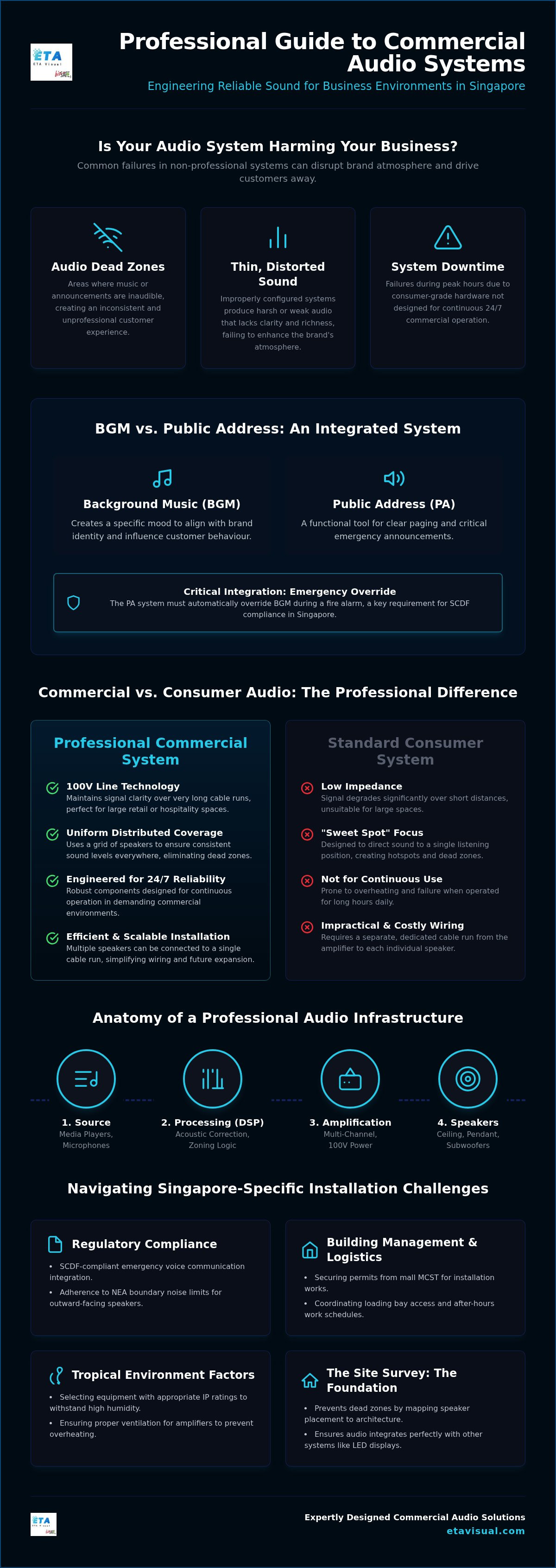
Commercial Audio Systems are engineered networks designed to provide uniform sound coverage across large, often complex architectural spaces. Unlike a home stereo that focuses sound on a single "sweet spot," a commercial setup distributes audio through a series of strategically placed speakers. This ensures every corner of a retail floor or office lobby receives the same auditory experience. Achieving this requires a shift from high-volume point sources to a high-density grid of low-volume speakers, which maintains clarity without overwhelming listeners near the source.
It's essential to distinguish between background music (BGM) and a public address (PA) system. While BGM focuses on creating a specific mood that aligns with a brand's identity, a PA system is a functional tool for paging and emergency announcements. In many Singaporean commercial buildings, these two functions are integrated into a single infrastructure. This integrated system must prioritize the PA signal during an emergency, often through a forced-override function triggered by the building's fire alarm system to meet local safety standards.
The Core Purpose of Commercial Sound
A well-designed audio environment does more than just fill the silence. In retail settings, the right tempo and volume can influence customer dwell time. Research suggests that slower music can encourage shoppers to browse longer, while higher energy tracks might suit a fast-casual dining outlet during the lunch rush. Beyond the atmosphere, professional integration of Commercial Audio Systems is vital for achieving consistent Sound Pressure Levels (SPL). Without this precision, you end up with "audio hotspots" near speakers that are too loud for conversation and "dead zones" where the message or music is completely lost.
Types of Commercial Audio Applications
Commercial installations vary based on the specific operational needs of the venue. Retail background music systems in high-traffic malls like Suntec City or Orchard Central require robust hardware that can operate 12 to 14 hours a day, 365 days a year. For larger hospitality venues, multi-zone systems allow managers to play different sources or adjust volumes independently in the lobby, restaurant, and bar area. In the corporate sector, Conference Room AV Systems focus heavily on speech intelligibility and seamless integration with video conferencing platforms. This ensures that remote participants hear every word clearly without the echo or feedback issues common in poorly integrated rooms.
Key Components of a Professional Audio Infrastructure
Professional Commercial Audio Systems function as a tightly coupled ecosystem. The signal chain begins with the source, moving through digital signal processing (DSP) for acoustic correction, into amplification, and finally to the speakers. Unlike consumer gear, these components are designed to meet professional integration standards, ensuring they can withstand the rigours of continuous operation. Centralised software or wall-mounted panels now replace bulky mixers, giving staff intuitive control over the entire environment without needing technical expertise.
A defining feature of commercial infrastructure is the use of 70V or 100V line systems. This technology allows us to run long cable lengths across large Singaporean retail units or hotel lobbies without significant signal loss. It also simplifies installation by allowing multiple speakers to be "tapped" onto a single cable run. This is far more efficient than the individual home-run wiring used in residential setups, which would be impractical in a mall environment with hundreds of metres of ceiling space.
Speakers and Transducers
Choosing the right transducer depends on the architecture of your space. Ceiling speakers provide a discreet, uniform sound field in shops with false ceilings, common in local shopping centres. For industrial-style cafes or offices with exposed services, pendant speakers are used to bring the sound closer to the listeners. While background music systems often focus on mid-to-high frequencies for clarity, adding subwoofers in hospitality settings provides a fuller, more premium sound that can significantly improve the customer experience.
Amplification and Zoning Logic
Modern amplification is no longer just about raw power; it's about intelligence. Multi-channel amplifiers allow for complex zoning, where the volume in a dining area can be kept high while the restrooms or corridors remain at a subtle level. This logic is central to Commercial Audio Singapore projects, where systems must also interface with the building's fire alarm. In the event of an emergency, the system must automatically mute music and prioritize clear, intelligible paging instructions to comply with local safety codes. If you're unsure which configuration fits your floor plan, you might want to consult an AV specialist for a site assessment to ensure your hardware choices match your specific acoustic challenges.
Commercial Audio vs. Consumer Systems: Why Professional Integration Matters
It's tempting to pick up off-the-shelf Bluetooth speakers or a home cinema receiver for a new shop or office. However, consumer electronics aren't built for the 12 to 14 hour daily duty cycles required in Singapore's retail and hospitality sectors. While a home amplifier might run for a few hours on a weekend, Commercial Audio Systems are engineered for 24/7 reliability. Using consumer gear in a business setting often leads to premature hardware failure, as the internal components can't dissipate the heat generated by constant operation. This leads to system downtime precisely when you need it most.
Scalability is another major hurdle for consumer equipment. In a home setup, adding more speakers usually requires a new amplifier or complex impedance matching that risks blowing the circuit. Professional systems utilize high-voltage line technology that allows you to add speakers simply by "tapping" into the existing line. This flexibility ensures your audio infrastructure can grow alongside your business without a complete hardware overhaul. Adhering to AV industry standards during the initial design phase ensures that your system remains stable, safe, and easy to manage as your floor plan evolves.
Technical Stability and Interference
Professional systems use balanced audio signals to prevent electromagnetic interference, which is a significant issue in Singapore's dense commercial buildings. Unbalanced consumer cables act like antennas, picking up hum and buzz over long distances. If you're trying to cover 2,000 square feet or more, consumer wireless setups like Bluetooth will inevitably suffer from dropouts due to signal congestion from nearby Wi-Fi networks and mobile devices. A wired, professionally integrated system ensures consistent audio quality across every zone without the risk of sudden silence or distorted output.
Long-term ROI of Professional Systems
The initial cost of professional hardware is offset by its significantly lower total cost of ownership. Commercial-grade speakers and amplifiers typically have a lifespan of 7 to 10 years when properly managed. By contrast, consumer units often need replacement every 18 to 24 months when pushed beyond their design limits. Professional integration also includes on-site support. If a retail system fails, a carry-in warranty from a consumer store is useless as it leads to days of silence. A professional partner provides emergency on-site repair and Av Maintenance Singapore contracts that keep your system operational year-round. This proactive approach prevents the lost revenue and brand damage associated with technical failures.
Planning Your Installation: Singapore-Specific Requirements and Challenges
Installing Commercial Audio Systems in Singapore requires more than just technical proficiency; it demands a deep understanding of local operational constraints. Navigating the requirements of building management (MCST) is often the first hurdle. Most shopping centres and Grade A offices require comprehensive work permits, security deposits, and strict adherence to after-hours schedules. Typically, major cabling and mounting works must occur between 10:00 PM and 7:00 AM to avoid disrupting business operations. Coordinating loading bay access for equipment delivery is equally vital, as these spaces are often fully booked days in advance.
A professional site survey is the only way to mitigate these logistical risks. We assess cable paths through crowded ceiling voids and identify the best locations for rack rooms. Without this initial assessment, projects often face delays due to unforeseen structural barriers or insufficient power points in the designated equipment areas. Proactive planning ensures that the installation phase proceeds smoothly without compromising the building's aesthetic or structural integrity.
Compliance and Safety Standards
In Singapore, fire safety is a non-negotiable aspect of any AV installation. The SCDF Fire Code requires that Commercial Audio Systems in large buildings interface directly with the Emergency Voice Communication (EVC) system. Under SS 546 standards, your audio must automatically mute the moment a fire alarm is triggered to allow for clear emergency paging. Additionally, the National Environment Agency (NEA) sets boundary noise limits for commercial premises. During the day, noise levels typically shouldn't exceed 70 dBA, dropping to 60 dBA at night. We design systems with built-in limiters to ensure you remain compliant and avoid noise pollution complaints from neighbouring units.
Environmental Factors
Singapore’s tropical climate presents unique challenges for hardware longevity. High humidity levels can lead to rapid corrosion of internal components and wiring connectors. For alfresco dining areas or rooftop bars, we specify speakers with high IP (Ingress Protection) ratings to withstand both moisture and heat. Inside the building, heat dissipation is the primary concern. Amplifiers housed in enclosed cabinets or poorly ventilated rack rooms will overheat, leading to thermal shutdown. We ensure every rack design includes active cooling or sufficient airflow to maintain stable operating temperatures, protecting your investment from the effects of our local environment.
Designing Your Commercial Soundscape with ETA Visual
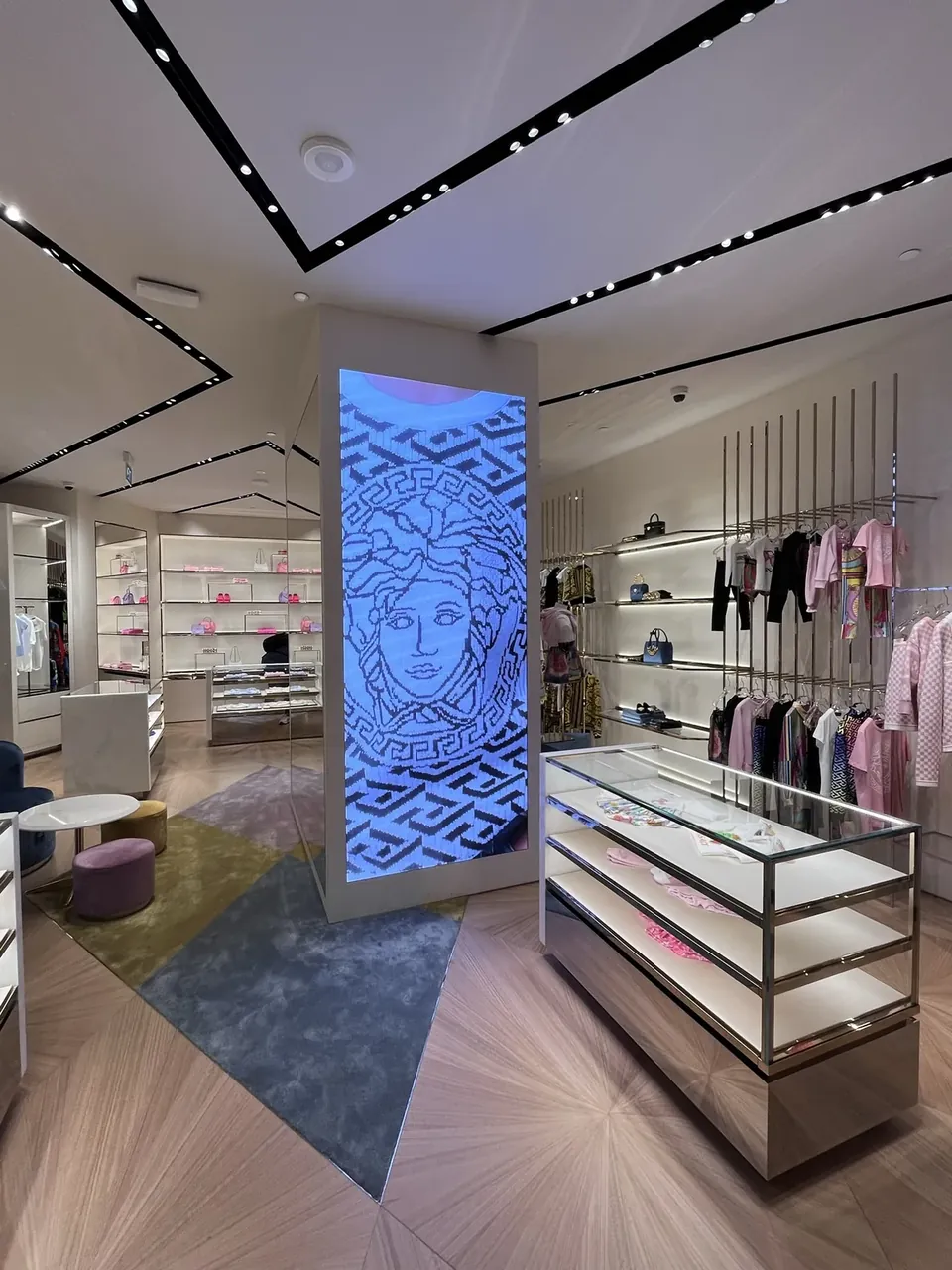
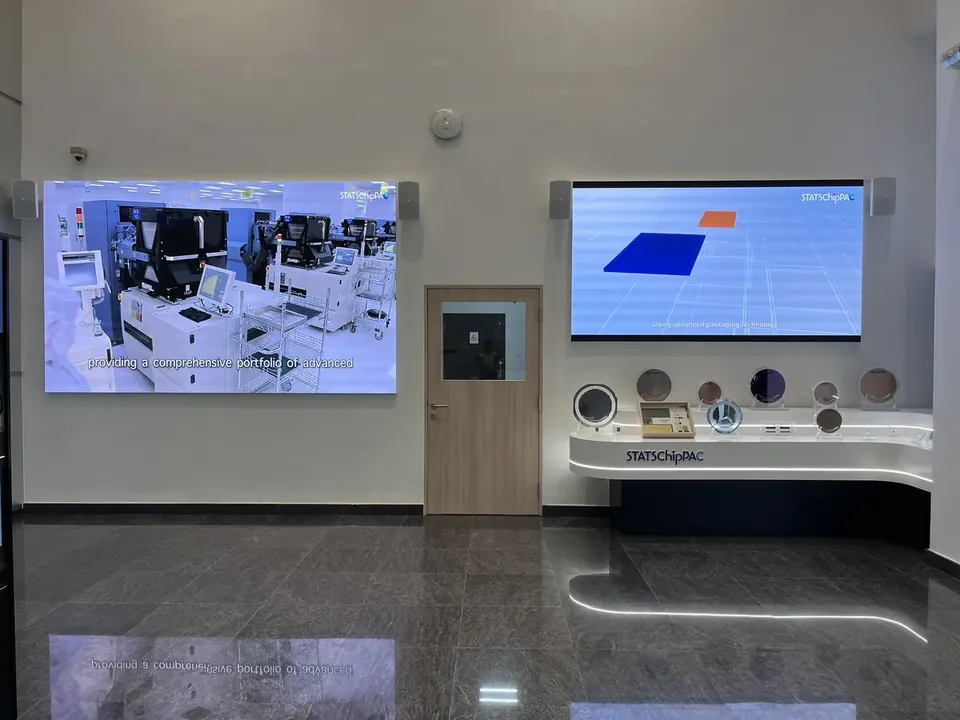
ETA Visual operates as a dedicated partner rather than a hardware vendor. We take full ownership of the project lifecycle, ensuring that Commercial Audio Systems are not just installed but engineered to meet the specific acoustic and regulatory demands of your space. Our approach bridges the gap between high-resolution LED displays and immersive sound, creating a unified sensory experience that strengthens brand identity. By synchronising visual content with crystal-clear audio, we help businesses create environments that truly resonate with their audience. A prime example of this integrated execution is our work on the Coach Storefront, where we achieved seamless audio integration that complemented the premium visual environment and met the mall's strict operational standards.
Our End-to-End Integration Process
We follow a disciplined, three-phase workflow to eliminate project risk and ensure long-term stability. With over 8 years of regional experience, our team understands the nuances of local infrastructure.
- Phase 1: Detailed site survey and acoustic assessment. We physically inspect your venue to map out cable routes, identify potential audio dead zones, and verify MCST requirements. This stage is vital for identifying structural barriers that could complicate cabling or speaker placement.
- Phase 2: System design and hardware procurement. Our engineers select components that meet professional duty cycles, ensuring compatibility between amplifiers, processors, and transducers. We focus on hardware that can withstand Singapore's humidity while delivering consistent performance.
- Phase 3: Professional installation and staff training. We manage after-hours logistics and loading bay access, followed by comprehensive training to ensure your team can operate the system confidently. We don't leave until the system is fully tuned to your specific environment.
Ensuring Long-term System Uptime
Reliability doesn't end once the installation is complete. We offer preventive maintenance contracts designed to catch potential hardware issues before they lead to costly system downtime. This is particularly critical in high-traffic retail and hospitality environments where silence can directly impact revenue. Our team provides rapid-response support for critical failures, ensuring your business remains operational year-round. Whether you're upgrading a retail floor or need to discuss your project with an Audio Office specialist, our local presence ensures we're always reachable for on-site assistance. We focus on precision engineering and meticulous attention to detail, providing the technical infrastructure your brand deserves.
Securing Your Sound Infrastructure
A robust audio setup is a fundamental component of your business's physical infrastructure. By moving away from consumer-grade hardware and adopting professional Commercial Audio Systems, you ensure your venue meets strict SCDF fire codes and NEA noise regulations while providing a superior auditory experience. Success in the Singaporean market requires navigating complex MCST requirements and managing hardware that can withstand our local humidity.
At ETA Visual, we leverage over 8 years of regional experience to provide end-to-end design and installation services. Our focus is on precision engineering and meticulous project management, from the initial site survey to ongoing preventive maintenance contracts that target 99% uptime. This disciplined approach eliminates technical risks and ensures your soundscape remains clear and reliable for years to come.
Investing in a professionally integrated system protects your brand and provides the stability your operations require. We look forward to helping you build a sound environment that supports your business goals.
What is the difference between a 100V line and a low-impedance audio system?
100V systems are designed for long-distance distribution and multiple speakers on a single line, making them ideal for large Commercial Audio Systems. Low-impedance systems, typically 4 or 8 ohms, are suited for high-fidelity audio over short distances, like small meeting rooms. Using 100V technology prevents signal loss over long cable runs and allows for easier scalability in mall or office environments without complex impedance matching.
Do I need a permit for commercial audio installation in a Singapore mall?
Yes, you typically need a work permit and approval from the building's Management Corporation Strata Title (MCST). Mall management requires technical drawings, risk assessment documents, and public liability insurance before any AV works begin. Most installations must be scheduled after-hours to avoid disrupting shoppers. We handle these administrative submissions as part of our integration service to ensure compliance with specific building management rules across Singapore.
Can I use streaming services like Spotify for my business background music?
Standard consumer Spotify accounts are for personal use only and don't cover the public performance rights required for businesses. You must use a licensed commercial streaming service to legally play background music in your retail or hospitality space. These services provide the necessary copyright clearances for Singapore. We can integrate these professional platforms directly into your hardware, ensuring a seamless and legally compliant audio environment for your brand.
How many speakers do I need for a 1,000 square foot retail space?
A 1,000 square foot retail space typically requires four to six ceiling speakers to achieve uniform sound coverage. The exact number depends on your ceiling height and the presence of structural obstructions. A higher density of speakers allows you to run the system at a lower volume while maintaining clarity throughout the shop. We determine the final count through a site survey to avoid audio dead zones or hotspots.
What is a multi-zone audio system and why do I need one?
A multi-zone system allows you to control different audio sources and volume levels in separate areas of your premises independently. For example, a restaurant might need high-energy music in the bar area but softer background audio in the dining room and restrooms. This flexibility is essential for creating the right atmosphere in diverse commercial spaces. It also allows for targeted paging without interrupting the music in every area simultaneously.
How does Singapore’s humidity affect commercial outdoor speakers?
Singapore's high humidity leads to rapid oxidation of internal components and wiring in standard speakers. For outdoor or alfresco zones, we use speakers with high Ingress Protection (IP) ratings and weather-resistant enclosures. These units feature specialized coatings on the drivers and sealed connectors to prevent moisture ingress. Regular inspections are necessary to check for salt-air corrosion or moisture buildup that could lead to short circuits in the amplification chain.
What happens to the audio system during a fire alarm?
Your audio system must automatically mute the moment a fire alarm is triggered to allow for emergency announcements. This integration is a mandatory requirement under the SCDF Fire Code and SS 546 standards for many commercial buildings. We install a signal relay between the building's fire alarm panel and your audio processor. This ensures that the Emergency Voice Communication (EVC) system takes absolute priority, providing clear instructions to occupants during an evacuation.
How often should a commercial AV system undergo maintenance?
We recommend a preventive maintenance check at least twice a year for most Commercial Audio Systems. High-traffic environments or those with outdoor components may benefit from quarterly inspections. Regular servicing includes cleaning amplifier filters, checking cable terminations, and updating DSP firmware. Our maintenance contracts focus on catching minor issues before they escalate into system failures, ensuring your AV infrastructure maintains 99% uptime for your business operations.
Visual planning reference
| Planning factor | What to define | Why it matters |
|---|---|---|
| Viewing positions | Nearest viewing distance and audience locations | Supports an appropriate pixel-pitch and screen-size decision. |
| Content workflow | Input sources, resolutions and control workflow | Helps ensure information remains readable and simple to operate. |
| Installation conditions | Structure, access, power, ventilation and maintenance access | Aligns the display scope with the physical site before procurement. |
Want an accurate budget for your space?
We'll do a free site survey and prepare a clear, itemised quotation — no obligation.
Frequently asked questions
100V systems are designed for long-distance distribution and multiple speakers on a single line, making them ideal for large Commercial Audio Systems. Low-impedance systems, typically 4 or 8 ohms, are suited for high-fidelity audio over short distances, like small meeting rooms. Using 100V technology prevents signal loss over long cable runs and allows for easier scalability in mall or office environments without complex impedance matching.
Yes, you typically need a work permit and approval from the building's Management Corporation Strata Title (MCST). Mall management requires technical drawings, risk assessment documents, and public liability insurance before any AV works begin. Most installations must be scheduled after-hours to avoid disrupting shoppers. We handle these administrative submissions as part of our integration service to ensure compliance with specific building management rules across Singapore.
Standard consumer Spotify accounts are for personal use only and don't cover the public performance rights required for businesses. You must use a licensed commercial streaming service to legally play background music in your retail or hospitality space. These services provide the necessary copyright clearances for Singapore. We can integrate these professional platforms directly into your hardware, ensuring a seamless and legally compliant audio environment for your brand.
A 1,000 square foot retail space typically requires four to six ceiling speakers to achieve uniform sound coverage. The exact number depends on your ceiling height and the presence of structural obstructions. A higher density of speakers allows you to run the system at a lower volume while maintaining clarity throughout the shop. We determine the final count through a site survey to avoid audio dead zones or hotspots.
A multi-zone system allows you to control different audio sources and volume levels in separate areas of your premises independently. For example, a restaurant might need high-energy music in the bar area but softer background audio in the dining room and restrooms. This flexibility is essential for creating the right atmosphere in diverse commercial spaces. It also allows for targeted paging without interrupting the music in every area simultaneously.
Singapore's high humidity leads to rapid oxidation of internal components and wiring in standard speakers. For outdoor or alfresco zones, we use speakers with high Ingress Protection (IP) ratings and weather-resistant enclosures. These units feature specialized coatings on the drivers and sealed connectors to prevent moisture ingress. Regular inspections are necessary to check for salt-air corrosion or moisture buildup that could lead to short circuits in the amplification chain.
Plan the next step
Continue with a relevant solution and real Singapore project evidence.