Automotive Showroom LED Display Planning Singapore 2026
Written and reviewed by the ETA Visual Engineering & Project Team. Guidance is updated when project, product or Singapore site-planning practices change.
For Singapore teams planning automotive showroom LED display planning Singapore, a successful result begins with the room rather than a catalogue. The intended audience, where people stand or sit, the material that will be shown and the way the display fits the interior should be resolved before comparing product proposals. In these settings, an indoor LED wall must work with the customer or presentation journey.
A good brief describes viewing positions, physical wall limits, content sources, installation access, power and data coordination, and the acceptance checks required before handover. It also separates decisions that affect the visible result from decisions that simply increase a specification list. This guide explains the questions to ask, a practical comparison framework and the information a supplier needs to plan an indoor LED installation with fewer late changes.
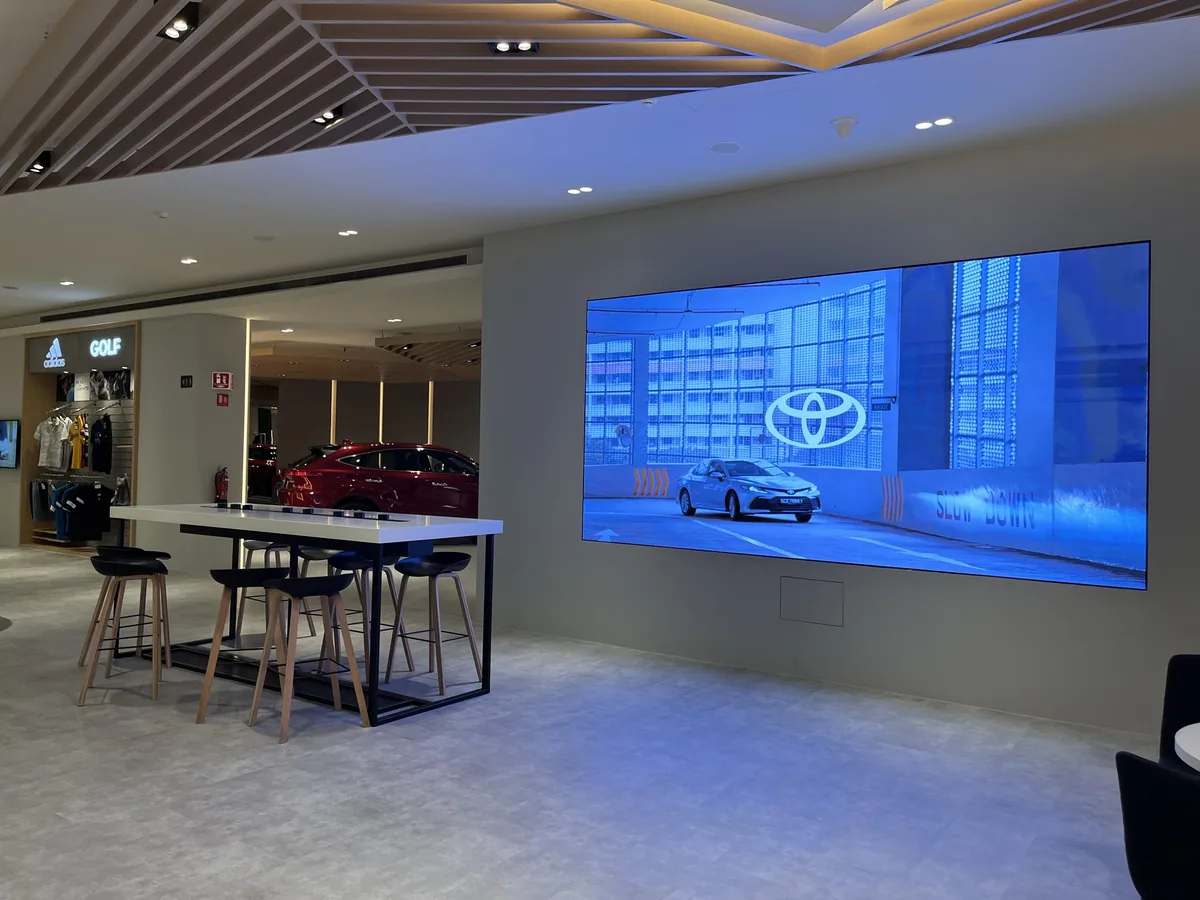
ETA Visual's Toyota Showroom case page states that it supplied, installed and commissioned a P1.86 indoor LED feature wall for a Toyota automotive showroom in Singapore. This factual example shows why the display, environment and project coordination need to be considered together. Use the following guidance to build an informed brief and compare proposals on criteria that match the intended use.
1. Start with purpose and content
Define the showroom objective before any technical discussion. Are you highlighting a single vehicle, supporting multiple model bays, creating an immersive brand backdrop, or running promotional messaging and live feeds? Objectives determine screen placement, size, aspect ratio and required image fidelity. Clarify whether the display will run full-screen video, split content zones, or synchronised multi-panel compositions. For lifecycle planning, note how often content will change and who will manage it, since content plans affect both hardware choices and the control system.
2. Viewing distance, pixel pitch and image quality
Viewing geometry and pixel pitch are central to perceived image quality. Identify primary viewing distances — for example the typical distance from a customer standing beside a vehicle to the screen, plus any seated areas. Pixel pitch relates to optimal viewing distance: smaller pitches (closer spacing) deliver finer detail at close range. Balance pixel pitch with budget: retain higher pixel density in focal areas where customers will stand close, and consider larger pitch panels for background or distant walls.
Also decide whether you need HDR-capable playback, colour-critical rendering (for brand colour fidelity) or high frame-rate content. These content attributes will influence the LED module specifications and the media processing hardware.
3. Structural, electrical and site integration
Integration with showroom architecture requires early collaboration with architects, structural engineers and facilities teams. Confirm wall construction and whether the LED will be mounted to studs, a dedicated subframe, or a freestanding structure. Evaluate cable routes, power capacity and air flow for confined cavities.
Work out the access approach: front-access panels can suit in customer areas where rear access is restricted. Confirm ceiling heights, floor loading and any visual sightlines that might be affected. Early site surveys help identify obstacles, concealment opportunities for controllers, and where control-room or equipment racks will be located.
4. Content workflows, control and calibration
Select a control and playback solution that matches your content complexity and scheduling needs. Simple setups may use purpose-built LED media players with playlist scheduling. More sophisticated showrooms often integrate content management systems (CMS) that support timed campaigns, remote updates and synchronisation across multiple displays.
Ask suppliers about colour calibration workflows and test content delivery on a representative panel or sample. Confirm compatibility between media servers and LED controller protocols, and ensure there are clear procedures for content handover, version control and emergency fallback content in case of network interruptions.
5. Preparing a clear procurement brief
Procurement should be structured so proposals are comparable. Provide a briefing pack with: objectives, site plans showing mounting locations and viewing distances, sample content or content intent, required operating hours, target lifetime and any building compliance constraints. Request itemised proposals that separate hardware, installation, cabling, commissioning and warranty terms. Ask for factory acceptance testing (FAT) evidence and commissioning procedures.
Confirm the programme for manufacturing, shipping, site works, commissioning and client reviews before fixing completion dates. Allow time for design coordination and content revisions.
6. Commissioning and acceptance
Acceptance testing should include visual checks (uniformity, colour consistency, no dead pixels), mechanical checks for stability, and functional tests of playback, scheduling and failover. Define acceptance criteria in the contract and include phased payments tied to milestones such as delivery, installation and commissioning. Keep a record of calibration settings and spare-parts lists for future reference.
7. Long-term considerations and trade-offs
Common trade-offs include cost versus pixel pitch, front-access versus rear-access modules, and integrated control vs separate CMS. Consider the consequences of layout, access approach and potential future changes to the showroom. For large feature walls, a modular layout can make later space coordination more straightforward without changing the overall design intent.
Plan for future content upgrades: allow spare capacity in control racks and reserved network ports to add media servers or streaming inputs later without major rework.
Before comparing proposals, write down the room purpose, the usual viewing positions and the content that will appear most often. A short written brief helps every bidder respond to the same requirement. It also exposes questions about wall space, display proportions, source devices and installation timing while those questions are still easy to resolve. Buyers can then compare recommendations against the same intended use instead of comparing specification lists that answer different problems.
Ask each supplier to explain the assumptions behind its recommendation in plain language. Useful responses distinguish what affects the audience experience from what is simply an implementation choice. The proposal should identify the display location, content format, mounting approach, power and data coordination, access constraints and acceptance checks. Recording these assumptions makes later design discussions more efficient and gives the project team a clear basis for reviewing changes.
| Use case | Recommended pixel pitch | Typical viewing distance | Strengths | Considerations |
|---|---|---|---|---|
| Vehicle-detail feature wall | Fine-pitch indoor LED | Close viewing; confirm during the brief | Supports detail-led content when verified against actual viewing conditions | Confirm content format, viewer position and project brief before comparison |
| Brand backdrop / immersive wall | Mid-fine-pitch indoor LED | Moderate viewing; confirm during the brief | Can support motion-led backdrop content when planned around viewing conditions | Compare display proportion, content format and the actual showroom journey |
| Distant reception or showroom entrance wall | Indoor LED for more distant viewing | More distant viewing; confirm during the brief | Can suit larger formats where the intended audience views from further away | Assess suitability against the intended content hierarchy and viewing journey |
Want an accurate budget for your space?
We'll do a free site survey and prepare a clear, itemised quotation — no obligation.
Frequently asked questions
Start with a clear room and content brief, then ask suppliers to explain their proposed display layout, installation assumptions, programme and acceptance checks. Compare responses against the same written requirements and confirm responsibilities before appointment.
Yes. Pixel pitch determines visible detail and ideal viewing distance. Finer pitches generally suit close-up viewing and product-detail content, while a coarser pitch may suit more distant walls. Consider content type and budget together with pixel pitch.
Confirm relevant electrical, building and safety approvals with the facilities and project teams early. The brief should identify power, cabling and any mounting or ceiling-penetration approvals that need coordination.
Plan content first: determine aspect ratio, motion or static mixes, and how frequently content will change. Select a playback and scheduling platform compatible with the LED control system and capable of integrating with showroom management needs.
Confirm lead times for manufacturing, testing, site works and commissioning early, then build a programme that allows for design review and content approval. Suppliers can provide a detailed project timeline once the brief and site conditions are confirmed.
Plan the next step
Continue with a relevant solution and real Singapore project evidence.